Kaupapataka
Open Agenda
|
Te Rā Hui:
Meeting date:
|
Thursday, 3 September
2020
|
|
Te Wā:
Time:
|
1.00pm
|
|
Te Wāhi:
Venue:
|
Council Chamber
Ground Floor
Civic Administration
Building
Lyndon Road East
Hastings
|
|
Te Hoapā:
Contact:
|
Democracy
and Governance Services
P: 06 871 5000
| E: democracy@hdc.govt.nz
|
|
Te Āpiha Matua:
Responsible Officer:
|
Chief Executive - Nigel Bickle
|
Kaupapataka
Open Agenda
|
Mematanga:
Membership:
|
Tiamana
Chair: Mayor Sandra Hazlehurst
Ngā KaiKaunihera
Councillors: Bayden Barber,
Alwyn Corban, Malcolm Dixon, Damon Harvey, Tania Kerr (Deputy Chair), Eileen
Lawson, Simon Nixon, Henare O’Keefe, Peleti Oli, Ann Redstone, Wendy Schollum,
Sophie Siers, Geraldine Travers and Kevin Watkins
|
|
Tokamatua:
Quorum:
|
8 members
|
|
Apiha Matua
Officer Responsible:
|
Chief Executive – Nigel
Bickle
|
|
Te Rōpū Manapori me te Kāwanatanga
Democracy and Governance Services:
|
Jackie Evans (Extn 5018)
|
Te Rārangi Take
Order of Business
|
1.0
|
Opening
Prayer – Karaki
a Whakatūwheratanga
|
|
|
2.0
|
Apologies
& Leave of Absence – Ngā Whakapāhatanga me te Wehenga ā-Hui
At the close of the agenda
no apologies had been received.
Leave of Absence had
previously been granted to Councillor O'Keefe
|
|
|
3.0
|
Seal
Register– Te
Rēhita Hira
|
|
|
4.0
|
Conflict
of Interest –
He Ngākau Kōnatunatu
Members need to be vigilant to stand aside from
decision-making when a conflict arises between their role as a Member of the
Council and any private or other external interest they might have.
This note is provided as a reminder to Members to scan the agenda and assess
their own private interests and identify where they may have a pecuniary or
other conflict of interest, or where there may be perceptions of conflict of
interest.
If a Member feels they do have a conflict of
interest, they should publicly declare that at the start of the relevant item
of business and withdraw from participating in the meeting. If a Member
thinks they may have a conflict of interest, they can seek advice from
the General Counsel or the Manager: Democracy and Governance (preferably
before the meeting).
It is noted that while Members can seek advice and
discuss these matters, the final decision as to whether a conflict exists
rests with the member.
|
|
|
5.0
|
Confirmation
of Minutes –
Te Whakamana i Ngā Miniti
Minutes of the
Council Meeting held Tuesday 25 August 2020.
(Previously circulated)
|
|
|
6.0
|
Petition
- Eskdale Park
|
7
|
|
7.0
|
Petition
- Cornwall Park Aviary
|
9
|
|
8.0
|
Chief
Executive Update
|
To Follow
|
|
9.0
|
Review
of the Gambling Act - Recommendations from District Planning and Bylaws
Subcommittee meeting on 5 August 2020
|
13
|
|
10.0
|
Hawkes
Bay Community Fitness Centre Trust Lease amendment
|
35
|
|
11.0
|
Parking
Controls
|
69
|
|
12.0
|
Summary
of Recommendations from Heretaunga Takoto Noa Māori Standing Committee 5
August 2020
|
83
|
|
13.0
|
Summary
of Recommendations from the Risk and Assurance Committee meeting held on 27
July 2020
|
93
|
|
14.0
|
2020
Meeting Schedule Changes
|
977
|
|
15.0
|
Minor Items
– Ngā Take
Iti
|
|
|
16.0
|
Urgent
Items –
Ngā Take Whakahihiri
|
|
Hastings
District Council: Council Meeting
Te Rārangi Take
Report to Council
|
Nā:
From:
|
Vicki Rusbatch,
Democracy and Governance Advisor
|
|
Te Take:
Subject:
|
Petition - Eskdale Park
|
1.0 Summary – Whakarāpopototanga
1.1 The purpose of this
report is to inform the Council about a petition received from Trina
Bergloff-Howes. The petition will be tabled at the meeting.
1.2 The petitioners’
prayer reads as follows:
“We, the undersigned, are concerned citizens who urge our leaders and the
Hastings District Council to keep the Eskdale Park as a natural reserve without
interference from private, commercial or council development. We would
like to stop the proposed development of the Eskdale Park and have the park
preserved as a natural nature reserve.”
There are 173 signatories to the petition submitted to Council. However,
this is an on-line petition and at the time of writing this report, there were
substantially more signatories to the petition. Many signatories have
also added their own comments. A hyperlink to the on-line petition
follows: https://www.petitions.nz/preserve_the_eskdale_park_in_the_esk_valley_napier
1.3 The report concludes
by recommending that the Council receive the petition and that it be considered
as part of consultation feedback on the Eskdale Park Reserve Management Plan.
|
2.0 Recommendation –
Ngā Tūtohunga
A) That the
report of the Democracy and Governance Advisor titled “Petition -
Eskdale Park” be received.
B) That the
tabled “Petition - Eskdale Park” be received.
C) That the lead
petitioner Trina Bergloff-Howes be invited to speak to the petition, as a
submitter to the Eskdale Park Reserve Management Plan proposal.
|
Attachments:
There are no attachments for this report.
Hastings
District Council: Council Meeting
Te Rārangi Take
Report
to Council
|
Nā:
From:
|
Colin
Hosford, Public Spaces and Building Assets Manager
|
|
Te Take:
Subject:
|
Petition
- Cornwall Park Aviary
|
1.0 Executive
Summary – Te
Kaupapa Me Te Whakarāpopototanga
1.1 To
receive a report from an online petition. The petitioners’
prayer is as follows:
LET’S GET THE
PARROTS OUT
Sad and lonely large
parrots in cold concrete cages, it's a no from us!
The Corella and
remaining Cockatoo in The Cornwall Park Aviaries have no stimulation, no grass
and very limited human contact. These guys are intelligent, they crave love and
affection, game play, puzzles and more. We adopted Chucky from the park aviary where
he lived for 20 years or so. He was abused by a bigger Cockatoo, harassed by
people visiting the park and sprayed with paint. He was very aggressive, even
tearing a large hole in a man’s ear. You should see him now, even the vet
is amazed! The lady that works in the Aviaries does an amazing job caring for
all the birds including the two large parrots. The cages are always clean, the
birds get treats & as much time as she’s able, but her hands are
tied. The Council say they are a good attraction for the park. They said they
were going to upgrade the cages & get them friends. Times have changed, big
parrots shouldn't be kept in cages for people’s entertainment. The public
complained about Chucky, he was facing euthanasia but with the help of the
aviary worker he found a good home. Please help get these guys out of those
horrible cages & into good homes like the one Chucky has.
1.2 At the time of
publication of the agenda there were 616 signatories by email. The link to the
online petition is below:-
https://www.change.org/p/hastings-district-council-lets-get-the-parrots-out
1.3 The
following table shows a breakdown of the geographic whereabouts of the 616
signatures.
|
Location
|
Number of signatures
|
|
Hastings
|
62
|
|
Napier
|
49
|
|
Rest of New Zealand
|
420
|
|
Overseas
|
85
|
1.4 The
petitioners believe the two large parrots are in a poor environment and are
unhealthy. They have asked that they be permanently relocated into the
lead petitioner’s care.
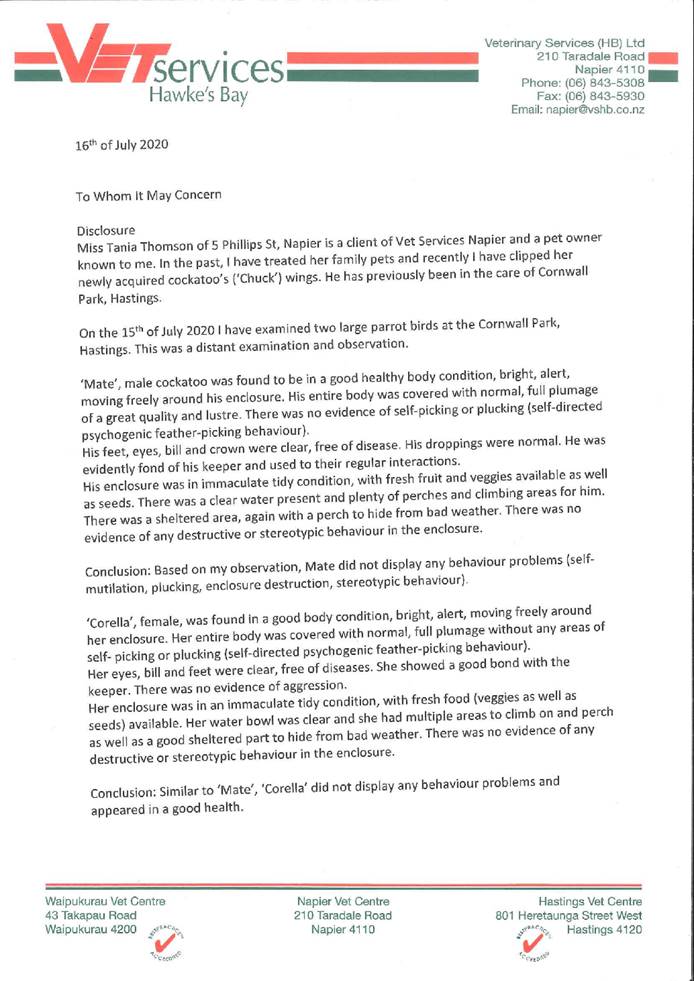
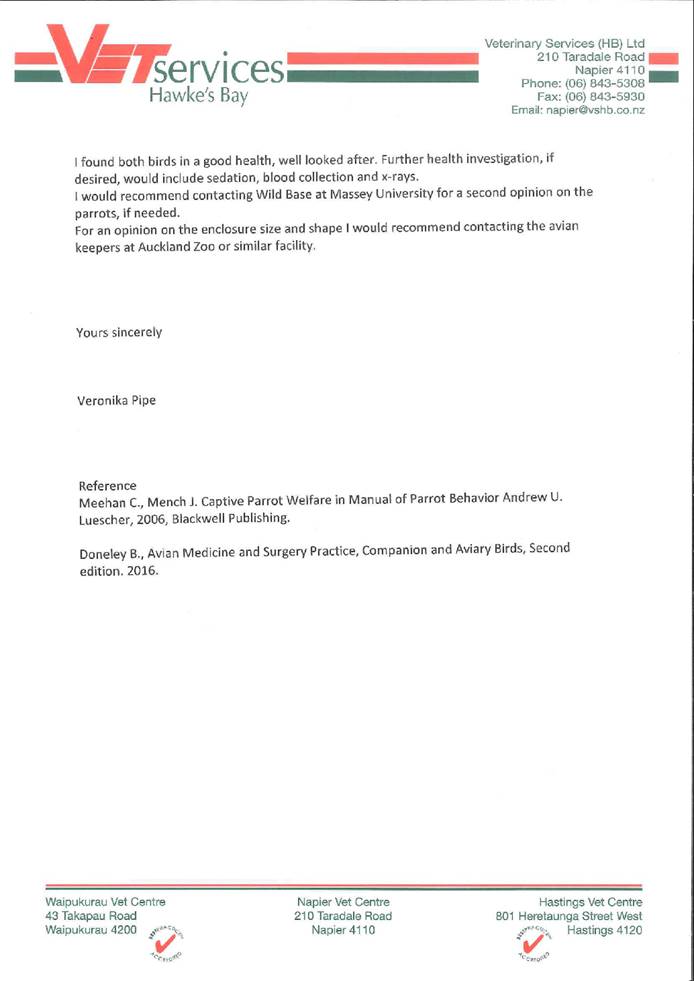
1.5 A
veterinary surgeon has inspected the birds and reports that they are mentally
and physically healthy. In addition the Society for the Prevention of
Cruelty to Animals (SPCA) have visited the birds and they state they are
generally well looked after but they support the improving the aviary for an
enhanced environment. In order to help resolve the requests to relocate
the parrots, the SPCA have offered to seek an interim improved new home while
cage improvements are undertaken.
1.6 On 19
March 2019 Council considered the future of the aviary as part of the Cornwall
Park Management Plan (CRMP). Several submitters spoke about the birds and their
housing. 104 local submitters supported the retention of the
aviary. Council is aware that the aviary as a whole is a valued facility
and it was acknowledged that the parrots’ enclosures should be
enlarged. The Cornwall Park Reserve Management Plan responded to this
issue and $75,000 funding has been allocated to enlarge the cages this
financial year. The design work has commenced with the parrots’
cages being the first priority.
1.7 Officers
believe that the birds are healthy and could appropriately stay where they have
been for many years. It is however recognised that should an alternate
improved location be sourced by the Society for the Prevention of Cruelty to
Animals (SPCA) the parrots could be temporarily put into the care of the SPCA,
while the cages are being refurbished.
1.8 Officers
are aware of the concerns of the petitioners with regard to the caging of the
two parrots. Council has discussed the issue of avian welfare as part of
the CRMP and resolved to make funding available to improve the cages.
Staff currently have the cage improvement work underway as an operational
matter.
|
2.0 Recommendations
– Ngā
Tūtohunga
A) That
the Council receives the petition titled “Let’s get the Parrots
Out.”
B) That
Council uphold its 2020/21 Annual Plan and Reserve Management Plan
commitments of retaining the birds in enlarged and enhanced cages.
C) That
should the SPCA find suitable temporary location for the two parrots, they
can be temporarily given into the care of the SPCA, until the cage
improvements are completed.
|
2.1
Attachments:
|
1⇩
|
Vet Report
|
CFM-17-8-6-20-542
|
|
|
Thursday, 3 September 2020
|
 Te Hui o Te Kaunihera ā-Rohe o Heretaunga
Hastings
District Council: Council Meeting
Te
Rārangi Take
Report to Council
|
Nā:
From:
|
Rowan Wallis,
Environmental Policy Manager
|
|
Te Take:
Subject:
|
Review of the Gambling
Act - Recommendations from District Planning and Bylaws Subcommittee
meeting on 5 August 2020
|
1.0 Summary
1.1 The
purpose of this report is to seek approval on the recommendations made by the
District Planning and Bylaws Subcommittee on the proposed class 4 gambling
venue and TAB venue policies held on 5 August 2020.
1.2 The
approved recommendations will be used to notify the draft documents for public
feedback under the special consultation process of the local government act.
1.3 The
subcommittee has recommended that the class 4 gambling venue policy moves from
a capped approach, to that of a sinking lid. The move towards a sinking lid
includes the removal of the current relocation policy.
1.4 For
the TAB venue policy, the subcommittee has recommended a move from an open
policy to cap the number of TAB venues in the district (refer to Attachment 3).
1.5 Background
information and the relevant District Planning and Bylaws Subcommittee
recommendations to be ratified are set out below.
2.0
Background
Class 4 Gambling Venue Policy
2.1 The
Gambling Act 2003 and Racing Act 2003 specifies that a city council or district
council must have a class 4 venue policy and TAB venue policy. A
council’s venue policy sets out the rules around class 4 venues and TAB
venues in their district. The aim of the venue policy is to give local
councils and the communities they represent a say in how class 4 gambling
operates in their district, this is in line with the Gambling Act’s
purpose.
2.2 For
a class 4 gambling venue policy, Councils can use either a sinking lid or a
cap. The policy may include or exclude a relocation policy. These
options are discussed below.
2.3 The
capped approach means that every time a venue closes, the number of machines
permitted in the Hastings District remains the same. This means that other
venues can apply for additional machines if their permitted number of machines
hasn’t been exceeded or if a venue is looking to host machines at their
premise.
2.4 The
use of sinking lid policy is adopted to decrease the number of gaming machines
or class 4 venues over time. A sinking lid policy prohibits any new
gaming machines or venues for the district. However, there is a six month
period after a venue closes before the licence expires. So potentially another
activity can establish at the premise and operate the machines along with their
activity as the licence is still active.
2.5 The
sinking lid policy cannot force venues to reduce the number of machines they
are operating, so only affect any new proposals.
Sinking Lid vs
Capped Policy
2.6 The last Gambling Policy review
was undertaken in 2017 and resulted in a change from a ‘sinking
lid’ policy to a ‘capped’ policy to control class 4 gambling
in the District. The policy included the retention of the relocation
policy with increased flexibility for some venues.
2.7 The
current policy is a cap of 293 machines that may operate where currently 276
machines are operating within the district (permitted up to 278 without the
need for Department of Internal Affairs consent). The policy also
includes a relocation policy which gives flexibility to some venues.
2.8 New
venues can apply to host machines (maximum of 9) where Council consent is
required. With any application received, the applicant is required to
demonstrate how they meet the performance standards of the class 4 gambling
venue policy.
2.9 The
benefit of the capped option is certainly that community funding will be
maintained while the control of harm created through gambling can be controlled
by the maximum number of machines. Retaining a relocation policy would be
beneficial to enable the re-establishment of venues away from sensitive sites.
Relocation
policy
2.10 A
relocation policy enables a venue to move the licence to another premise (e.g.
when a lease expires, building is upgraded or has been damaged).
2.11 Section
101 (3) (c) of the Gambling Act 2003 says that a policy may include a
relocation policy. It does not state that a council must have a
relocation policy.
TAB Venue Policy
2.12 The
Racing Act 2003 specifies a territorial authority must complete a review of a
policy within 3 years after adopted, and then within 3 years after that review
and each subsequent review is completed.
2.13 In
terms of the TAB Venue Policy, Hastings District Council has the ability to regulate
whether or not new stand-alone TAB venues may be established in the district
and if so where these may be located. Council consent is not required under the
legislation to establish a TAB facility in a bar, hotel or club. The District
has just one stand-alone TAB venue (Stortford Lodge).
3.0 Options
3.1 The
following options were identified and discussed with the subcommittee for
consideration for this review;
Class 4 gambling venue
policy:
3.2 Option
One: New cap level of 278. This would be a reduction from 293
machines under the current policy. This means that gaming machines in the
Hastings District will be maintained at the current level which would be at a
ratio of 3.41 machines per 1,000 residents (retain relocation policy).
3.3 Option
Two: Current Cap level of 293 machines, making 15 gaming machines available
for existing or new venues (retain relocation policy).
3.4 Option Three: Sinking lid; no new
machines or venues will be permitted in the Hastings District. As
machines are not utilised the number available drops (retain relocation
policy).
3.5 The officer’s recommendation was option one with minor
amendments of the policy as set out in paragraph 3.2 above. The full report
which was considered by the District Planning and Bylaws Subcommittee is
attached as Attachment 4.
3.6 Following
a full debate, the subcommittee unanimously agreed to recommend to Council that
the current gambling policy be changed from a capped to a sinking lid policy
with no relocation policy to reduce harm from gambling in the District.
3.7 In
reaching this decision, the subcommittee noted the 2019 research undertaken by
the Department for Internal Affairs (DIA) which showed that Hastings players
were spending longer hours playing gaming machines, betting more per game and
more players were playing ‘pokie’ machines.
3.8 It
was noted that problem gambling disproportionately affected deprived and low
income families, of which a significant proportion in this district are
Māori. The subcommittee considered that the benefit from community
grants derived from gaming machine profits from non-club and club societies did
not outweigh the community harm from gambling particularly in our vulnerable
communities.
3.9 TAB
Venue Policy:
3.10 The
subcommittee recommended a move from an open policy for TAB venues to a cap of
one TAB venue for the district.
3.11 The
officer’s recommendation was the retention of the open TAB venue policy
with minor changes.
4.0 Next
Steps
Special Consultative Procedure
4.1 The
proposed timeline under the special consultative procedure is as follows:-
· 5th
August 2020 - seek approval from the District Plan and Bylaws Subcommittee for
the proposed reviewed document to go to Full Council meeting.
· 3rd
September 2020 - Council meeting seeking approval to adopt the statement of
proposal and commence the special consultation process.
· Public
Notice for submissions will open 12th September 2020.
· Notice
and submission forms will be delivered to all three libraries.
· There
will be the ability to submit online through My Voice My Choice.
· Council’s
website and Facebook page will be linked to an online submission process.
· Public
notice will be in the Hawke’s Bay Today and Hastings Leader.
· Submission
period ends 11th October 2020.
· Council
hearing date to be set for 1st December 2020.
· Decision
of policies to be released two weeks after conclusion of hearing.
4.2 In
addition to general community notification, the following stakeholder groups
will be notified;
· Groups
representing Maori (marae, Te Puni Kōkiri,
Ngāti Kahungunu Iwi Incorporated)
· Hawke’s
Bay District Health Board
· Hāpai
te Hauora (Māori Public Health)
· NZ
Racing Board
· Post
Settlement Governance Entity (PSGE) Ngāti Pāhauwera Development
Trust, Maungaharuru Tangitū Trust, Mana Ahuriri Trust, Hineuru Iwi Trust,
Heretaunga Tamatea Settlement Trust, Te Whanganui-a-Orotū, Ngāti
Kahungunu Iwi Incorporated.
· Societies
and Clubs who currently own the machines in the district
· Te
Rangihaeata Oranga (HB problem gambling)
· Venue
operators (bars)
|
5.0 Recommendation– Ngā Tūtohunga
A) That
the report of the Environmental Policy Manager titled “Review of the
Gambling Act - Recommendations from District Planning and Bylaws
Subcommittee meeting on 5 August 2020” be received.
B) That
the Council adopt for consultation under the Special Consultative Procedure
of the Local Government Act 2002, the Class 4 Gambling Venue Policy and TAB
Venue Policy, and Statement of Proposal, appended to this report as
Attachments 1, 2, and 3 and incorporating any amendments made at its meeting
of 3 September 2020.
|
Attachments:
|
1⇩
|
Class 4 Gambling Venue Policy and TAB Venue Policy
Statement of Proposal 5th August 2020
|
STR-3-4-20-461
|
|
|
2⇩
|
Class 4 Gambling Venue Policy
|
STR-3-4-20-463
|
|
|
3⇩
|
Tab Venue Policy
|
STR-3-4-20-464
|
|
|
4⇨
|
Class 4 Gambling Venue and TAB Venue Policies Review -
Report to District Planning and Bylaws Subcommittee - 5.8.20
|
CG-16-2-00300
|
Under Separate Cover
|
|
Class 4
Gambling Venue Policy and TAB Venue Policy Statement of Proposal 5th
August 2020
|
Attachment 1
|
|
Statement of Proposal
PROPOSED CLASS
4 GAMBLING VENUE POLICY & TAB VENUE POLICY
|

|
1. INTRODUCTION
1.1. The
Gambling Act 2003 and the Racing Act 2003 requires all Territorial Authorities
to develop a Class 4 Gambling and TAB Venue policy. The Hastings District
Council adopted a Class 4 Gambling Venue Policy and TAB Venue policy in May
2004 and three yearly reviews were undertaken and completed in May 2007,
September 2010, August 2013 and May 2017 in accordance with the Gambling Act
2003 and Racing Act 2003.
1.2. The Class 4 Gambling Venue
Policy and TAB Venue policies currently have the following objectives:
· To support the purpose
and intent of the Gambling Act 2003.
· To avoid the
establishment of class 4 gambling activities in locations close to residential
areas, public facilities or other identified land uses sensitive to gambling
activities.
· To avoid the
proliferation of class 4 gambling venue strips or blocks within the city
· To encourage
responsible gambling practices and attitudes in class 4 gambling venues
· To minimise the
potential for new entrant problem gamblers by reducing accessibility to
gambling venues
· To reduce the exposure
and risk of under-18 year old persons to gambling opportunities and the
promotion of gambling
· To ensure as far as
practicable that actual and reasonable costs relating to venue consent
applications are borne by the applicant(s)
· To control the growth
of gambling within the scope of the Gambling Act 2003, while providing for the continued
availability of sports or race betting within Hastings District in accordance with the
purpose and intent of the Gambling and Racing Acts.
2. REASON
FOR PROPOSAL
2.1 Under
the Gambling Act 2003 all Class 4 Gambling and TAB Venue policies must be
reviewed on a three yearly basis. The current policies were adopted in
May 2017 and are therefore due for review. The current policies can be viewed
on the council website at https://www.hastingsdc.govt.nz/assets/Document-Library/Policies/Gambling-Strategy/Class-4-Gambling-Venue-Policy.pdf? and https://www.hastingsdc.govt.nz/assets/Document-Library/Policies/Gambling-Strategy/Gambling-TAB-Venue-Policy-Final.pdf?
2.2 Section
102(5A) of the Gambling Act provides that the first time a territorial
authority commences a review of a policy after the Gambling (Gambling Harm Reduction) Amendment Act 2013
comes into force, the territorial authority must (and may at any other time)
consider whether to include a relocation policy (as defined in section 101(5)) in its class 4 venue
policy. As this review is the second review since the Amendment Act came
into force on 14 September 2013, this review also considers the merits of a
relocation policy.
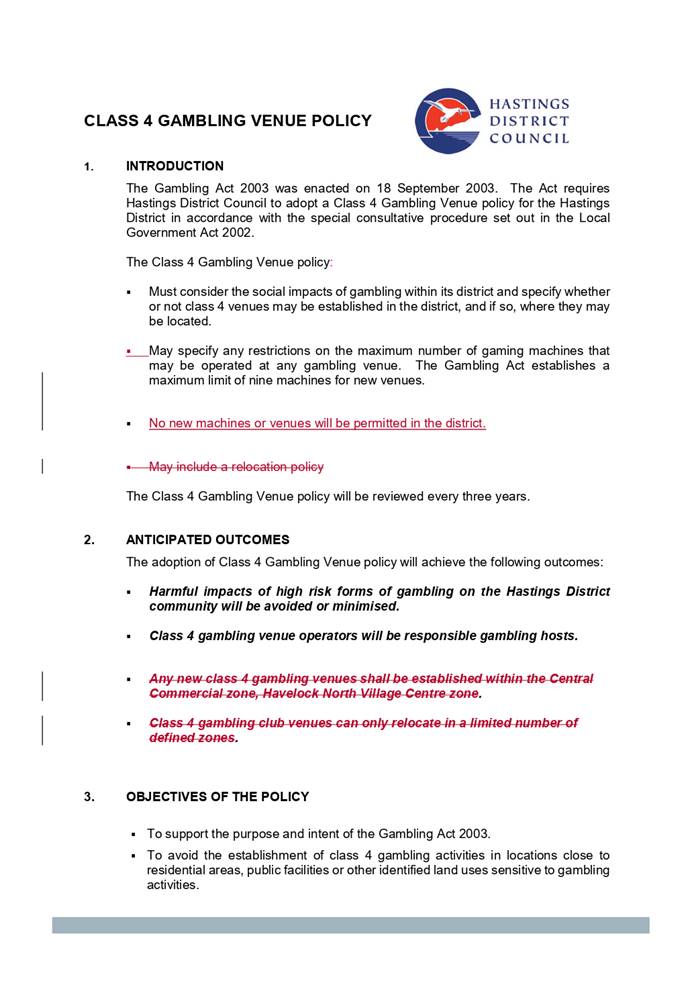
2.3 This
proposal is for a change of the current cap policy to a sinking lid and with the
removal of the relocation policy. The proposal includes some minor wording
amendments to the existing Class 4 Gambling Venue Policy. The proposed sinking
lid policy with no relocation for gaming machines will reduce the current
number of machines operating in the district over time
2.4 The
TAB Venue policies will move from an open policy to a cap of one TAB venue in
the District. Minor changes are proposed to the TAB venue policy for
internal consistency. The number of TAB venues is proposed to limit the number
in the District. Any new TAB venue proposal will be subject to the zone and
locational requirements.
2.5 The
proposed sinking lid with no relocation policy and TAB venues cap is based on a
meeting held with the District Plan and Bylaws sub-committee where it was
discussed on the options available and best solution to control class 4
gambling in the district. It was concluded that the sinking lid with no
relocation policy was the best option as this provides for gambling but with
emphasis to reduce mahine numbers over time.
2.6 The
proposed amendments are as follows:
Class
4 Gambling Venue Policy
Clause 1 (points 3 and 4)
“Introduction”.
· Include no
new machines or venues will be permitted in the district.
· Remove
reference to may include a relocation policy.
Clause 2 (points 3 and 4) “Anticipated
Outcomes”.
· Delete
“any new class 4 gambling venues shall be established within the
central commercial zone, Havelock North Village Centre zone”.
· Delete
“class 4 gambling club venues can only relocate in a limited number of
defined zones”.
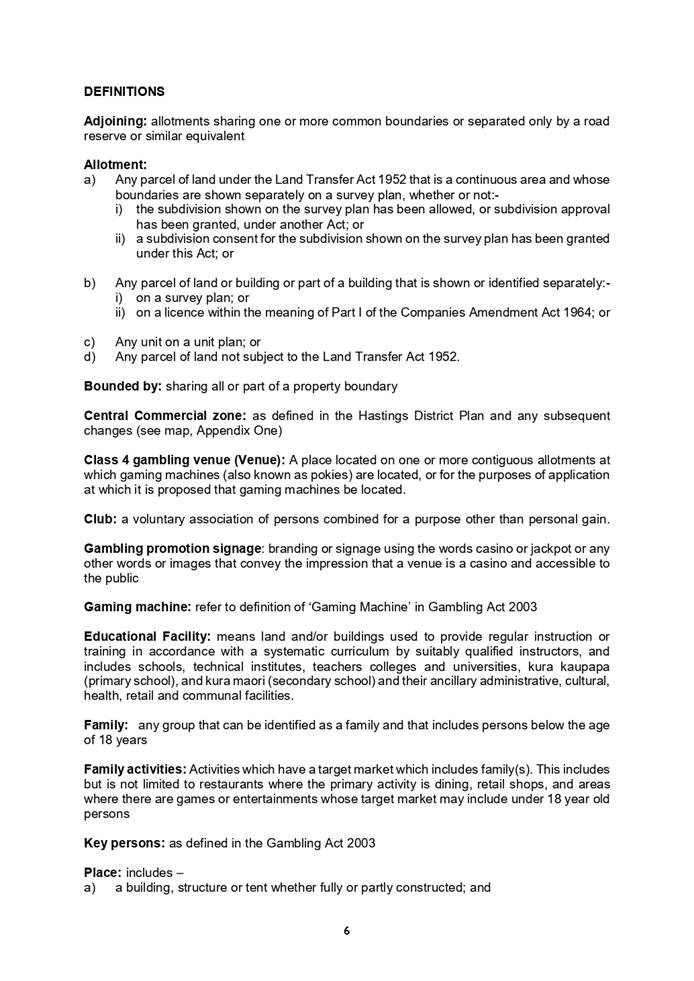
Clause 3 (point 3) “Objectives of the
Policy”.
· Remove
reference to city and replace with District.
Clause 4 (i and ii)“Establishment of
Class 4 Machines & Venues”
· Delete
reference to ‘cap’ and replace with Sinking lid.
· Delete (i) A
proposal to establish a new Class 4 gambling venue is not within the Central
Commercial zone, Havelock North Village Centre zone (as defined in the maps in
this policy)
· Delete
“The total number of gaming machines in the Hastings District exceeds
293” and replace with “No new venues or machines will be
permitted within the district”.
Clause
5 “Exceptions from Meeting Parts of the Policy”
· Delete 5.1
Venue Relocation
· Council may
grant consent under s 98(c) of the Act to a proposal to change the venue to
which a class 4 venue licence currently applies, provided that the relocation
of a venue to which a Class 4 Venue licence currently applies can only occur
within the Hastings Central Commercial or the Havelock North Village
Centre zones with the following exception:
· That the
existing venues at Stortford Lodge and Clive, can only relocate within the
Stortford Lodge and Clive zones as defined in the attached maps or within the
Hastings Central Commercial or Havelock North Village Centre zones.
· In
accordance with s 97A (2)(b) of the Act the maximum number of gaming machines
permitted to operate at the new venue at the time when the new class 4 venue
licence takes effect is the same as the maximum number of gaming machines
permitted to operate at the old venue immediately before the licence relating
to the old venue is cancelled.
Clause 6 (iii) “ Social impact
considerations when applying to all class 4 gambling venues under this policy”
· Delete
reference to “liquor” and replace with “alcohol”
Clause 7 (vii) Applications
· Remove
reference to liquor and replace with alcohol and add including
licence number.
Clause 8 (ii) “Hearing
considerations”
· Add social
impact considerations.
Clause 8 (vii)
“Hearing considerations”
· Delete as
the removal of the relocation policy is proposed “The extent to which
the relocated venue is giving effect to the sinking lid policy by resulting in
a lesser number of machines overall, and”
Clause 9 (ii)
“Application Fees”
· Include in
accordance with section 150 of the Local government act.
Table reference to
review date “Hastings District Council Class 4 Gambling Venue
Policy”.
· Replace Date
by which review must be completed and replace with review date.
TAB
Venue Policy
Clause 2 “Objective of the Policy”
· Include the
following “The number of TAB venues for the district is capped at
one”.
Clause 4(i) “Where TAB venues may be
established”
· Include
Hastings to Central commercial zone.
Table reference to
review date “Hastings District Council Class 4 Gambling Venue
Policy”.
· Replace Date
by which review must be completed and replace with review date.
2.5 Section
102(6) of the Gambling Act provides a policy does not cease to have effect just
because it is being reviewed. Therefore, the current policy remains in place
until a new policy is formally adopted.
3. WHAT IS THE PERCIEVED
PROBLEM?
3.1 These policies
provide criteria for processing consent applications for Class 4 Gambling and
TAB Venues in the Hastings District. Controls and standards are
prescribed as per the Gambling Act 2003 to help inhibit and diminish problem
gambling.
4. COUNCIL OBJECTIVES
4.1 The reviews of
the policies under the provisions of the Gambling Act 2003 (the Act) and
the Local Government Act 2002 are designed to ensure that Hastings District
Council’s policies continue to address identified problems and give
effect to the following Council Objectives:
· Building
safer communities.
· Develop
a safe and vibrant city heart in the Hastings CBD.
· Provide
resilient and adaptable social and recreational infrastructure and support
services.
5. OPTIONS FOR ADDRESSING THE
PROBLEM
5.1 The review of
Hastings District Council’s Class 4 Gambling Venue Policy and TAB Venue
Policy has resulted in a recommendation to change the May 2017 policy with
amendments. A sinking lid with no relocation policy is proposed. With the
exception for club mergers, the sinking lid will control class 4 gambling for
the district. A cap policy is proposed to limit the number of TAB venues
in the district. The cap will be set to one venue as this is the current number
of the TAB venue. Minor wording amendments are proposed to these existing
policies to provide consistency with the Gambling Act and to provide further
clarity and to simplify the existing wording.
5.2 The
following options have been identified for consideration in terms of a capped
versus sinking lid;
· Option
One:
New cap level of 278. This would be a reduction from 293 machines under the
current policy. This means that gaming machines in the Hastings District will
be maintained at the current level which would be at a ratio of 3.41 machines
per 1,000 residents (retain relocation policy).
· Option
Two:
Current Cap level of 293 machines, making 15 gaming machines available for
existing or new venues (retain relocation policy).
· Options
Three: Sinking lid no new machines or venues will be permitted
in the Hastings District. As machine are not utilised the number available
drops. Option 3 would also remove the relocation policy.
5.3 A
requirement of s 102(5A) of the Gambling Act is that Council consider whether
to include a relocation policy (as defined in section 101(5)) in its policy.
Section 101(5) defines a relocation policy as a policy setting out if and when
the territorial authority will grant consent in respect of a venue within its
district where the venue is intended to replace an existing venue (within the
district) to which a class 4 venue licence applies. The current policy includes
an exception from meeting parts of the policy if a venue is relocating, and
allowed a maximum of 9 gaming machines at the new location. The
amendments to the Gambling Act mean that the policy cannot provide how many
machines are allowed, but rather the Act provides that the same number of
machines can be operated at the new venue as the old venue.
6. ASSESSMENT OF
OPTIONS
6.1 The current Class 4
Gambling Venue Policy and TAB Venue policy were adopted in May 2017. The
proposed changes serve to update and amend these two policies to provide
further clarity of these policies and to ensure consistency with the current
Hastings gambling environment.
6.2 The 2017
review resulted in a change to the Hastings Class 4 Gambling Venue Policy from
a sinking lid to a cap on the number of gaming machines (293).
6.3 According
to the Department of Internal Affairs report on 29 July 2019 there are 17
venues operating gaming machines and 293 gaming machines may be operated (276
machines are currently being operated) in the District. In May 2016, the
Department of Internal Affairs recorded 19 venues and 287 (293 without the need
of terroritoral authority consent) gaming machines operating within the
Hastings District. This formed the basis for the current cap number of 293
machines for the district.
6.4 The
proposed sinking lid with no relocation policy on gambling machines is based on
a meeting held with the District Plan and Bylaws sub-committee where it was
discussed on the options available and best solution to control class 4
gambling in the district. It was concluded that the sinking lid with no
relocation policy was the best option as this provides for gambling but with
emphasis to reduce mahine numbers over time.
6.5 In
reaching this decision, the subcommittee noted the 2019 research undertaken by
the Department for Internal Affairs (DIA) which showed that Hastings players
were spending longer hours playing gaming machines, betting more per game and
more players were playing ‘pokie’ machines.
6.6 It was
noted that problem gambling disproportionately affected deprived and low income
families, of which a significant proportion in this district are
Māori. The subcommittee considered that the benefit from community
grants derived from gaming machine profits from non-club and club societies did
not outweigh the community harm from gambling particularly in our vulnerable
communities.
7. NEW ZEALAND BILL OF RIGHTS ACT 1990
7.1 The Council must determine
whether the proposed Class 4 Gambling and TAB Venue policies give rise to any
implications under the New Zealand Bill of Rights Act 1990 (BORA). Council’s
legal advice is that the restriction set out in the proposed Class 4 Gambling
and TAB Venue policies do not impose any unreasonable limitations on any
particular right set out in the BORA.
8.1 Submissions
As part of the special consultative
procedure required by the Local Government Act 2002, Council wishes to hear
from any person, group or business that would like to make a submission on the
proposed policies. Submissions may be lodged between 12 September and 11
October 2020.
Details
of the policies can be viewed at:
o The
Hastings District Council Lyndon Road East, Hastings.
o The
Hastings, Flaxmere and Havelock North Libraries
o The
Hastings District Council website: www.myvoicemychoice.co.nz
where you can make an online submission.
Submissions may be lodged to the following
address:
Class
4 Gambling and TAB Venue policies – Submissions
Hastings District Council
Private Bag 9002
Hastings
Attn:
Junior Tuakana
Please
ensure you include your contact details (name, phone, email, postal address),
and whether or not you wish to speak to the Council at the hearing.
For
further information contact Junior Tuakana:
Phone:
06 871 5000
Email: juniort@hdc.govt.nz
|
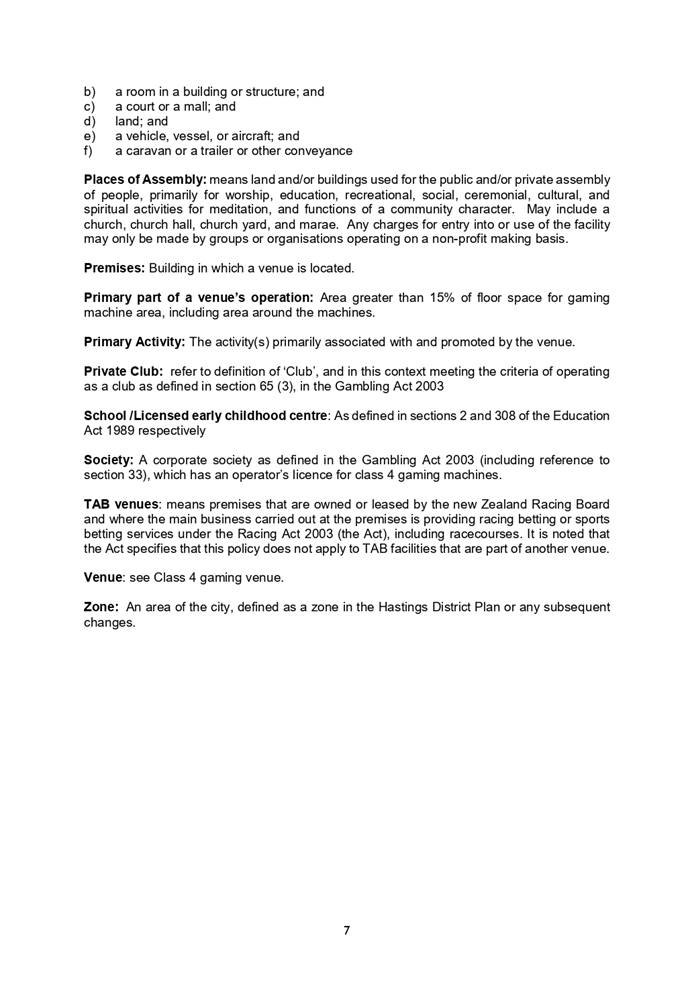
Class 4 Gambling Venue Policy
|
Attachment 2
|


|
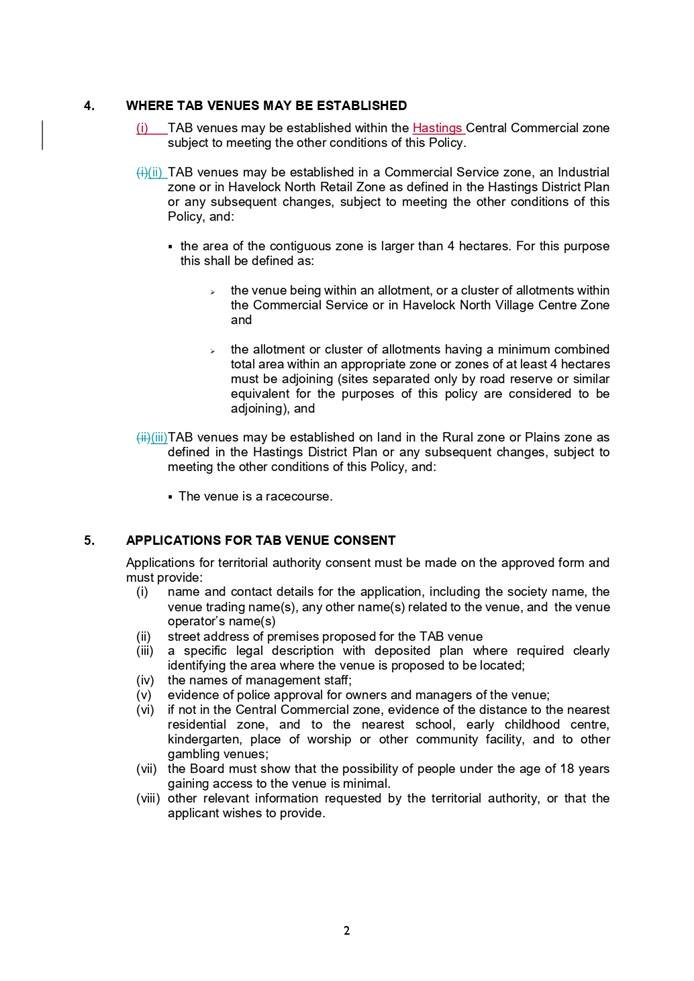
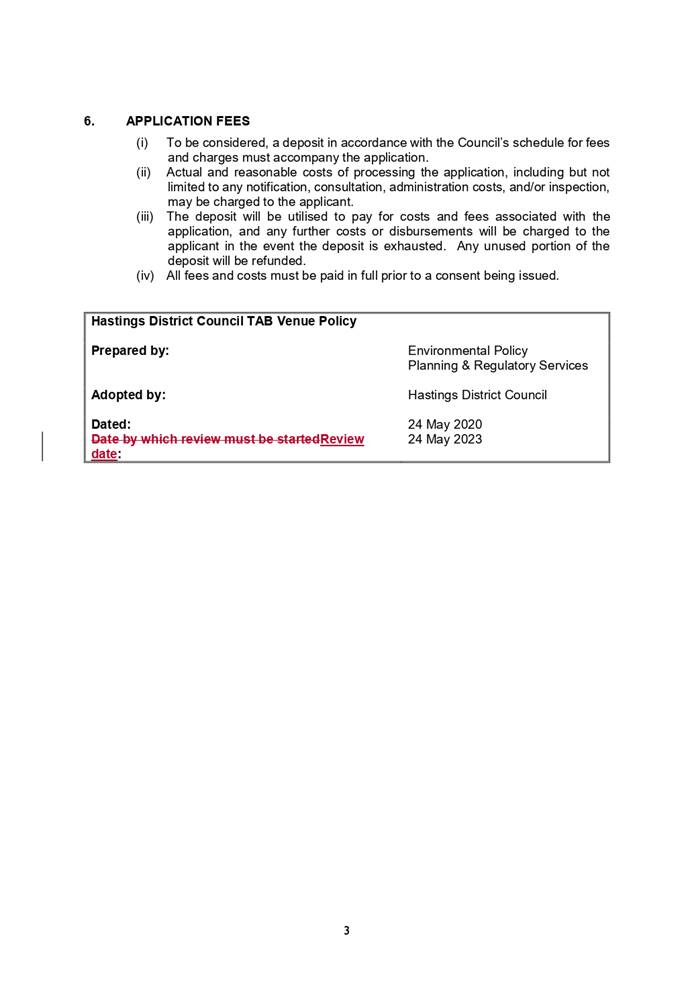
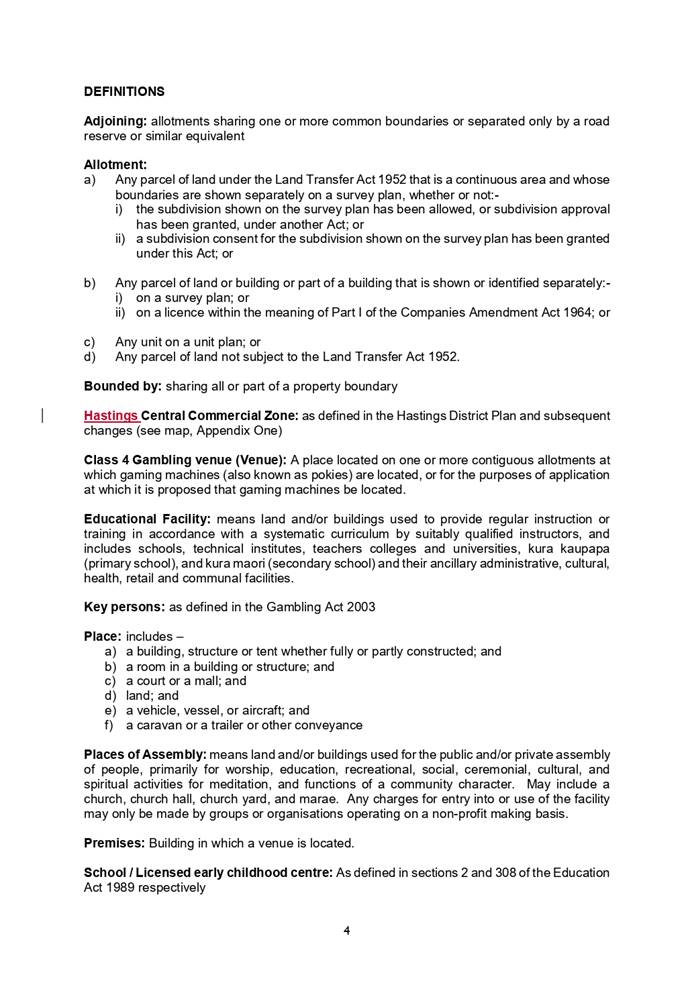
Tab Venue Policy
|
Attachment 3
|


|
Thursday, 3 September 2020
|
 Te Hui o Te Kaunihera ā-Rohe o Heretaunga
Hastings
District Council: Council Meeting
Te
Rārangi Take
Report to Council
|
Nā:
From:
|
Bruce Allan, Group
Manager: Corporate
|
|
Te Take:
Subject:
|
Hawkes Bay Community
Fitness Centre Trust Lease Amendment
|
1.0 Executive Summary – Te Kaupapa Me Te
Whakarāpopototanga
1.1 The
purpose of this report is to seek approval from Council to amend the lease
arrangements with the Hawke’s Bay Community Fitness Centre Trust (HBCFCT)
following the announcement that the Trust has received $32m from the Crown
Infrastructure Partners (CIP) shovel ready infrastructure fund for the
development of a 50 metre swimming pool.
1.2 The
lease requires amendment to accurately represent the area of land leased by the
Trust and to provide security over the tenure of the land to satisfy CIP
funding requirements.
1.3 The
amendment to this lease will also affect the lease arrangements with the
Hawke’s Bay Regional Sports Park Trust (HBRSPT).
1.4 The
leases with HBRSPT and HBCFCT both require Council approval prior to any
development works occurring on the land covered in this lease. This report also
seeks that approval for the HBCFCT to build the Indoor Aquatics Facility which
includes a 50m swimming pool, the northern extension to the existing Sports
Hall and the hostel. Note that any approval given at this time does not
pre-empt any regulatory decisions that may be required in the future.
1.5 This
report recommends that the lease adjustments required to provide the HBCFCT
with the land tenure it requires to secure the CIP funding is approved. The
report also recommends to Council that approval be given to HBCFCT to proceed
with a project to construct the proposed Indoor Aquatic Facility, the northern
extension to the Sports Hall and the hostel on the Regional Sports Park land.
1.6 Both
Trusts have indicated their general approval of the plans being put forward,
however some minor amendments may yet be required. It is recommended that the
Chief Executive be delegated authority to negotiate those minor amendments if
required.
|
2.0 Recommendations – Ngā Tūtohunga
A) That
the Council receives the report titled Hawkes Bay Community Fitness Centre
Trust Lease amendment.
B) That
the Council provide their approval of the development of an aquatic facility,
the northern extension of the main sports hall and the hostel to the
Hawke’s Bay Community Fitness Centre Trust.
C) That
Council amends the leases with the Hawke’s Bay Community Fitness Centre
Trust and the Hawke’s Bay Regional Sports Park Trust to accurately
reflect the areas each Trust occupies at the Regional Sports Park with the
following map to be incorporated.

D) That
the Chief Executive be given delegated authority to make any other minor
amendments to the leases, including the maps to enable this change to be
made.
|
3.0 Background – Te Horopaki
3.1 Council
amended the lease arrangements at the Hawke’s Bay Regional Sports Park
(now Mitre 10 Park) in February 2018 to recognise the new Hawke’s Bay
Community Fitness Centre Trust, acknowledging the area of the park that the new
Sports Hall was to be located, areas of common space and potential future
development areas.
3.2 The
current map included in the lease with the allocation of land between the
leases is as follows with the balance of land leased to the HBRSPT. A copy of
the current signed lease with HBCFCT is attached as Attachment 1.
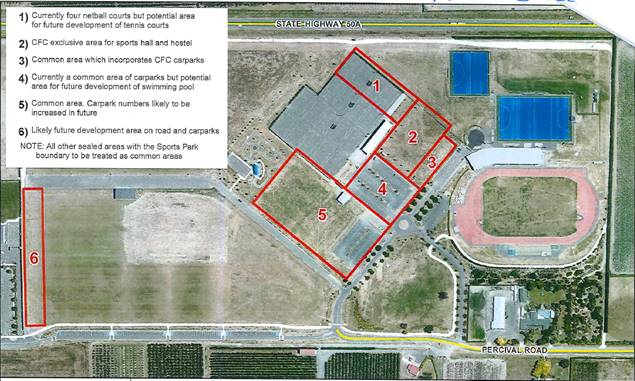
3.3 When
Council entered into the current lease arrangements there was an
acknowledgement that there could be future development and Area 4 on the above
plan identified a future development area for a swimming pool. The actual area
required for the aquatic facility is now more than was previously anticipated
and now encroaches into what was Area 5.
3.4 The
HBCFCT has been successful in attracting $32m of CIP funding and requires the
lease with Council to be amended to provide them with security of land tenure
to satisfy CIP requirements and secure the funding under contract.
3.5 The
actual location of the existing Sports Hall differs slightly to the lease
arrangements above and a correction to the lease boundaries between the two
trusts is also required to remedy that.
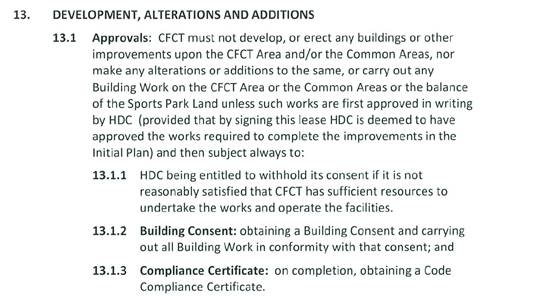
3.6 Under
the current lease arrangements, HBCFCT and HBRSPT require Council approval
prior to developing or erecting any buildings or other improvements upon the
land that they lease. Clause 13 which details this requirement is detailed
below. Note also that Council needs to satisfy itself that the HBCFCT has the
resources to not only deliver the capital project, but also operate the facility.
Council’s main interest in the operating space will be to ensure it has
sufficient comfort that HBCFCT can operate the facilities in a financially
sustainable manner. If Council is to grant approval at this stage for the
development to proceed, this does not obligate Council to any future
operational or capital contributions.
3.7 The
HBCFCT have requested that the lease boundaries be adjusted to accommodate the
Aquatic Facility, northern extension of the Sports Hall and the enlarged area
required for the hostel. The following plan is what has been submitted by
HBCFCT.
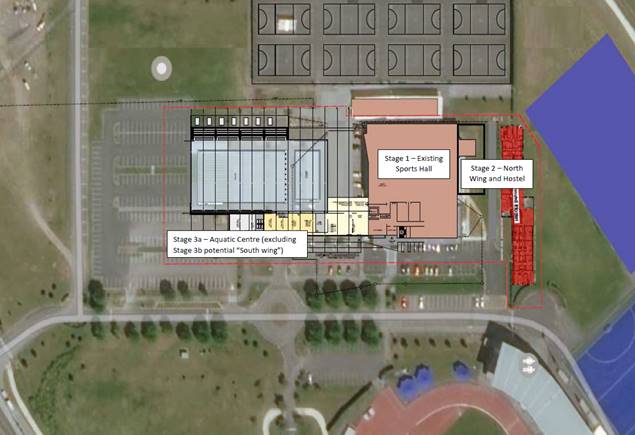
3.8 The
proposal put forward by HBCFCT does encroach on the existing car parking which
is at a premium during events and Saturday mornings. The HBRSPT have estimated
that approximately 150 carparks will be lost with this development and will be
replaced.
4.0 Discussion – Te Matapakitanga
4.1 The
HBRSPT have signalled their strong support for the aquatic and hostel
facilities and the necessary lease adjustments. Council has requested from both
the Trusts a strategic plan for future developments and this is currently being
scoped. However the outcome and recommendations from that strategic plan will
not be available to inform this decision in the timeframes required.
4.2 Lease
boundaries
4.3 Council
Officers have worked with both Trusts to ensure the new lease boundaries are in
the most appropriate place. It has been important that all developments planned
for the immediate future are recognised to understand how each will be
impacted, noting that this has been completed without the strategic plan
referenced above. The following plan sets out all those developments which
includes identifying suitable land for car parking and the HBRSPT’s plans
for the cricket and boxing facility. The plan also adjusts the requested HBCFCT
areas to reflect the actual space requirements for the new facilities, with
specific adjustments made to:
· The hostel area so
that it does not encroach on the turning circle by the Grandstand
· The southern end
of the Aquatic Facility is shortened so that it represents actual land
requirements.
4.4 Based
on the plans above and the original map in the lease documents the new map
proposed to be included in the lease are as follows. Both the HBCFCT and HBRSPT
have indicated their agreement to the new map.
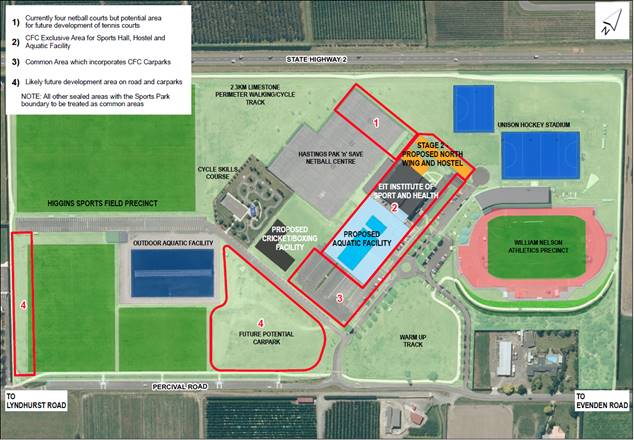
4.5 Approval
for development
4.6 HBCFCT
have received confirmation of $32m of funding from CIP for the delivery of the
Aquatics facility and $5m for the hostel from the PGF, ensuring that these two
facilities are fully funded. Progress continues for fundraising for the full
Northern extension of the Sports Hall however $3m has already been secured from
Lotteries/DIA for the extension of the courts and strength and conditioning gym
and that development will be undertaken concurrently with the hostel
construction phase. The remaining North-east admin and community gym extension
will then be pursued once those additional funds are raised. HBCFCT have a
track record of delivering projects on time and to budget with the completion
of the $19m Sports Hall in 2019.
4.7 The
requirement in the lease for Council to be satisfied that HBCFCT have
sufficient resources to deliver the facilities operationally, requires some
scrutiny with a comprehensive feasibility study undertaken on the aquatic
facility which presents a financial position that generates a small surplus in
year 1, increasing to an estimated surplus of $176,000 by year 3. If the
aquatics facility was to make a loss, it would encumbered on the HBCFCT to
either recover those losses from the balance of their operations, previously
accrued reserves or future years. There has been no approach to Council by
HBCFCT to meet any potential operational losses or underwrite its operations.
4.8 The
feasibility study has been undertaken by APR Consultants, experienced
specialists in strategic and environmental planning, business and economic
development and social and market research. The operational model included in
the feasibility study has been modelled off the AUT Millennium Institute of
Sport on the North Shore of Auckland and resized for the Hawke’s Bay
context.
4.9 While
the feasibility study presents an operationally sustainable facility for
HBCFCT, it does not consider the impact that this facility will have on
Council’s own network of aquatic facilities. While Sir Graeme Avery and
the HBCFCT have previously indicated that future stages of their development
could include an aquatic facility, it was not expected that the funding
required for such a facility would be available so soon, and as such, planning
and analysis of what the impact could be on Council’s own network of
aquatic facilities has not been undertaken.
4.10 An
Aquatics review undertaken in 2010 identified that an additional aquatic
facility would be required in the Hastings area, however this has not been
progressed.
4.11 Car
parking replacement
4.12 The
footprint of the new aquatics facility removes approximately 150 carparks from
circulation at the Sports Park which will be required to be replaced. HBCFCT
have confirmed that their development plans include replacement car parking
plus an increase in carparks provided to accommodate the increased use at the
Park due to the Aquatics facility.
4.13 There
is an opportunity to provide additional car parking facilities utilising a
stormwater detention area, however more work is required to understand if a
hard standing permeable surface could be used that didn’t compromise the
primary use of that area which is to act as a stormwater detention area and was
a use that was in line with current consents.
4.14 HBCFCT
have initiated a strategic review of the transport links within the Sports Park
including car parking which will help inform any future solutions. Car parking
requirements will also feature in the scope that is being prepared for the
strategic review that both Trusts will be undertaking.
5.0 Options – Ngā Kōwhiringa
Option One - Recommended Option -
Te Kōwhiringa Tuatahi – Te Kōwhiringa Tūtohunga
5.1 Agree
to the HBCFCT development and construction of the northern extension of the
Sports Hall, the development of the Aquatics facility and the hostel and to the
changes in the areas leased by the HBCFCT and the HBRSPT required to enable
these developments.
Advantages
· The
HBCFCT have had unprecedented success in raising funds for the delivery of the
capital build for the aquatic facility, extension to the Sports Hall and the
hostel. Previous aquatic strategy reviews for Hastings aquatics facilities have
identified the need for additional aquatics facilities and this opportunity
provides that outcome at no cost to Council and at this stage the feasibility
study indicates that there is no additional operational cost to Council.
Disadvantages
· The
impact of the Aquatics Facility on Council’s network of pools is
currently unknown and approving this development at the Sports Park without
this knowledge could have quite a detrimental effect on Council’s
facilities including reduced operating revenue opportunities and therefore
increased ratepayer contributions to meet the costs of those facilities. This
facility will however be meeting a regional need for a 50 m swimming pool and
the timing of its delivery will allow Council time to develop alternative
delivery models and services at Council pools.
Option Two – Status Quo - Te Kōwhiringa Tuarua – Te
Āhuatanga o nāianei
5.2 Decline
approval for the construction of the Aquatics facility and request officers to
undertake a strategic review of Council’s aquatic facilities to
understand the implications on its own network if this new facility was to be
built.
· Declining
approval for the construction of the aquatics facility removes some of the
immediate need for the leases to be adjusted. There will still be some
requirement to provide approvals to the HBCFCT for the development of the
extension to the Sports Hall and the hostel.
· Declining
approval does however put at risk the $32m secured for the Aquatics facility
and this option is not recommended.
6.0 Next steps – Te Anga Whakamua
6.1 Providing
Council provides approval to these developments and for the leases to be
amended accordingly, the next steps will be to formally advise the Trusts of
this decision and engage Council solicitors to amend the leases as directed.
Attachments:
|
1⇩
|
HDC - HBCFCT Deed of Lease
|
EXT-10-10-20-15
|
|
|
Summary of
Considerations - He Whakarāpopoto Whakaarohanga
|
|
Fit
with purpose of Local Government - E noho hāngai pū ai ki te
Rangatōpū-ā-Rohe
The Council is required to give effect to the purpose of
local government as set out in section 10 of the Local Government Act 2002.
That purpose is to enable democratic local decision-making and action by (and
on behalf of) communities, and to promote the social, economic,
environmental, and cultural wellbeing of communities in the present and for
the future.
Link to the Council’s
Community Outcomes –
Ngā Hononga ki Ngā Putanga ā-Hapori
This proposal promotes the social and
economic wellbeings of communities in the present and for the future.
|
|
Māori
Impact Statement -
Te Tauākī Kaupapa Māori
There are a number of wider health and
wellbeing benefits that will flow from the investments being made by the
HBCFCT that will also benefit local Hapu and Iwi. The author has spoken with
Pou Ahurea Matua to understand the benefits and look for further
opportunities into the future.
|
|
Sustainability
- Te
Toitūtanga
N/A
|
|
Financial
considerations -
Ngā Whakaarohanga Ahumoni
At this stage there are no financial
considerations for Council in regard to the build of these complexes at the Sports
Park. There is however the unknown effect of the new Aquatic Facility on
Council’s own network of swimming pools.
|
|
Significance
and Engagement -
Te Hiranga me te Tūhonotanga
This decision has been assessed under the Council's
Significance and Engagement Policy as being of low significance.
|
|
Consultation
– internal and/or external - Whakawhiti Whakaaro-ā-roto / ā-waho
There has been consultation with the two
Trusts affected but no consultation with the wider community.
|
|
Risks
There is a risk to Council that if the facilities are not
able to be operated as expected, there may be future call on Council finances
to assist with the operations of these facilities, in particular the Aquatics
Facility.
There is also a risk that the Aquatics Facility will materially
affect the existing swimming pool network provided by Council, affecting
income and the amount of rates income required to subsidise these facilities.
Opportunities
– this proposal from HBCFCT creates huge opportunities for Council, the
District and the Region. An aquatic facility of this nature being built in
the Hastings District without any ratepayer funding is unprecedented and will
create opportunities for a large number of improved health and wellbeing
outcomes plus economic outcomes with the ability to host significant national
and regional events.
|
|
Rural
Community Board –
Te Poari Tuawhenua-ā-Hapori
N/A
|
|
HDC -
HBCFCT Deed of Lease
|
Attachment 1
|


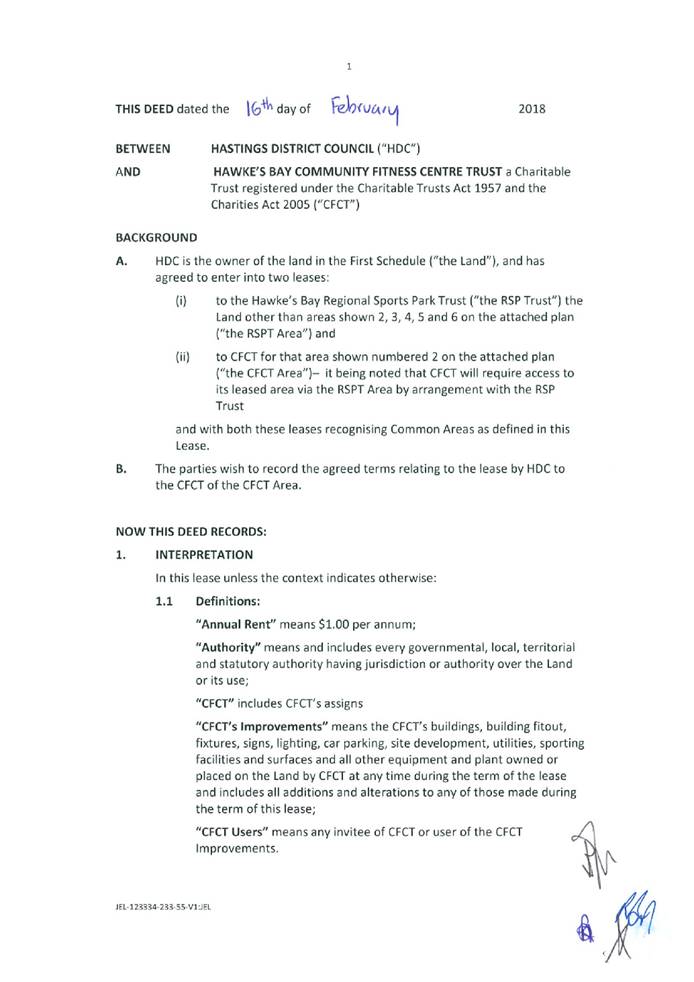


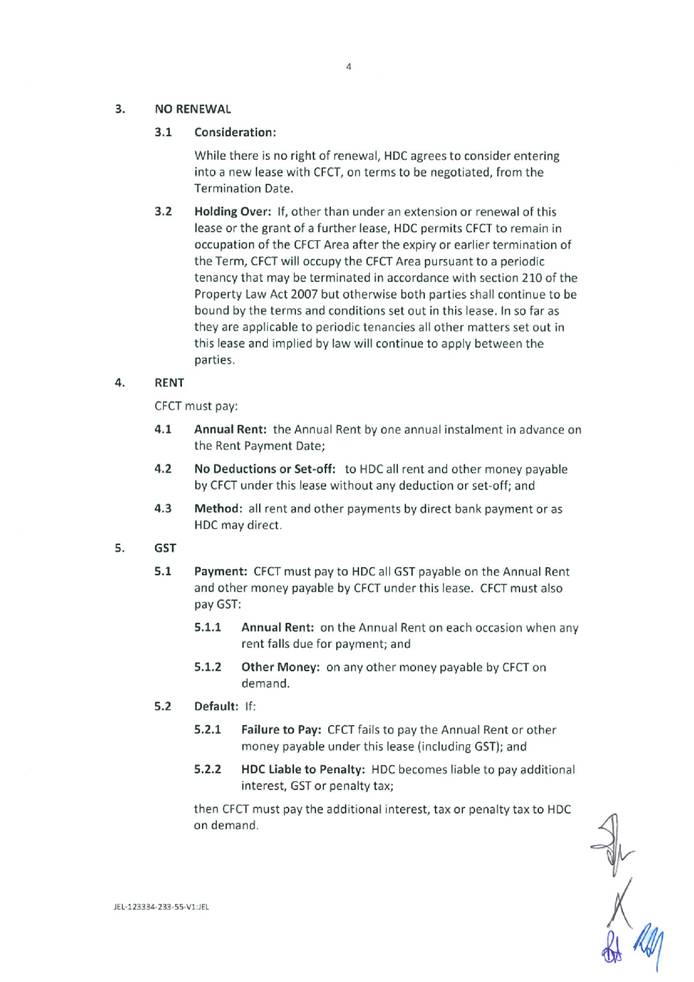
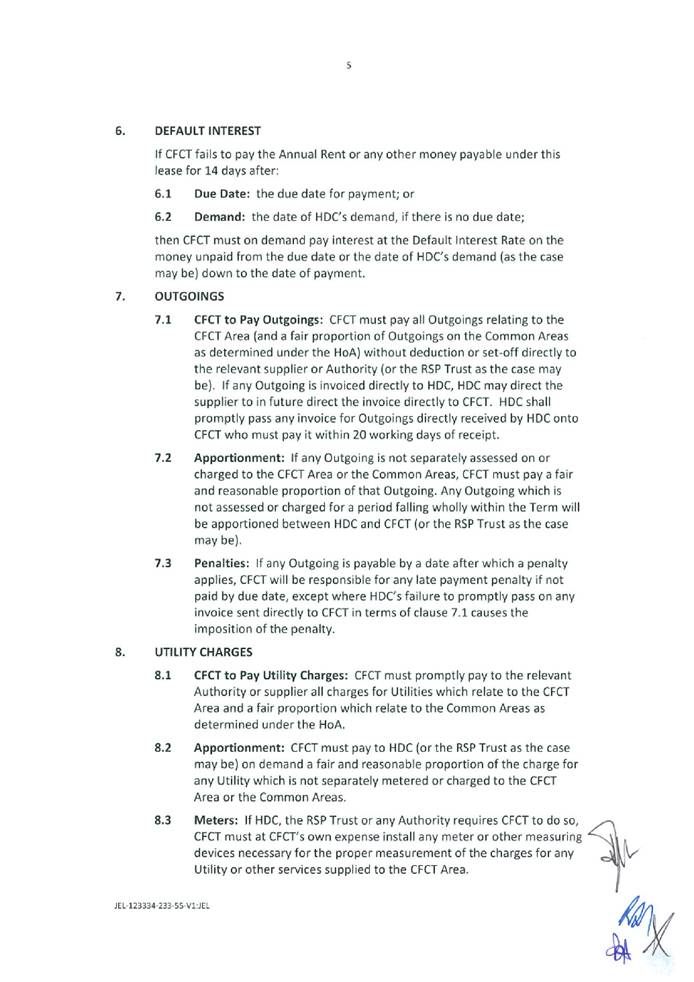
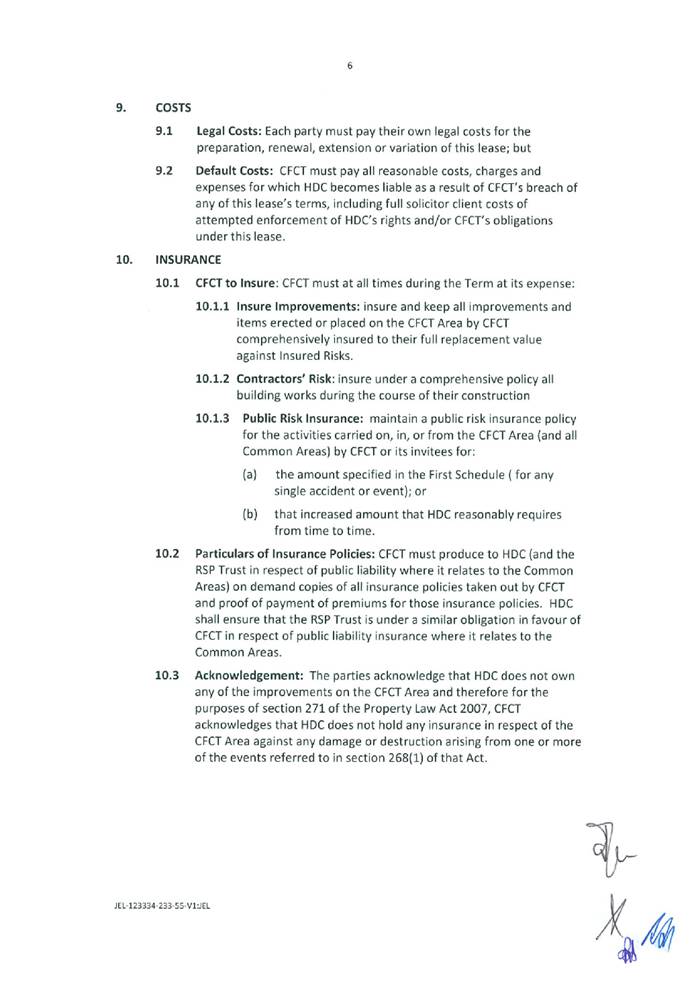
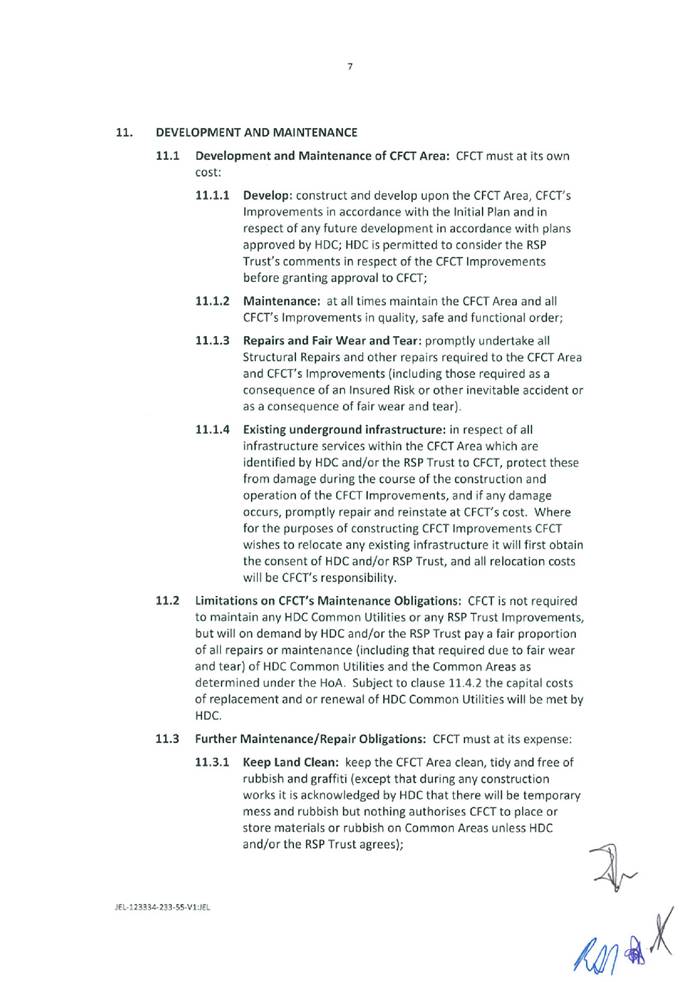
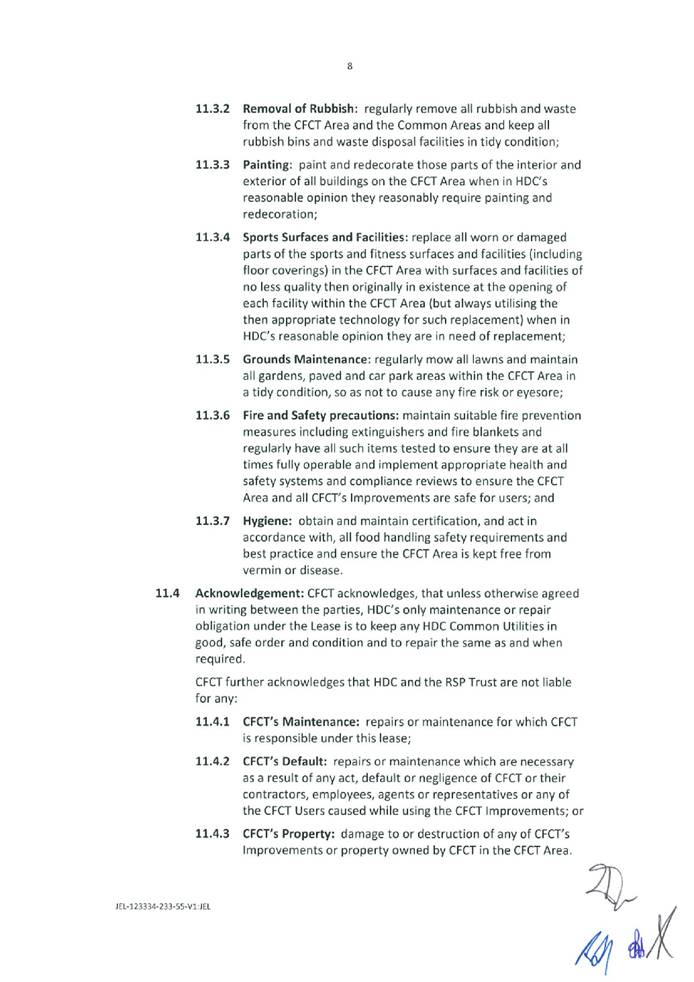
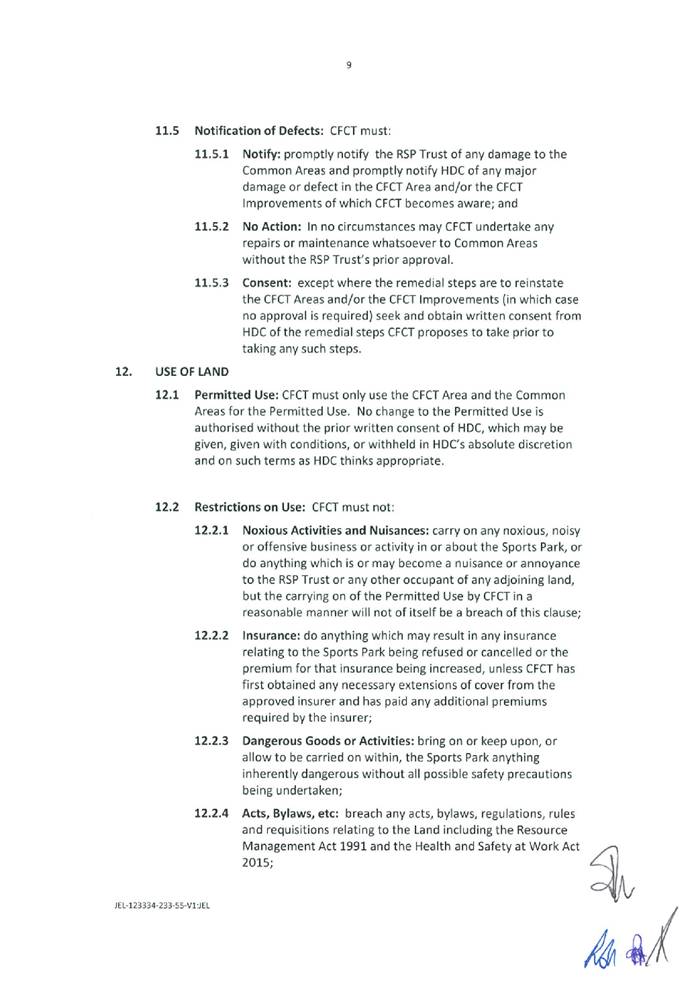
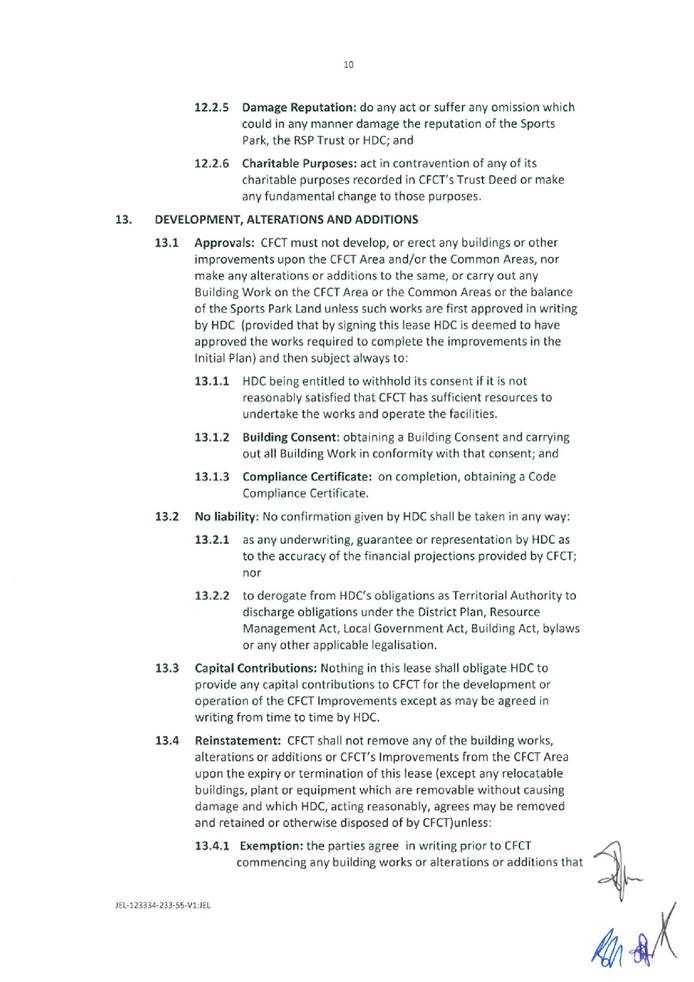
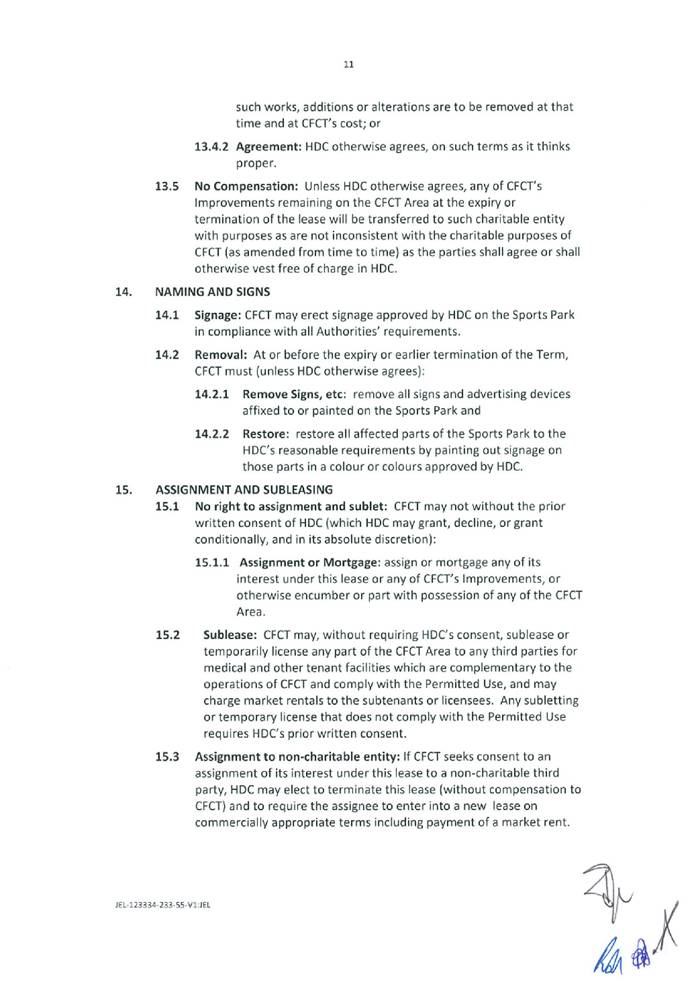
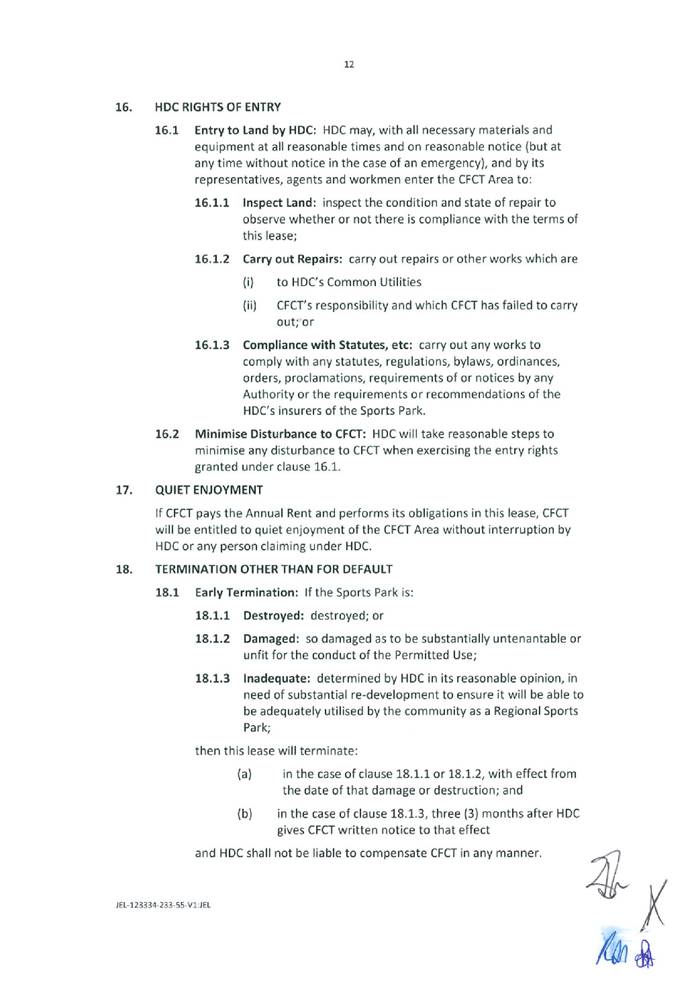


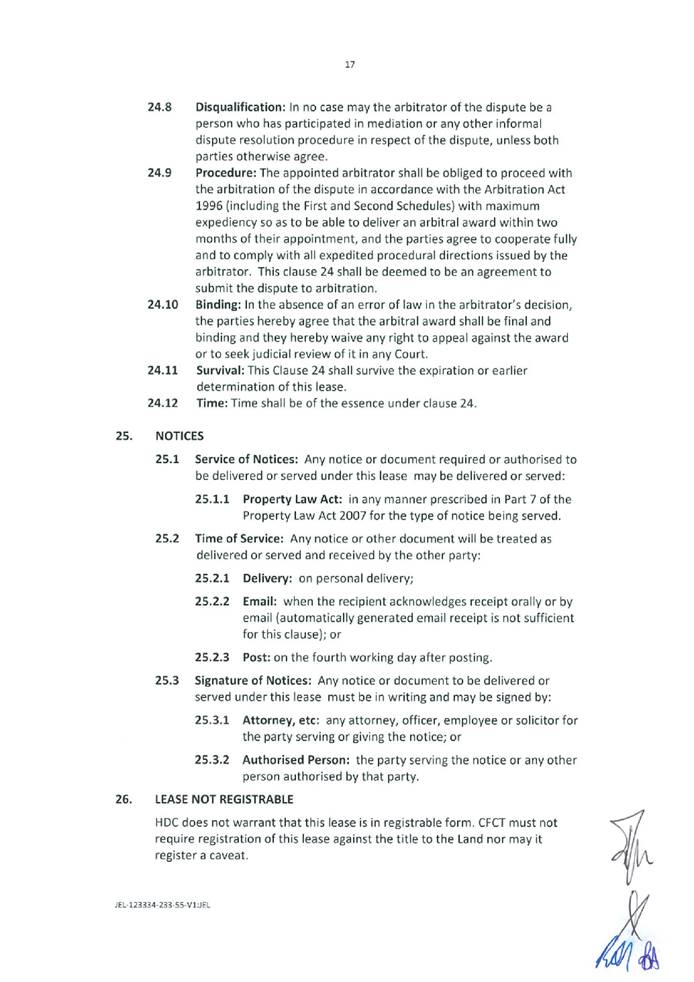
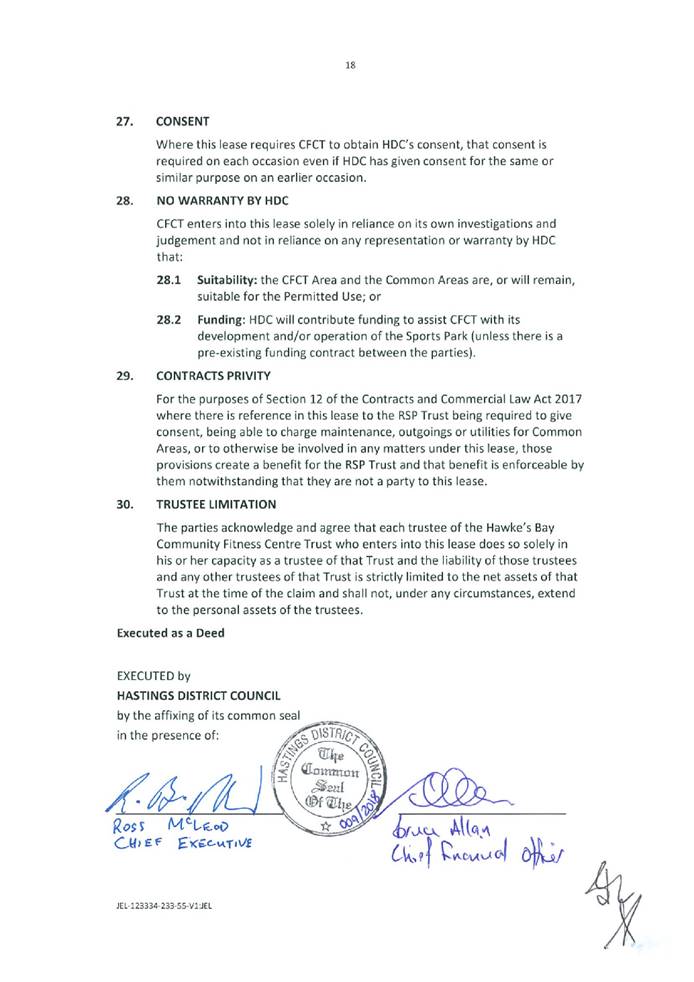



|
Thursday, 3 September 2020
|
 Te Hui o Te Kaunihera ā-Rohe o Heretaunga
Hastings
District Council: Council Meeting
Te
Rārangi Take
Report to Council
|
Nā:
From:
|
Mel England, Parking Transportation Officer
|
|
Te Take:
Subject:
|
Parking Controls
|
1.0 Executive Summary – Te Kaupapa Me Te
Whakarāpopototanga
1.1 The
purpose of this report is to obtain a decision from Council on changes to
parking controls on Cunningham Crescent, Frederick Street West, Frimley Road,
Hastings Street South, Campbell Street, Northern Carpark, Omahu Road, Orchard
Road, Queen Street East, Warren Street South Leased Carpark and Loading zones
in the Hastings CBD.
1.2 This
report contributes to the purpose of local government by primarily promoting economic
wellbeing and more specifically through Council’s strategic objectives
of:
· Reducing public nuisance and threats to public health and safety
· Moving people and goods around safely and efficiently
1.3 This
proposal arises from a number of requests for new parking controls in and
around Hastings and concludes by recommending a number of changes in parking
control and time limits.
1.4 A summary
of the proposed changes is as follows:
|
ROAD
|
EXISTING CONTROLS
TO BE REMOVED
|
PROPOSED CONTROLS
|
|
Cunningham Crescent
|
2 bus stops
|
1 bus stop (centralised)
|
|
Frederick Street West
|
None
|
School Drop Off and Pick up Zone
|
|
Frimley Road
|
P5 parking spaces
|
School Drop Off and Pick up Zone
|
|
Hastings CBD Loading Zones
|
Loading Zone 5min Maximum Goods Vehicles
Only
|
P5 Loading Zones
|
|
Hastings Street South
|
None
|
School bus stop
|
|
Campbell Street
|
P5 parking spaces
|
School Drop Off and Pick up Zone
|
|
Northern Carpark
|
None
|
Electric Vehicle Park
|
|
Omahu Road
|
None
|
No Parking lines
|
|
Orchard Road
|
Incorrect school drop off times
|
Correct school drop off times
|
|
Queen Street East
|
None
|
P5 Loading Zone
|
|
Warren Street South Leased Carpark
|
None
|
No Parking 5.30pm to 7.30am on weekdays.
No parking at all times on weekends
|
1.5 Amendments
to Bylaws require a resolution of Council.
|
2.0 Recommendations – Ngā Tūtohunga
A)
That the Council receives the report titled Error!
No document variable supplied..
B)
That Council resolve pursuant to Clause 5.3.1(a)(iv)
of Chapter 5 (Parking and Traffic) of the Hastings District Council
Consolidated Bylaw 2016, that the existing bus stop located outside of 1112
Cunningham Crescent be revoked.
C)
That Council resolve pursuant to Clause 5.3.1(a)(iv)
of Chapter 5 (Parking and Traffic) of the Hastings District Council Consolidated
Bylaw 2016, that the existing bus stop located outside of 1218 Cunningham
Crescent be revoked.
D)
That Council resolve pursuant to Clause 5.3.1(a)(iv)
of Chapter 5 (Parking and Traffic) of the Hastings District Council
Consolidated Bylaw 2016, that a bus stop be established on the western side of
Cunningham Crescent commencing 14 metres south of 1202 Cunningham Crescent
and extending 20 metres south.
E)
That Council resolve pursuant to Clause 5.3.1(a)(i)
of Chapter 5 (Parking and Traffic) of the Hastings District Council
Consolidated Bylaw 2016, that the existing spaces on the northern side of
Frederick Street West commencing 17 metres east of the intersecting line with
Konini Street and extending 27 metres east become a Drop Off and Pick up
Zone. The times being 8-15am to 9am and 2–30pm to 3–15pm School
Days Only.
F)
That Council resolve pursuant to Clause 5.3.1(a)(i)
of Chapter 5 (Parking and Traffic) of the Hastings District Council
Consolidated Bylaw 2016, that the existing spaces on the southern side of
Frederick Street West commencing 77 metres west of the intersecting line with
Waipuna Street and extending 60 metres west become a Drop Off and Pick up
Zone. The times being 8-15am to 9am and 2–30pm to 3–15pm School
Days Only.
G)
That Council resolve pursuant to Clause 5.3.1(a) of
Chapter 5 (Parking and Traffic) of the Hastings District Council Consolidated
Bylaw 2016, that the existing P5 time limits located on Frimley Road outside
of Frimley Primary School be revoked.
H)
That Council resolve pursuant to Clause 5.3.1(a)(i)
of Chapter 5 (Parking and Traffic) of the Hastings District Council
Consolidated Bylaw 2016, that the existing spaces on the southern side of
Frimley Road commencing 65 metres west of the intersecting line with Pakowhai
Road and heading 85 metres in a westerly direction be amended to became a
Drop Off and Pick up Zone. The times being 8am to 9am and 2–30pm to
3–30pm School Days Only.
I)
That Council resolve pursuant to Clause 5.3.1(a) of
Chapter 5 (Parking and Traffic) of the Hastings District Council Consolidated
Bylaw 2016, that the existing Loading Zone 5min Maximum Goods Vehicles Only
located in the Hastings CBD area be revoked.
J)
That Council resolve pursuant to Clause 5.3.1(a)(i)
of Chapter 5 (Parking and Traffic) of the Hastings District Council
Consolidated Bylaw 2016, that the previously revoked areas in (I)
become P5 Loading Zones.
K)
That Council resolve pursuant to Clause 5.3.1(a)(iv)
of Chapter 5 (Parking and Traffic) of the Hastings District Council
Consolidated Bylaw 2016, that a time limited bus stop be established on the
western side of Hastings Street South commencing 72 metres south of Akina
Street and extending 15 metres south. The times being 8:00am to 8:20am, and
2:50pm to 3:15pm School Days Only.
L)
That Council resolve pursuant to Clause 5.3.1(a) of
Chapter 5 (Parking and Traffic) of the Hastings District Council Consolidated
Bylaw 2016, that the existing P5 time limits located on Campbell Street
outside of Havelock North Primary School be revoked.
M)
That Council resolve pursuant to Clause 5.3.1(a)(i)
of Chapter 5 (Parking and Traffic) of the Hastings District Council
Consolidated Bylaw 2016, that the existing spaces on the eastern side of
Campbell Street commencing 36 metres south of the intersecting line with
Busby Hill and heading 37 metres in a southerly direction be amended to
became a Drop Off and Pick up Zone. The times being 8am to 9am and
2–30pm to 3–30pm School Days Only.
N)
That Council resolve pursuant to Clause 5.3.1(a)(iv)
of Chapter 5 (Parking and Traffic) of the Hastings District Council
Consolidated Bylaw 2016, that another Electric Vehicle (EV) car park be
established next to the existing EV park in the Northern Carpark as shown in
section 4.7 of this report.
O)
That Council resolve pursuant to Clause 5.3.1(a)(i)
of Chapter 5 (Parking and Traffic) of the Hastings District Council
Consolidated Bylaw 2016, revoke two parking spaces outside of Caltex Petrol
Station on Omahu road, located 130 metres west of Wilson road and extending
12 metres.
P)
That Council resolve pursuant to Clause 5.3.1(a)(i)
of Chapter 5 (Parking and Traffic) of the Hastings District Council
Consolidated Bylaw 2016, that the P5 time limited signs on the northern side
of Orchard Road be changed from 8-30 – 9-30am to 8am – 9am.
Q)
That Council resolve pursuant to Clause 5.3.1(a)(i)
of Chapter 5 (Parking and Traffic) of the Hastings District Council
Consolidated Bylaw 2016, that a P5 Loading Zone be established on the
northern side of Queen Street East commencing 48 metres east from the
intersecting line with Russell Street North and extending 12 metres east.
R)
That Council resolve pursuant to Clause 5.3.1(a)(i)
of Chapter 5 (Parking and Traffic) of the Hastings District Council
Consolidated Bylaw 2016, that all vehicles are restricted from parking in the
Warren Street South Leased Carpark from the hours of 5.30pm to 7.30am Monday
to Friday, and at all time on weekends.
|
3.0 Background – Te Horopaki
3.1 From time
to time it is necessary to introduce parking controls and or amend those that
are already in place.
3.2 In order
that the changes are legally established and enforceable, a formal resolution
by Council is required.
3.3 The
following information provides the background and current situation relevant to
the changes being proposed.
4.0 Discussion – Te Matapakitanga
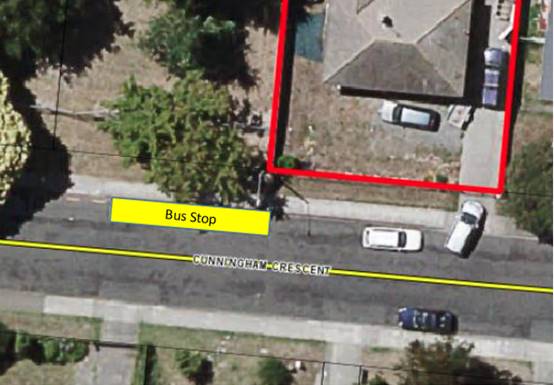
4.1 Cunningham
Crescent – Bus stop
Kainga Ora are developing a
residential property behind numbers 1112 and 1218 Cunningham Crescent, for this
project to succeed the existing bus stops need to be moved as the proposed
vehicle entrance is in the middle of the bus stop. The proposal is to remove
both bus stops and install a new bus stop near Bill Matthewson Park.
Initially residents were consulted on
the original proposed site at 1116 Cunningham Crescent, but they refused to
have the bus stop located outside their properties. An alternative site was
found in Cunningham Crescent where this would not affect households.
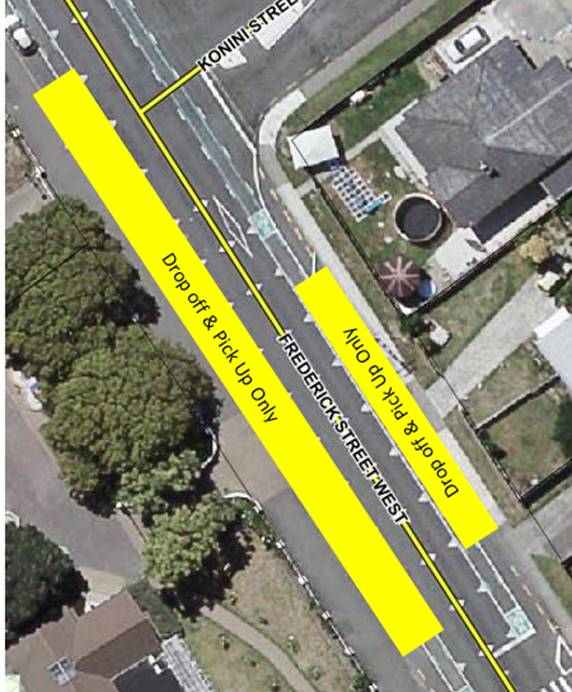
4.2 Frederick
Street West - Mahora School – Drop off and Pick up area
Mahora School approached Hastings
District Council to investigate installing Drop off and Pick up only areas.
Presently the school have no time
limited parking and have trialled drop off and pick up signs with really good
success.
Although limited consultation was
carried out as this is only able to be done at certain times during the school
week, parents have been very receptive to the parking and is working well.
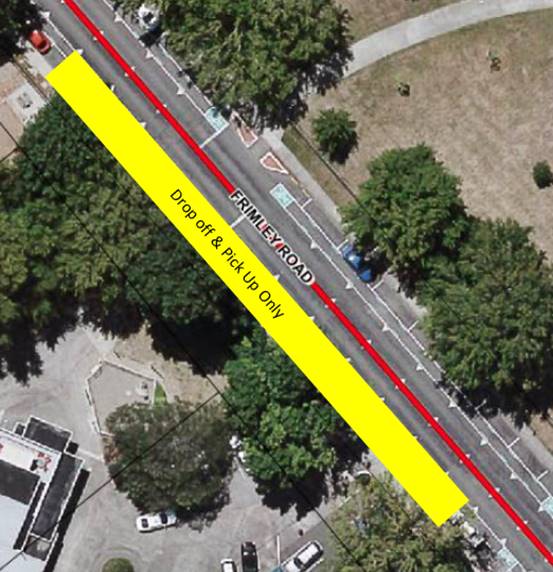
4.3 Frimley
Road - Frimley School – Drop off and Pick up area
Frimley School approached Hastings
District Council to investigate installing Drop off and Pick up only areas.
Presently the school have P5 parking
spaces, but people are staying in these longer than the allocated time. In
response the school has placed their own sign boards out on the footpath
encouraging parents to drop off and move on.
Although limited consultation was
carried out as this is only able to be done at certain times during the school
week, parents have been very receptive to the parking and is working well.
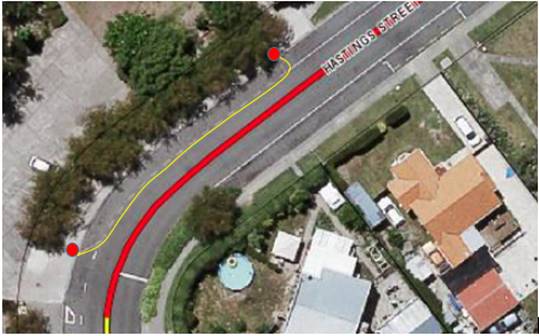
4.4 Hastings
CBD – Loading Zone Sign Changes
Hastings CBD has various types of
loading zones which can and has led to confusion when non-commercial vehicles
are dropping off goods. This has resulted in residents getting ticketed.
Having one type of Loading Zone across
the CBD will result in less confusion, allow non-commercial vehicles to use
loading zones, especially when unloading goods outside of charity shops.
Currently there are 6 Loading Zone 5min Maximum Goods Vehicles Only areas in the CBD.
Hastings District
Council Parking Wardens brought to light the issue of the confusing Loading
Zone Signs and are in favour of having a consistent approach to the loading
zones across the CBD.
4.5 Hastings
Street South – Bus stop
Hastings Intermediate School
approached Hastings District Council to install a school bus stop outside of
the school. This will allow for the safe pick up of students.
The bus stop will have a time limit on
School Days Only - 8:00am -8:20am and 2:50pm - 3:15pm.
Limited consultation was carried out,
as the proposed area is outside the school and affects no households.
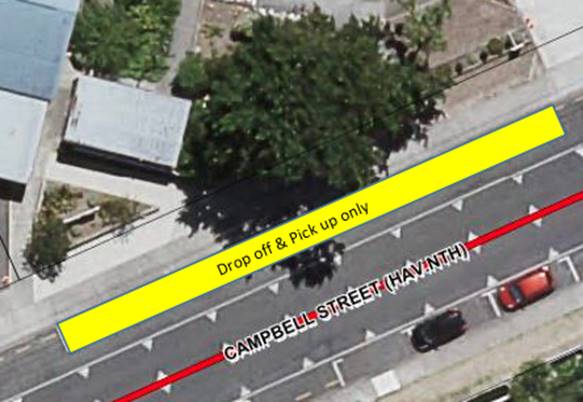
4.6 Havelock
North Primary School – Drop off and Pick up area
Havelock North School approached
Hastings District Council to investigate installing Drop off and Pick up only
areas.
Presently the school have P5 parking
spaces, but people are staying in these longer than the allocated time. In
response the school has placed their own sign boards out on the footpath
encouraging parents to drop off and move on.
Although limited consultation was
carried out as this is only able to be done at certain times during the school
week, parents have been very receptive to the parking and is working well.
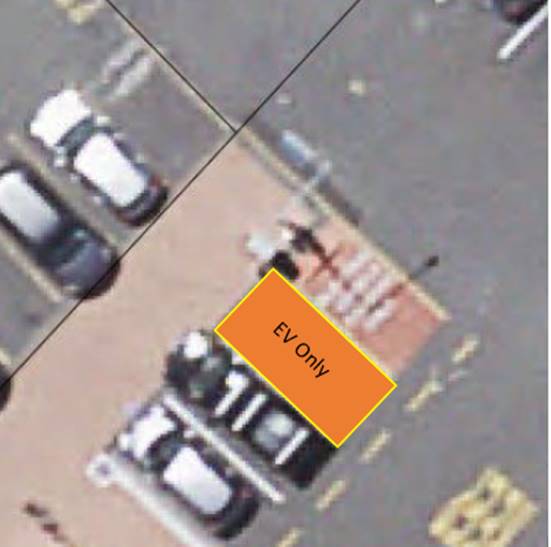
4.7 Northern
Carpark – Electric Vehicle Park
Electric Vehicle owners approached
Hastings District Council to provide an extra EV park, at present there is only
one park.
The EV machine allows for up to two
vehicles to charge at once. There have been more and more instances of EV
vehicles waiting to charge while another is charging.
EV usage has grown and is expected to
grow over the next few years.
This request came from the EV users in
the CBD. Parking officers agree with this proposed change.
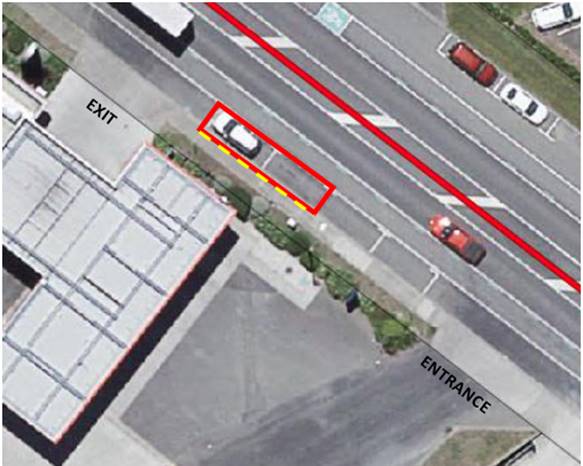
4.8 Omahu
Road – Carpark Removal
Officers were requested to investigate
the removal of two carparks due to safety concerns.
When trucks park in the carparks they
block the view of vehicles exiting the petrol station, removing 2 carparks
nearest to the exit will improve visibility when exiting the petrol station.
Hastings District Council Traffic
Engineering Officer was consulted on the accidents in the last 10 years in the
area and agreed about the safety concerns raise.
In consultation with the Caltex owners
there was agreement to remove 2 carparks closet to the main exit to improve
visibility.
4.9 Orchard
Road – P5 Restrictions
The School drop off zone signs on the
northern side of Orchard Road, opposite Heretaunga Intermediate does not match
the sign on the southern side and need to be changed for consistency.
This was previously consulted on
however the signage does not match the original proposal.
4.10 Queen
Street East – P5 Loading Zone
OM Bakery have approached Hastings
District Council to install a loading zone in the area as they have delivery
trucks that are parking on the no stopping lines which is causing visibility
issues for traffic.
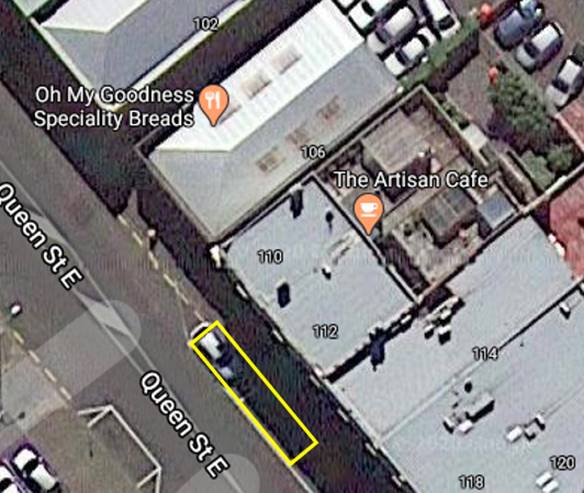
Businesses in the immediate area were
consulted and agreed on the proposed changes and welcome the idea of a P5
loading zone in the area. Parking Officers agree with the proposed change.
4.11 Warren
Street South – Leased Carpark Time Restriction
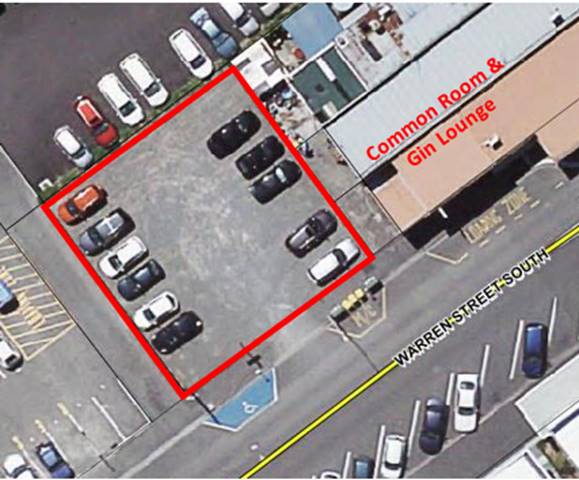
Council resolved earlier this year to
transform the Warren Street carpark into a multi-use space – leased
carpark by day, and outdoor dining and event space after hours and
weekends. There will be 13 carparking spaces in the new carpark: 7
on the northern side and 6 on the southern side. Gin Distillery and
Common Room have agreed to lease all 7 on the northern side.
To allow for this outdoor dining and
event space to operate, parking will be restricted between 5.30pm and 7.30am on
weekdays and at all times on weekends.
During the hours of 7.30am to 5.30pm
on weekdays the carpark will be available for leaseholders.
Consultation was undertaken with
existing leaseholders and hospitality management and an agreement was made on a
suitable arrangement.
5.0 Options – Ngā Kōwhiringa
Option One - Recommended Option -
Te Kōwhiringa Tuatahi – Te Kōwhiringa Tūtohunga
5.1 To
change the Parking Bylaws to allow the parking arrangements as outlined at the
sites in section 4.
Option Two – Status Quo - Te Kōwhiringa Tuarua – Te
Āhuatanga o nāianei
5.2 To
continue current arrangements.
6.0 Next steps – Te Anga Whakamua
If the changes are
approved, changes will occur to the parking as set out above.
Attachments:
There are no attachments for this report.
|
Summary of
Considerations - He Whakarāpopoto Whakaarohanga
|
|
Fit
with purpose of Local Government - E noho hāngai pū ai ki te
Rangatōpū-ā-Rohe
The Council is required to give effect to the purpose of
local government as set out in section 10 of the Local Government Act 2002.
That purpose is to enable democratic local decision-making and action by (and
on behalf of) communities, and to promote the social, economic,
environmental, and cultural wellbeing of communities in the present and for
the future.
|
|
Link to the Council’s Community Outcomes – Ngā Hononga ki Ngā Putanga
ā-Hapori
· Reducing
public nuisance and threats to public health and safety
· Moving
people and goods around safely and efficiently
|
|
Māori
Impact Statement -
Te Tauākī Kaupapa Māori
N/A
|
|
Sustainability
- Te
Toitūtanga
N/A
|
|
Financial
considerations -
Ngā Whakaarohanga Ahumoni
N/A
|
|
Significance
and Engagement -
Te Hiranga me te Tūhonotanga
This decision does not trigger the threshold of the
Significance and Engagement Policy.
|
|
Consultation
– internal and/or external - Whakawhiti Whakaaro-ā-roto / ā-waho
Details of the consultation for each
proposal is included in the discussion.
|
|
Risks:
Legal - Ngā
Tūraru: Ngā Ture
N/A
|
|
Rural
Community Board –
Te Poari Tuawhenua-ā-Hapori
N/A
|
Hastings
District Council: Council Meeting
Te Rārangi Take
Report to Council
|
Nā:
From:
|
Dr James Graham, Pou
Ahurea Matua - Principal Advisor: Relationships Responsiveness and Heritage
|
|
Te Take:
Subject:
|
Summary of
Recommendations from Heretaunga Takoto Noa Māori Standing Committee 5
August 2020
|
1.0 Executive Summary
– Te Kaupapa Me Te
Whakarāpopototanga
1.1 The
purpose of this report is to advise Council that one of the recommendations
from the Heretaunga Takoto Noa Māori Standing Committee held on 05 August
2020 requires ratification by Council.
1.2 The
relevant Heretaunga Takoto Noa Māori Standing Committee recommendation to
be ratified is set out below.
|
2.0 Recommendations – Ngā Tūtohunga
A) That the report of the Pou Ahurea Matua - Principal Advisor:
Relationships Responsiveness and Heritage titled “Summary of
Recommendations from Heretaunga Takoto Noa Māori Standing Committee 5
August 2020” be received.
B) The following recommendation of the meeting held 5
August 2020 be ratified:
· That the Council
ratify the Heretaunga Ararau Te Reo Māori Action Plan for adoption and
implementation.
|
3.0 Background – Te Horopaki
3.1 On
11 September 2019, the Hastings District Council Heretaunga Ararau - Te Reo
Māori Policy was officially launched in Council Chambers by Her Worship
the Mayor Sandra Hazlehurst and our Council Kaumātua,
Jerry Hapuku, with a number of staff and Councillors present. The policy was
the first step in a two stage process of officially recognising te reo
Māori at Hastings District Council, the second step, and that would follow
at that time was the Hastings District Council Heretaunga Ararau - Te Reo
Māori Action Plan.
Leading up to September
2019, the Pou Ahurea team consulted with Te Taura Whiri i Te Reo
Māori (Māori Language Commission), Wellington City Council, Wairoa
District Council, Te Kura Whakarauora, Ngāti Kahungunu Iwi Incorporated,
and nationally recognised te reo Māori experts on the potential content,
design, reo accuracy and format of a te reo Māori policy for Hastings
District Council. Since September 2019 and up to this juncture, the Hastings
District Council Heretaunga Ararau Te Reo Māori Action Plan has been
further developed and refined to reflect the policy’s intent and to
support the policy’s implementation across the Hastings District Council
moving forward.
3.2 The
Te Ture mō Te Reo Māori 2016 (Māori Language Act 2016) reaffirms
the status of te reo Māori as an official language of Aotearoa New
Zealand. This has particular implications for Government departments, Crown
agencies and Crown entities. The Hastings District Council for instance,
acknowledges the importance and significance of te reo Māori. In
recognition of the status of te reo Māori as a taonga (treasure) protected
under the Treaty of Waitangi, and within the spirit of the Te Ture mō Te
Reo Māori 2016, Hastings District Council Heretaunbga Ararau Te Reo
Māori Policy endorses the right of staff and Councillors to use te reo
Māori.
3.3 The
purpose of Heretaunga Ararau (both the policy and action plan) is to
recognise the status of te reo Māori as a taonga of whānau,
hapū, iwi and Māori, and to create a framework to direct and
guide the actions of the Hastings District Council. In doing so, the
Hastings District Council will have increased capacity and capability to
celebrate te reo Māori and support the revitalisation of the language
within Council activities and across Hastings city, and the wider Hastings
district and thereby:
· Contribute
to the revitalisation of the Māori language alongside the work and
aspirations of other entities including Ngāti Kahungunu Iwi Incorporated
and its te reo Māori strategy – Kahungunu, kia eke!;
· Enhance
our effectiveness to engage and interact with tangata whenua customers, clients
and stakeholders;
· Strengthen
our identity as a New Zealand organisation anchored to place, to the region and
to this country;
· Increase
our organisational wellness by growing a confident and capable workforce; and,
· Meet
other organisational priorities that are enhanced by the use of the Māori
language such as Crown-Iwi relations, diversity and inclusion, and cultural
responsiveness.
3.4 As
a territorial local authority the scope of functions is broad and complex as
detailed in the Council’s Long Term Plan (LTP). In its planning and
delivery of services, the Hastings District Council recognises the importance
of partnership with tangata whenua and responsibilities detailed within the
Local Government Act 2002. Heretaunga Ararau (policy and action plan) will
enable the Hastings District Council to meet its strategic goals and objectives
as set out in:
· The
Long Term Plan 2018 – 2028, Planning For Our Future;
· Local
Infrastructure, which contributes to public health and safety, supports growth,
connects communities, activates communities and helps to protect the natural
environment;
· Local
Public Services, which help meet the needs of young and old, people in need,
visitors and locals, businesses and households; and,
· Regulatory
functions, which help to prevent harm and help create a safe and healthy
environment for people, which promote the best use of natural resources and
which are responsive to community needs.
4.0 Discussion – Te Matapakitanga
4.1 Heretaunga-haukū-nui,
Heretaunga-ara-rau, Heretaunga-hāro-o-te-kāhu,
Heretaunga-raorao-haumako, Heretaunga-ringahora, Heretaunga takoto noa.
‘Ararau’ is a metaphorical representation of the
district’s diversity, identity, innovation, and is an acknowledgement of
place. Ararau is also symbolic in that it forms one part of the iconic
whakatauākī (proverb) that identifies and represents the Hastings
district presented above. Heretaunga Ararau is the cultural construct
that represents both the Te Reo Māori Policy and the Te Reo Māori
Action Plan at Hastings District Council. Consequently, Heretaunga Ararau
brings together all of the different paths of local government here in the
Hastings District including Corporate Finance, Planning and Regulatory, People
and Capability, Community Wellbeing and Services, Major Capital Projects, Asset
Management, Strategy and Development, Marketing and Communication, and the
Office of the Chief Executive to celebrate, elevate and champion te reo
Māori.
Heretaunga-haukū-nui:
Heretaunga of the life-giving dews and waters
Heretaunga-haukū-nui
describes the thick fog that hovers over Heretaunga and the heavy dews that
envelop the land. This fog is a symbol of warm land, life enriching waters and
a veritable breeding ground of fish, fowl, livestock, produce and fruit to
support a huge and diverse community including communities across the nation,
indeed globally. An interpretation of this line refers to the lifeblood from
the awa (rivers), manga (streams), reporepo (swamps), roto (lakes) and the
muriwai hou (aquifers), including the haukūnui (heavy mists); the
lifeblood that sustains the Heretaunga and the Hastings district’s
fertility and what the region’s renowned for across Aotearoa New Zealand.
Heretaunga-ara-rau:
Heretaunga of converging pathways
Heretaunga-ara-rau
is a saying about the myriad of pathways both on land and by water that all
converge on Heretaunga due to the fertile oasis that Heretaunga was and remains
today. Ararau also speaks of diversity, discourse, innovation, collision and a
collusion of ideas, identity, and interpretations. These descriptors all refer
to the productivity from the notion of ‘ararau’, which lends itself
to great diversity and ultimately sustenance and production from the
‘ararau’ of Heretaunga.
Heretaunga-hāro-o-te-kāhu:
Heretaunga from the eye of the hawk
Heretaunga-hāro-o-te-kāhu
refers to the amazing beauty of the land and waterways, as seen by the sharp
eye of the hawk in full flight. Today we have the luxury of drones, aircraft
and other means to view the magnificent vista and landscape that is our home,
Heretaunga. Features of this landscape too are recognised and acknowledged for
their beauty today as reflected by recognised land categories such as,
‘outstanding natural landscapes’ and or ‘outstanding natural
landscape features’.
Heretaunga-raorao-haumako:
Heretaunga of the fertile plains
Heretaunga-raorao-haumako
pays homage to the lowlands or plains that are rich and fertile lands, and that
produce the vast range of horticultural and viticultural produce and fruits as
well as the agricultural livestock that the lands nurture and grow.
Papatūānuku (Earth mother) is the whenua (land) that nurtures and
lends to the fertility of Heretaunga that together with the haukūnui,
sustains life, both locally and globally through the quality export products
that the land produces.
Heretaunga-ringahora:
Heretaunga of its hospitality and open arms
Heretaunga-ringahora
refers to the hospitality and or the manaakitanga (kindness) that the district
is renowned for and has been known for since time immemorial. Ringahora is a
metaphorical representation that symbolises manaaki with open hands and an
acknowledgement of the welcome extended by tangata whenua (local people) to
settlers and visitors to Heretaunga at the start of the 19th
century, where this legacy continues today not only from tangata whenua but
from the wider established and diverse communities that comprise Heretaunga
today.
Heretaunga
takoto noa: Heretaunga of the departed chiefs
Heretaunga
takoto noa is in reference to Heretaunga and its many departed chiefs. That is,
people come and go but the land endures, and so strong leadership is necessary
to ensure that the land is safe and well for generations to come. Heretaunga
heritage sets the scene for greater leadership over the challenges ahead. The
plains and wetlands were traditionally the common domain for all hapū
although specific areas were the preserve of specific hapū or rangatira.
Today, Heretaunga, the Hastings district is the home for 81 000 people, where
everyone has a role to play in being custodians of Heretaunga for future
generations to come. Governance, management and leadership that aspires to
handing the land over in good condition to the ensuing generation will continue
the legacy set as this whakatauākī alludes to and indeed celebrates.
4.2 Tangata
Whenua
Tangata
Whenua have cultural, spiritual, historical and traditional association with,
and customary rights to the land and resources of Heretaunga, the Hastings
district. The district has an extensive history of ancestral settlement,
particularly in the former wetlands, waterways and coastal areas where food
resources were abundant and extensive cultivations flourished. In pre-European
times the people of Heretaunga and their predecessors were renowned for the
abundance of their food gathering and cultivations. These aspects remain specific
to the identity of Heretaunga, the Hastings district today and especially to
the nature of its cultural heritage, landscapes, history and sense of
community.
Land,
humanity and the supernatural were and remain co-dependent entities in te ao
Māori (Māori world) as well as specifically among local Heretaunga
Māori traditions too; they co-exist and do so by a sequenced network of
relationships (whakapapa) linking each entity, and that are maintained and
strengthened by similar yet distinct cultural narratives and traditions of
Heretaunga. Despite this cultural diversity amongst the tangata whenua of
Heretaunga, Māori have a unique spiritual relationship with
‘place’ and with Heretaunga that underpins a commonly shared
belief; an impression of unity and harmony with land and the environment; as
tangata whenua.
4.3 Ngāti
Kahungunu
Approximately
25% of the 81 000 population of Hastings district identifies as Māori with
the majority belonging to the Ngāti Kahungunu iwi (tribe). Ngāti
Kahungunu are the 3rd largest iwi by population and account for 10%
of the entire Māori population; only Ngāpuhi (1st) and
Ngāti Porou (2nd) are larger. Ngāti Kahungunu Iwi
Incorporated is a mandated iwi organisation with the authority to represent the
people of Ngāti Kahungunu, and is the governing body for all aspects of
iwi development. The Ngāti Kahungunu Māori Language Strategy 2013 -
2027 ‘Kahungunu, Kia Eke’ states that:
By the year 2027, the Māori
language, along with its Ngāti Kahungunu distinctions, will be a principal
language of communication for Ngāti Kahungunu in all events and places.
· People will be
confident to use quality language within their communities;
· Ngāti Kahungunu
will suitably safeguard its knowledge regarding the language; and,
· There will be a wide
range of resources to support Ngāti Kahungunu descendants learning the
language.
4.4 Te
Tiriti o Waitangi, Māori Language Act 1987, Te Taura Whiri i te Reo
Māori
The
Treaty of Waitangi (1840) paved the foundations of biculturalism for Aotearoa
New Zealand including bilingualism and the bicultural relationships as espoused
through the guiding principles of partnership, participation and protection
that have evolved from the Treaty texts since the 1980s. In order to recognise
and respect the Crown’s responsibility to take appropriate account of the
principles of the Treaty of Waitangi, and to maintain and improve opportunities
for te reo Māori to take its rightful place, the Māori Language Act
1987/ Te Taura Whiri i te Reo Māori was passed by Parliament, and it gave
official language status to te reo Māori, and gave speakers a right to use
it in legal settings such as in courts. The Act also established the Māori
Language Commission, to promote te reo Māori and provide advice on it, and
in due course, expanded the range of legal settings in which te reo Māori
could be used, to include bodies such as Tenancy Tribunals and any Commission
of Inquiry. Ngāti Kahungunu currently have two of five commissioners to Te
Taura Whiri i te Reo Māori. One is Hastings District Councillor Bayden
Barber, and the other local representative is Jeremy Tātere Macleod,
Director Te Reo, Tikanga and Mātauranga at Ngāti Kahungunu Iwi
Incorporated.
The
Māori Language Act 2016, in addition to continuing the roles set out in
the original 1987 Act, created a new statutory body called Te
Mātāwai. Te Mātāwai is government funded and works under a
purchase agreement with the Minister for Māori Development. Te
Mātāwai represents and leads revitalisation among Māori, iwi and
communities. It issues a strategy called Te Maihi Māori which
complements the Crown strategy Te Maihi Karauna. A ‘maihi’
is one of the two barge boards in the front of a carved whare. The symbolism in
the Act is of Te Whare o Te Reo Mauriora, a concept developed to
represent an on-going partnership between the Crown and Māori for
revitalisation of te reo Māori. Te Mātāwai also recommends
appointments to the Minister for other Māori language bodies. A key part
of the Maihi Māori Strategy is about language planning and the target
that all public service departments will have language plans in place by 2021.
4.5 Te
Kura Nui - Māori Relationships Framework
The
Hastings District Council Māori Relationships Framework, named Te Kura Nui
after ‘Pinepine te kura’, highlights the ‘kura’
as a localised cultural construct and one that is normalised through a
Heretaunga ‘gaze’. In this way, the ‘kura’ is reflected
upon and framed in order that it is viewed as a vessel that houses a Heretaunga
philosophy; a Heretaunga way of knowing, of being and of doing. It is this
philosophy that has manifest as a framework that aims to strengthen cultural
responsiveness here at the Hastings District Council. Te Kura Nui is the
organisational cultural framework that aims to capture the needs and aspirations
that represent Heretaunga, as well as the organisation’s aspirations to
celebrate culture and recognise the history and narratives that are vital
components of a dynamic, caring and culturally connected territorial authority.
Te
Kura Nui recognises the Treaty of Waitangi as the founding document of our
nation and the Council’s statutory obligations to tangata whenua.
Importantly this framework articulates the Council’s role in enabling
opportunities for tangata whenua to flourish and participate in a thriving
community. Te Kura Nui is a tool:
· To support Council to fulfil its responsibilities and obligations to
tangata whenua and to the Treaty of Waitangi;
· To support Council to take appropriate account of the principles of
the Treaty of Waitangi;
· To improve and maintain opportunities for tangata whenua to
contribute to local government decision-making processes; and,
· To enable the assessment of Council performance where the underlying
objective is to integrate in a mutually appropriate way, Māori
responsiveness, into the organisation’s culture, and practices.
4.6 Implications for Council
There
are a number of Councils who have Te Reo Māori policies, action plans, and
or priority actions embedded within broader cultural strategies. The following
examples demonstrate what is happening across other Councils here in Aotearoa
New Zealand:
Wellington
City Council
· Te
Tauihu - Te Reo Māori Action Plan
The purpose of Te Tauihu is to recognise the status of te reo
Māori as a taonga of iwi Māori and to create a framework to help
guide the actions of the Council – to celebrate te reo Māori and
support the revitalisation of the language within Wellington City. The Council
has long supported the use of te reo, this is not a completely new way of working.
This action plan is designed to take our relationship with te reo to another
level and to deliver te reo transformation in our capital city. Our intention
with this action plan is to drive change and influence participation and
collaboration across communities and in workplaces throughout the city.
Auckland
Council
· Toi
Whitiki - Arts and Culture Strategic Action Plan
Promote the visual and spoken use of te reo Māori as a core
component of Auckland’s unique Māori culture. For example, promoting
functional signage in te reo, across the council, and creating user-friendly
ways to access Māori language and experiences – web, guide books and
signage.
Waikato
Regional Council
· He Ritenga Mahitahi - Māori Engagement Framework
Te reo Māori is an essential part of mātauranga Māori
and te ao Māori. It provides an unbroken link to the mātauranga first
brought to Aotearoa by Polynesian ancestors. It is often critical to
understanding and working in te ao Māori. The requirement for te reo
Māori to be a part of council/iwi Māori partnerships will continue to
grow. Two of the council’s iwi partners are implementing goals for the
restoration of the Māori language. The Raukawa vision is that te reo
Māori will become the first language within their rohe by 2170. The
Waikato-Tainui vision is that 80 per cent of their people will be fluent in te
reo by 2050.
Wairoa
District Council
· Te Kaupapa Here mō Te Reo Māori ki Te Kaunihera o Te
Wairoa - Te Reo Māori Policy
The Wairoa District Council is committed to recognising and
promoting te reo Māori as the Indigenous language of Aotearoa and as a
taonga of iwi and Māori and encouraging its use in communications, hui and
day to day operations of the organisation.
Christchurch
City Council
· Our heritage, Our Taonga - Heritage Strategy 2019 - 2029
Mahinga
- Actions: The Council, in partnership with the six papatipu rūnanga and
together with its communities, will seek to include Ngāi Tahu taonga
throughout the narrative for storytelling in the district and provide a variety
of opportunities for communities to connect with Ngāi Tahu and Māori
heritage by:
Ø Increasing
the use of Te Reo Māori in the Council’s heritage communications,
and providing opportunities for Council staff to access training related to
Ngāi Tahu heritage including tikanga, Te Reo and Te Ao Māori.
Gisborne
District Council
· Tairāwhiti Piritahi - Fostering Māori Participation in
Council Decision-Making
An empowered
organisation that values Te Ao Māori (the Māori world) by:
Ø Acknowledging Māori
values such as kaitiakitanga, tikanga, mana whenua, rangatiratanga,
mātauranga Māori and their role in solutions for our issues. We will
do this by supporting staff to build cultural knowledge about Māori
through providing training opportunities such as Te Reo Māori me ōna
tikanga (basic and advanced courses) and networking and capability building
opportunities to work with our Māori communities.
Ø Developing and
implementing Bicultural Service Targets for the organisation i.e. a % of fluent
staff, implement the te reo me ōna tikanga policy, provide specific
training.
5.0 Options – Ngā Kōwhiringa
Option One - Recommended Option -
Te Kōwhiringa Tuatahi – Te Kōwhiringa Tūtohunga
5.1 That
Council adopt the Heretaunga Ararau Te Reo Māori Action Plan and endorse
the Pou Ahurea to implement and progress its actions in accordance with the
plan’s details.
Advantages
· Extrinsic
advantages include the fulfilment of statutory and Te Tiriti o Waitangi
obligations; intrinsic advantages include that individuals across the
organisation as well as the whole of the Hastings district will increase their
knowledge and learnings of te reo Māori contributing not only to the
personal good but the greater good of the community.
Disadvantages
· None.
Option Two – Status Quo - Te Kōwhiringa
Tuarua – Te Āhuatanga o nāianei
5.2 The
status quo prevails and the Heretaunga Ararau Te Reo Māori Action Plan
remains in draft form.
Advantages
· None.
Disadvantages
· We lose time and
much progress made as a territorial authority and in doing so, we’ll fall
further behind our counterparts who are already leading the way with regard to
their respective te reo Māori policies, strategies and or action plans.
6.0 Next steps – Te Anga Whakamua
6.1 To pursue the
direction set by Council.
Attachments:
|
1⇨
|
DRAFT HDC_Heretaunga_Ararau_ActionPlan
|
STR-1-7-20-931
|
Under Separate Cover
|
|
Summary of
Considerations - He Whakarāpopoto Whakaarohanga
|
|
Fit
with purpose of Local Government - E noho hāngai pū ai ki te
Rangatōpū-ā-Rohe
The Council is required to give effect to the purpose of
local government as set out in section 10 of the Local Government Act 2002.
That purpose is to enable democratic local decision-making and action by (and
on behalf of) communities, and to promote the social, economic,
environmental, and cultural wellbeing of communities in the present and for
the future.
Link to the Council’s
Community Outcomes – Ngā Hononga ki Ngā Putanga ā-Hapori
This proposal promotes the social and
cultural wellbeing of communities in the present and for the future.
|
|
Māori
Impact Statement -
Te Tauākī Kaupapa Māori
The action plan will have a significant
impact on kaupapa Māori and Māori issues moving forward here at
Council and will support the local iwi Ngāti Kahungunu and its te reo
Māori strategy - Kahungunu kia eke. In Ngāti Kahungunu and indeed,
here in Heretaunga, we have two Commissioners to the Te Taura Whiri i te Reo
Māori, the national Board responsible for te reo Māori across the
country, Jeremy Tātere MacLeod and Councillor, Bayden Barber. Hastings
District Council sits in the heart of Ngāti Kahungunu and has the
greatest Māori demographic across the iwi.
|
|
Sustainability
- Te Toitūtanga
The Heretaunga Ararau Te Reo Māori
Policy and the Heretaunga Ararau Te Reo Māori Action Plan will ensure
and strengthen Council’s contribution to the sustainability of te reo
Māori here in the Hastings district and this part of the Ngāti
Kahungunu region.
|
|
Financial
considerations -
Ngā Whakaarohanga Ahumoni
There are 2021 - 2031 Long Term Plan
implications with other costings coming within the Pou Ahurea operational
budget.
|
|
Significance
and Engagement -
Te Hiranga me te Tūhonotanga
See all of the above narrative.
|
|
Consultation
– internal and/or external - Whakawhiti Whakaaro-ā-roto / ā-waho
Pou Ahurea have consulted externally with
respect to the development of the Council’s Heretaunga Ararau Te Reo
Māori Policy and engaged staff of the organisation across the last two
and half years.
|
|
Risks
|
REWARD – Te Utu
|
RISK – Te Tūraru
|
|
Heretaunga Ararau recognises the status of te reo Māori as a taonga of
whānau, hapū, iwi and Māori. Through Heretaunga Ararau
the Hastings District Council will celebrate te reo Māori and support
the revitalisation of the language within Council activities and across
Hastings city, and the wider Hastings district.
|
If the Heretaunga Ararau Te Reo Māori Action Plan is not adopted by Hastings
District Council, then Council’s credibility becomes a key talking
point. That is, Council acknowledges the importance and significance of te
reo Māori in its Policy and if it does not adopt the Action Plan, then
Council’s credibility becomes questionable.
|
|
|
Rural
Community Board –
Te Poari Tuawhenua-ā-Hapori
N/A.
|
Hastings
District Council: Council Meeting
Te Rārangi Take
Report to Council
|
Nā:
From:
|
Bruce Allan, Group Manager: Corporate
|
|
Te Take:
Subject:
|
Summary of
Recommendations from the Risk and Assurance Committee meeting held on 27 July
2020
|
1.0 Summary
1.1 The purpose of this
report is to advise that the recommendations from the Risk and Assurance Committee
held on 27 July 2020 require ratification by Council.
1.2 The relevant Risk and
Assurance Committee recommendations to be ratified are set out below.
|
2.0 Recommendation– Ngā Tūtohunga
A) That
the report of the Group Manager: Corporate titled “Summary of
Recommendations from the Risk and Assurance Committee meeting held on 27 July
2020” be received.
B) The
following recommendations of the Risk and Assurance Committee meeting held 27
July 2020 be ratified:
“5. Health and
Safety Risk Management Update Report”
B) That the Council endorse the updated Health and Safety Policy (Policy document
HR-03-02-2-20-40).
C) That the Council postpone the external ISO
45001:2018 Gap Analysis Assessment for 12 months.
D) That the Council support an internal assessment
against the ISO 45001:2018 Gap Analysis being undertaken by the Health &
Safety Manager and that regular progress reports be brought back to the Risk
and Assurance Committee as sections of the internal assessment are completed.”
|
Attachments:
|
1⇩
|
HDC Health and Safety Policy - Approved Text - 2020
|
HR-03-02-2-20-40
|
|
|
HDC Health
and Safety Policy - Approved Text - 2020
|
Attachment 1
|
HEALTH AND SAFETY POLICY
•
Hastings District Council is committed to
keeping our workers (employees, volunteers and contractors) and our community
safe through living a strong, positive Health and Safety culture.
We believe that we all have responsibility
for Health and Safety in our Workplace and in our Community.
We expect our Staff to respect and serve
the Hastings Community by taking pride in demonstrating good health and safety
practices.
To demonstrate our organisation’s
commitment to Health and Safety, we will:
• Build
and maintain a workplace environment and culture that supports good health and
wellbeing.
• Take
a proactive approach to managing Health and Safety risk by actively identifying
hazards and unsafe behaviour within our workplaces, and take steps to reduce
the risks to an acceptable level.
• Increase
awareness, participation and learning through active communication
consultation, training and collaboration with our workers with regard to
Health, Safety and Wellbeing matters.
• Comply
with all relevant legislation, regulations, and codes of practice and industry
standards.
• Maintain
and continuously improve our Health and Safety management system.
• Set
targets for improvement and measure, appraise and report on our Health and
Safety performance.
• Accurately
report and learn from our incidents (including near misses).
• Support
the safe and early return to work of injured employees.
• Ensure
that we design, construct, operate and maintain our assets so that they
safeguard the community.
• Require
our contractors to demonstrate a strong Health and Safety culture within their
organisations.
As Chief Executive and Mayor, we maintain ultimate
accountability for our organisation and we shall ensure that Health and Safety
is central to what we do in delivering our services to our Community.
|
Sandra Hazlehurst
|
|
Nigel Bickle
|
|
Mayor
|
|
Chief Executive
|
Date: 5 August 2020
Hastings
District Council: Council Meeting
Te Rārangi Take
Report to Council
|
Nā:
From:
|
Jackie Evans, Manager:
Democracy and Governance
|
|
Te Take:
Subject:
|
2020 Meeting Schedule
Changes
|
1.0 PURPOSE AND SUMMARY - TE
KAUPAPA ME TE WHAKARĀPOPOTOTANGA
1.1 The
purpose of this report is to consider amendments to the schedule of Council and
Committee Meetings for the 2020 Meeting Calendar which was adopted by Council
on 10 December 2019.
1.2 This
report recommends that the 2020 Meeting Schedule as amended below be adopted.
1.3 The
Local Government Act 2002, Schedule 7, Clause 19 states:
“A local
authority must hold meetings at the times and places that it appoints”.
If a local
authority adopts a schedule of meetings-
a) The
schedule-
i) may
cover any future period that the local authority considers appropriate, and
ii) may
be amended
Although a local
authority must hold the ordinary meetings appointed, it is competent for the
authority at a meeting to amend the schedule of dates, times and number of
meetings to enable the business of the Council to be managed in an effective
way.
1.4 The
meeting schedule has been amended as follows:
· 17 September 2020 – Operations and Monitoring Committee at 1.00
pm
· 4 November 2020 (from 11 November) Heretaunga Takoto Noa: Maori
Standing Committee at 1.00 pm
· 4 November 2020 (from 11 November) District Planning and Bylaws
Subcommittee at 10.00 am
· 1 December 2020 – Council (Gambling Policy – Hearing of
Submissions) at
|
2.0 RECOMMENDATIONS
- NGĀ TŪTOHUNGA
A) That the
Council/Committee receives the report titled 2020 Meeting
Schedule Changes and notes the changes outlined
above.
|
Attachments:
There are no attachments for this report.
 Te Hui o Te Kaunihera ā-Rohe o Heretaunga