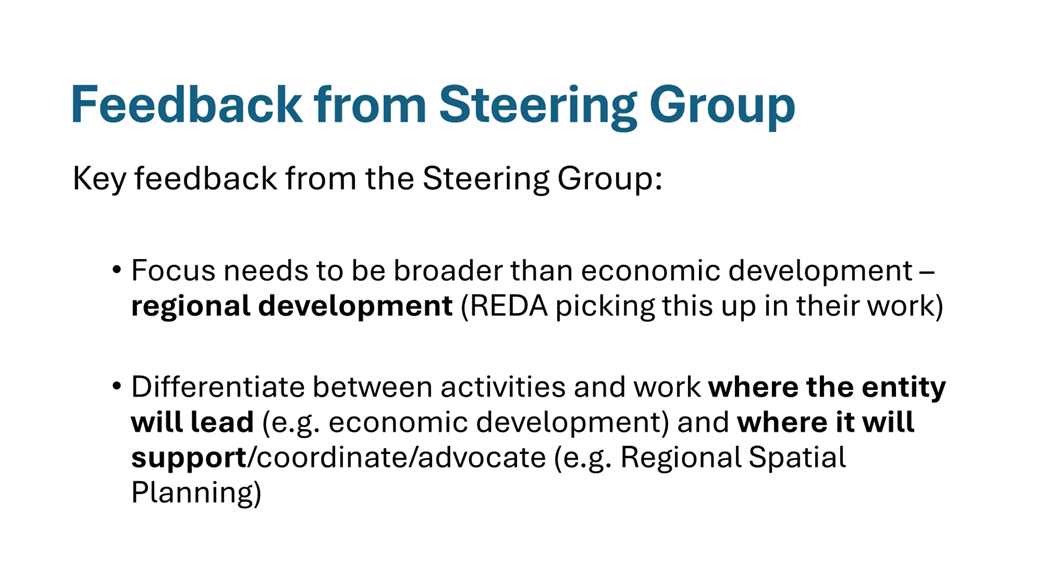
|
Thursday, 4 September 2025
|
Hastings
District Council: Council Meeting
Te Rārangi Take
Report to Council
|
Nā:
From:
|
Gus Charteris, Interim
Group Manager: Strategy
|
|
Te Take:
Subject:
|
Report back on Matariki
Governance Group (MGG) meeting of 29 August 2025
|
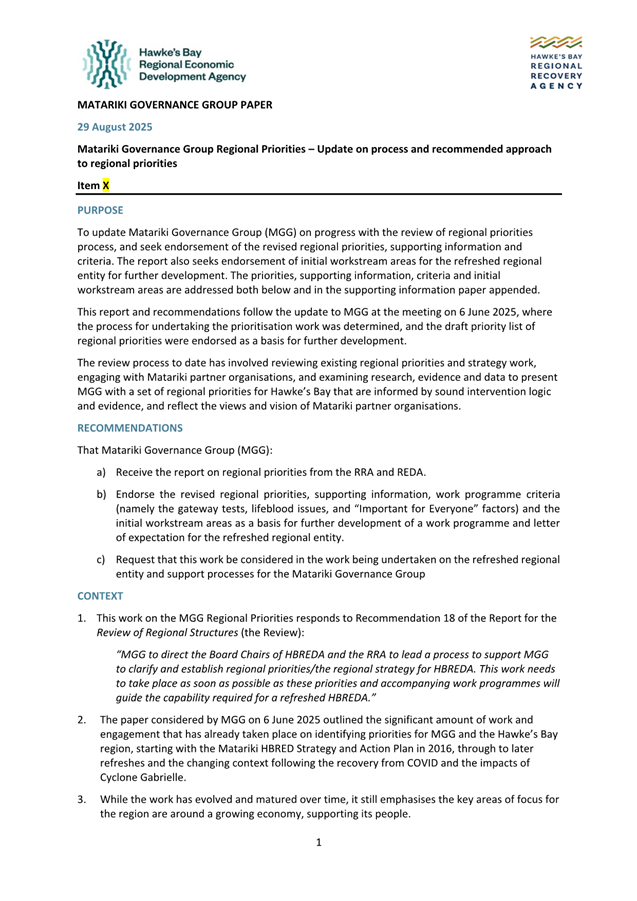
1.0 Purpose and summary - Te Kaupapa Me Te Whakarāpopototanga
1.1 This report provides a
report back on the Matariki Governance Group (MGG) meeting on 29 August
2025. MGG is Hawke’s Bay’s regional leadership forum made up of the
region’s Mayors, Regional Council Chair, and Chairs of Post-Settlement
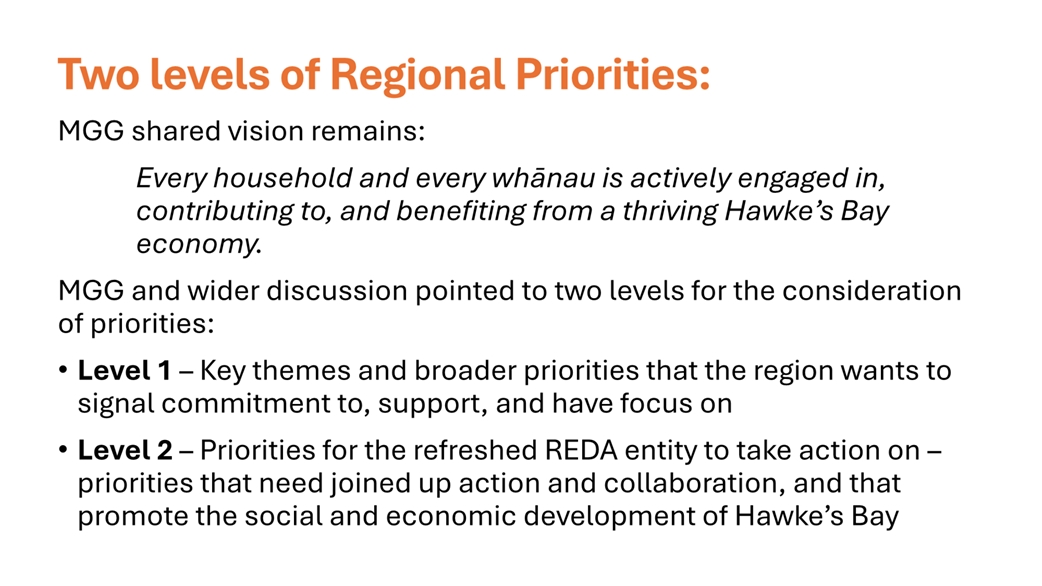
Governance Entities (PSGEs). The MGG vision is that “every household
and every whānau is actively engaged in, contributing to, and benefiting
from a thriving Hawke’s Bay economy”.
1.2 The focus of the 29
August 2025 meeting was:
· An update from the
HB Regional Economic Development Agency (REDA),
and the Regional Recovery Agency (RRA),
on their joint work to support MGG to determine a small set of shared
regional priorities. These priorities are intended to be the focus of regional
collaboration and form the basis of the refreshed work programme of REDA.
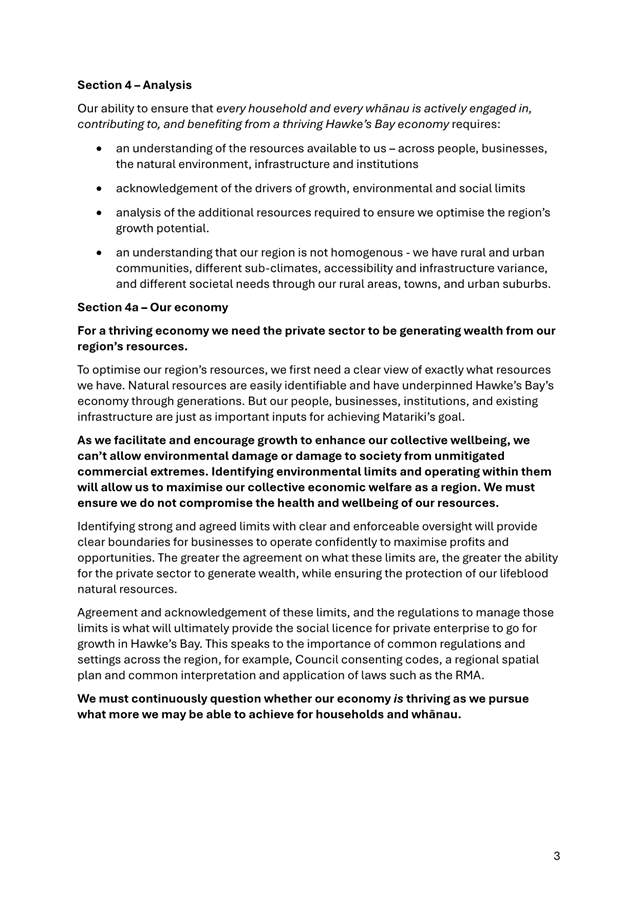
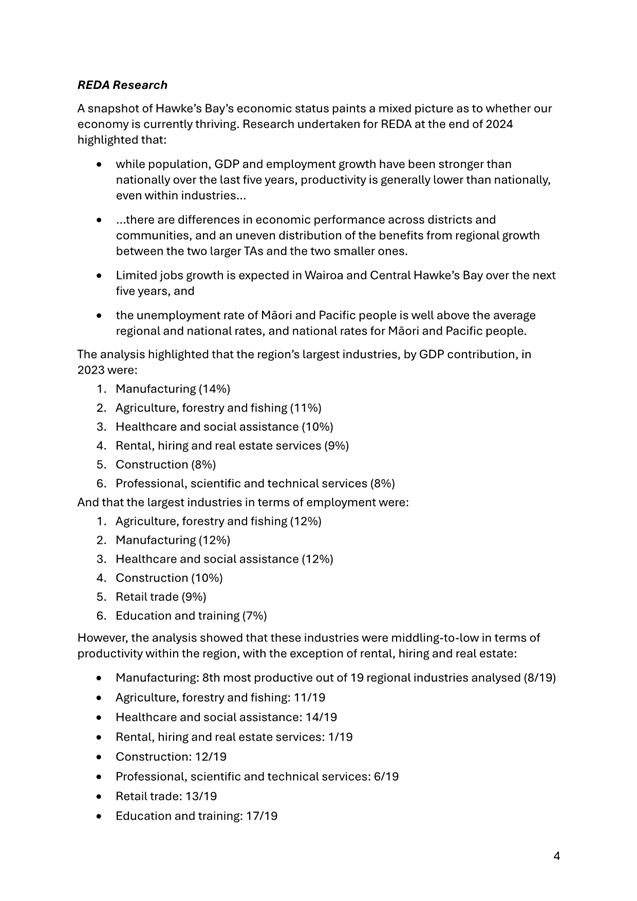
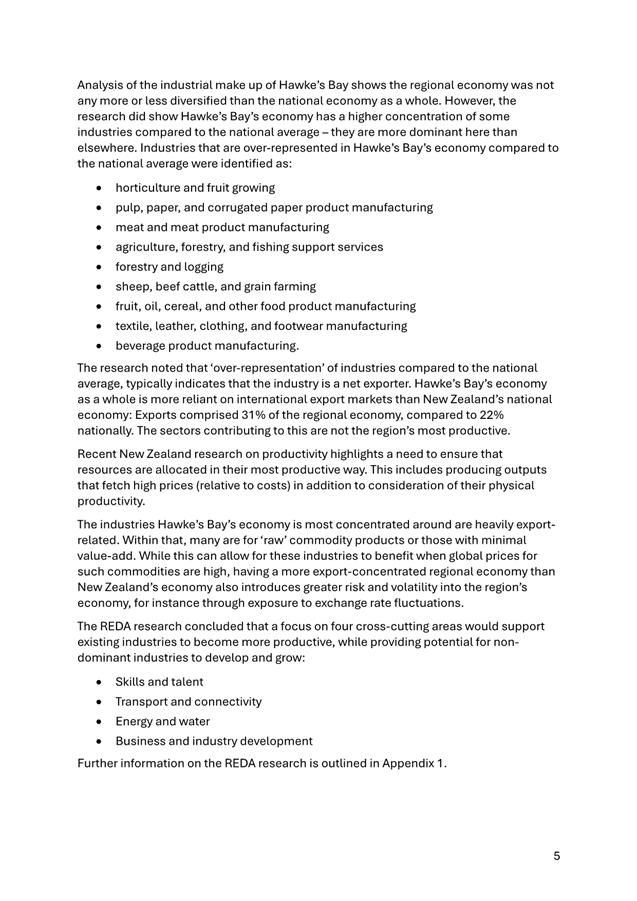
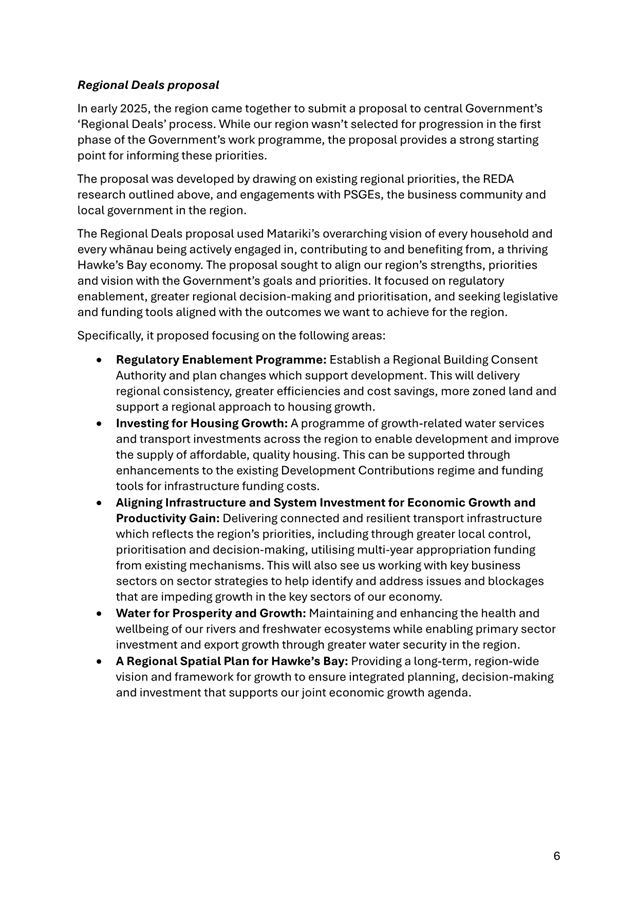
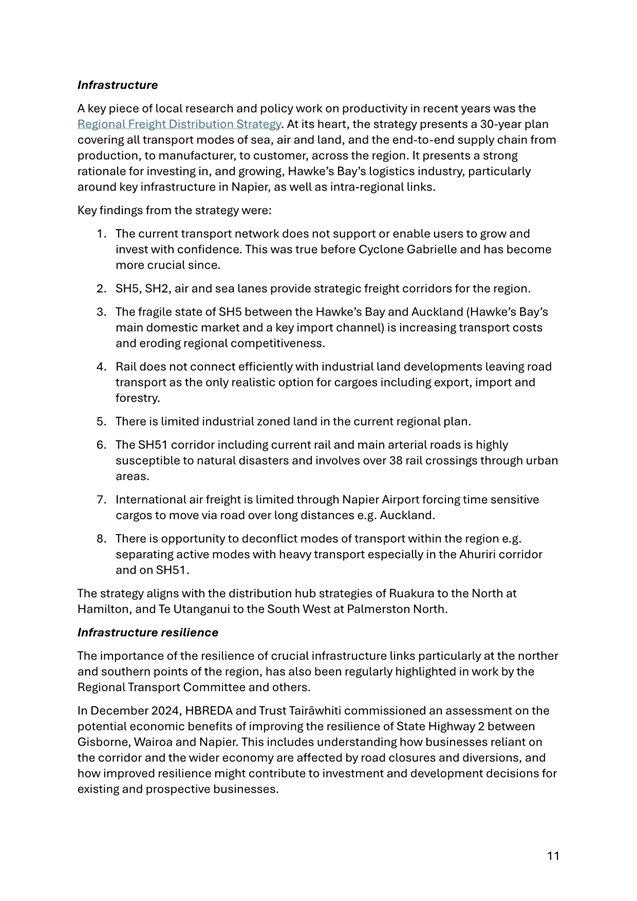
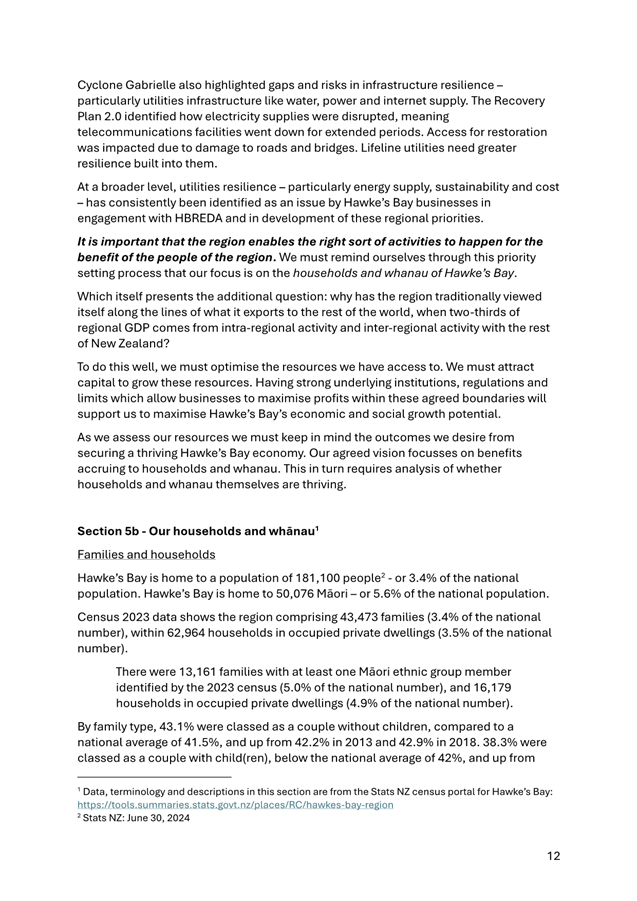
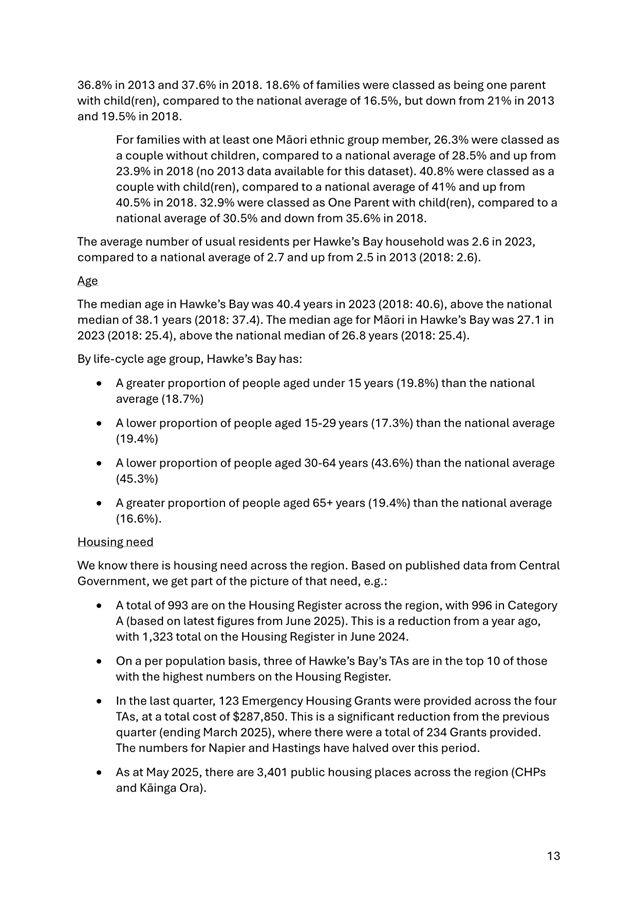
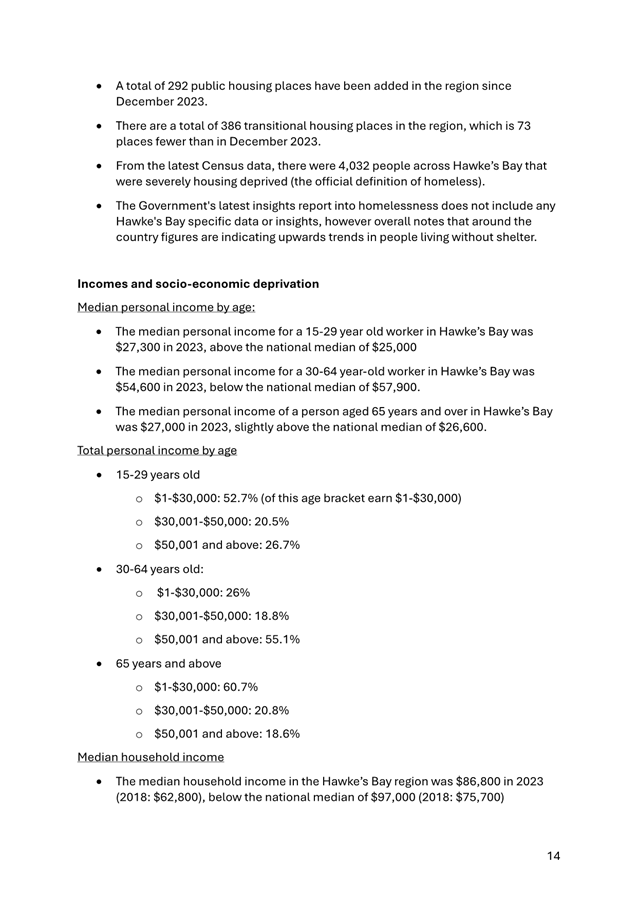
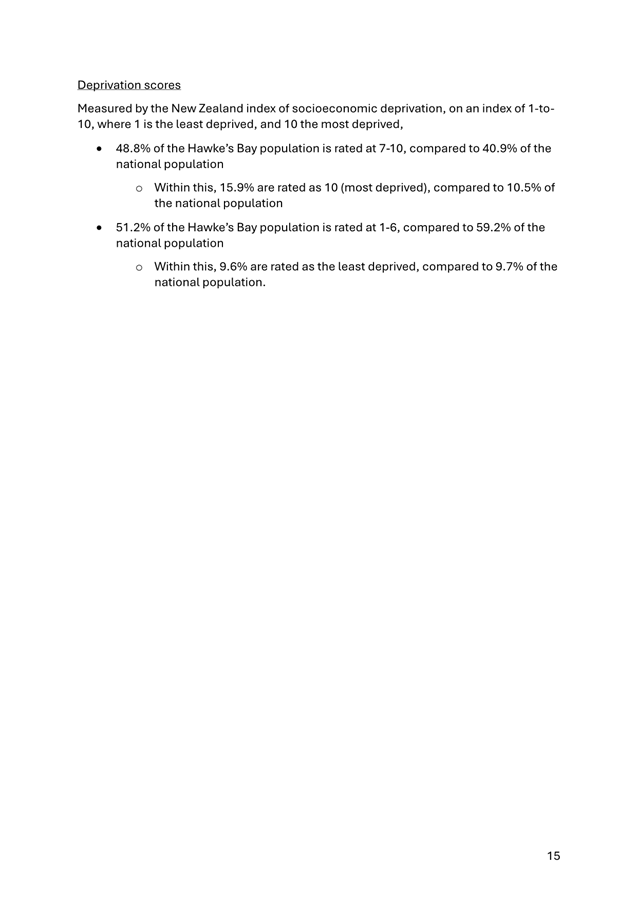
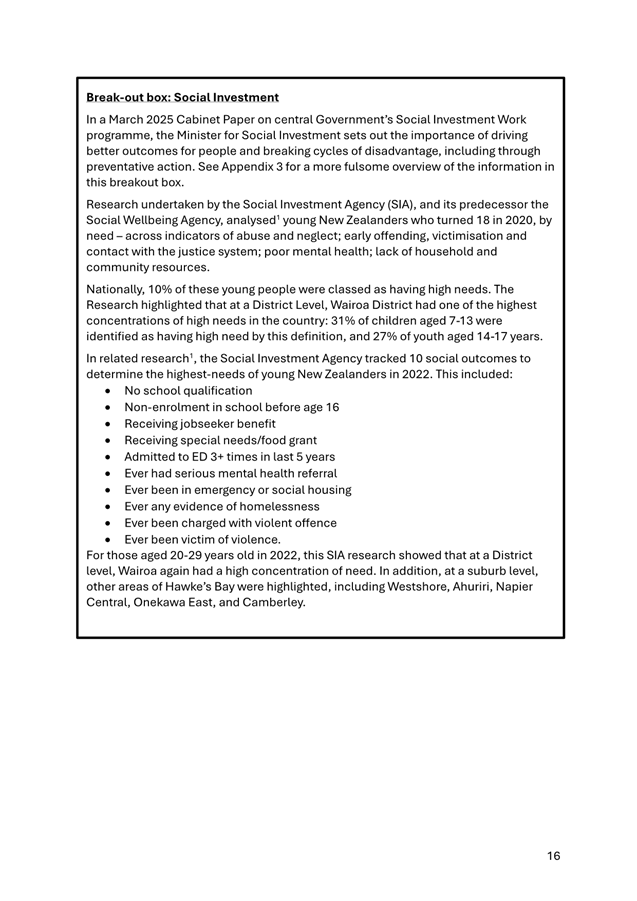
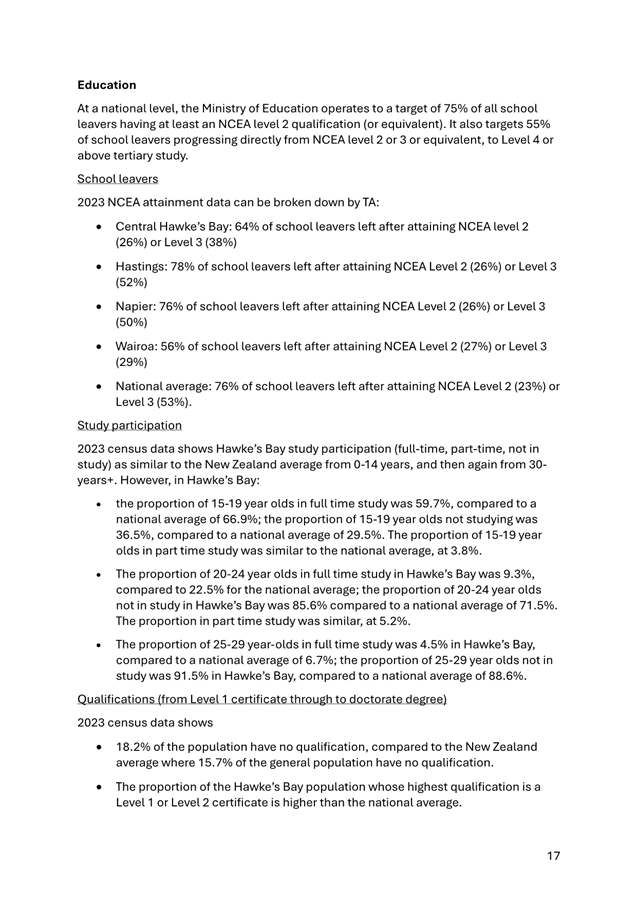
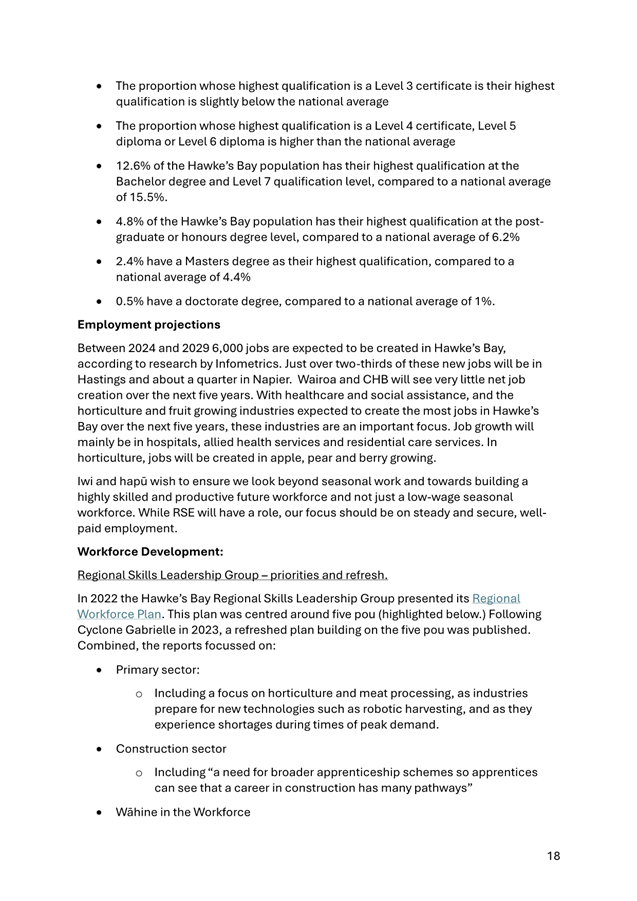
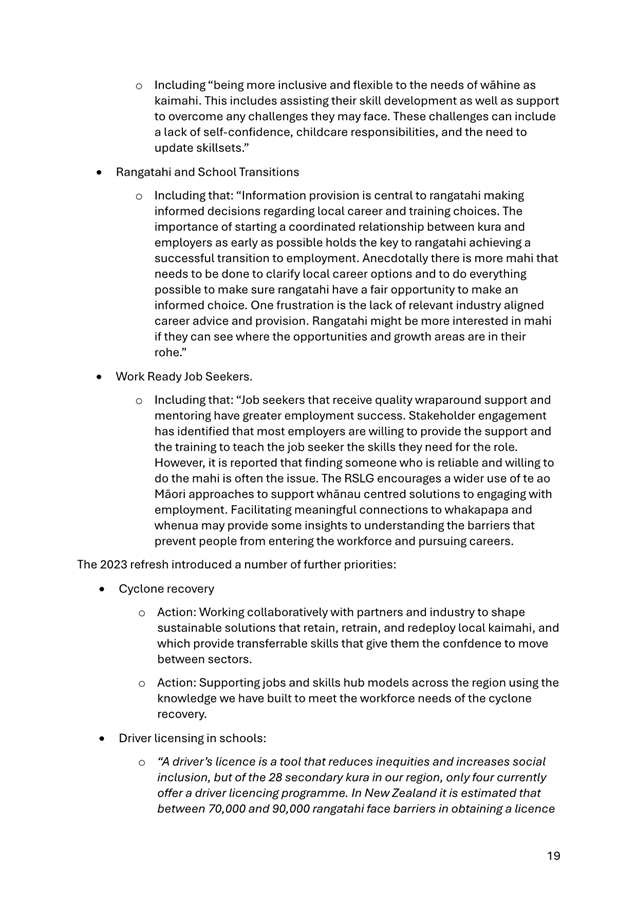
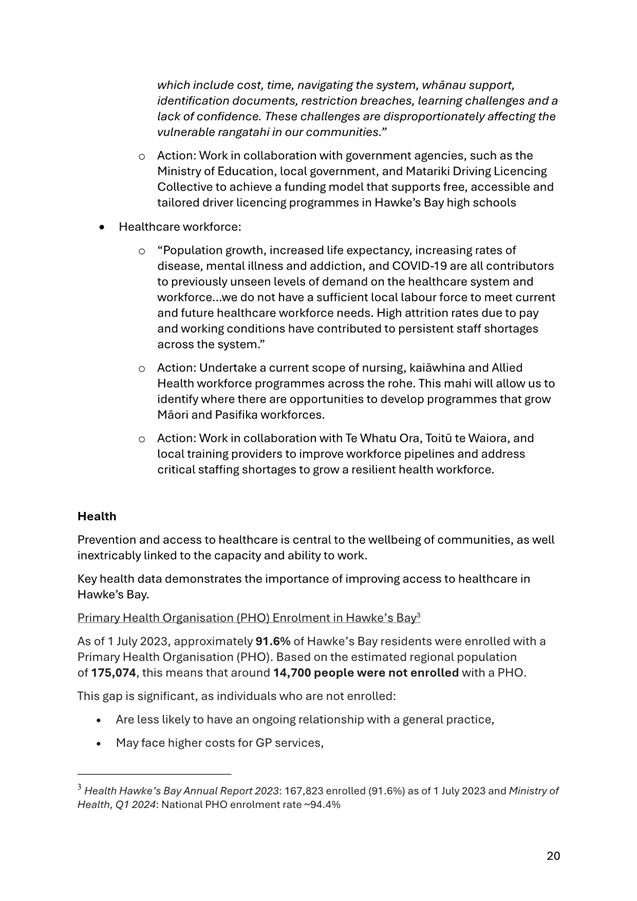
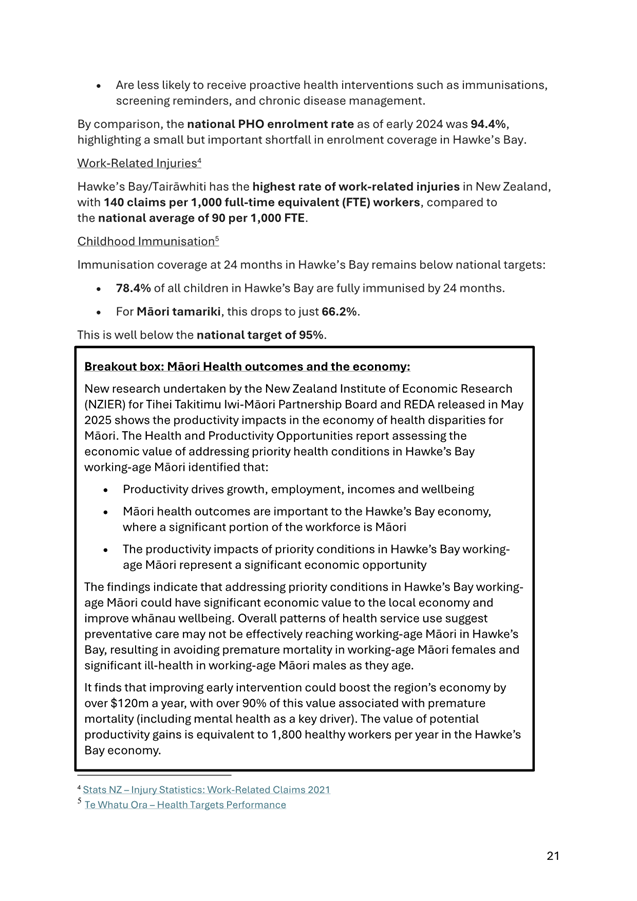
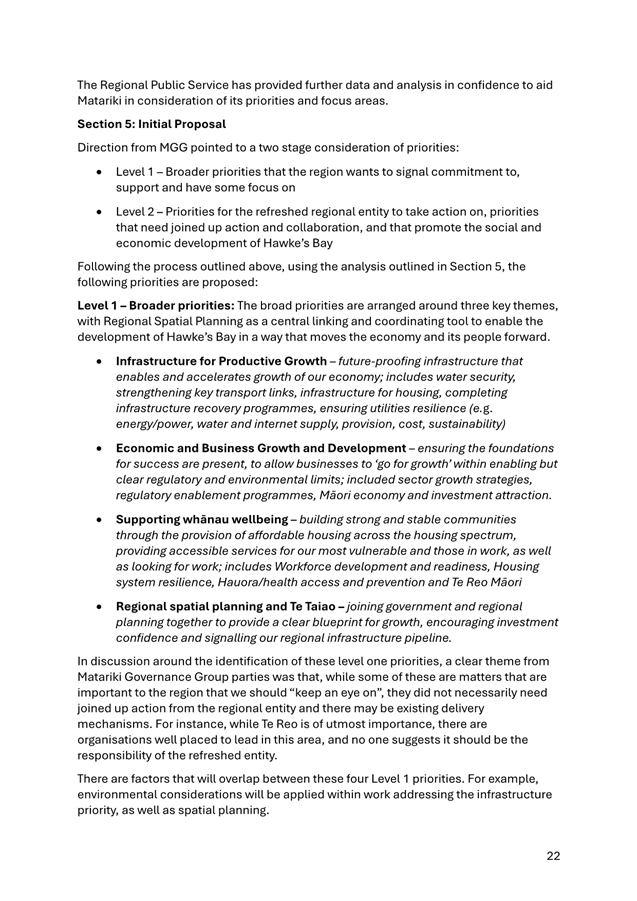
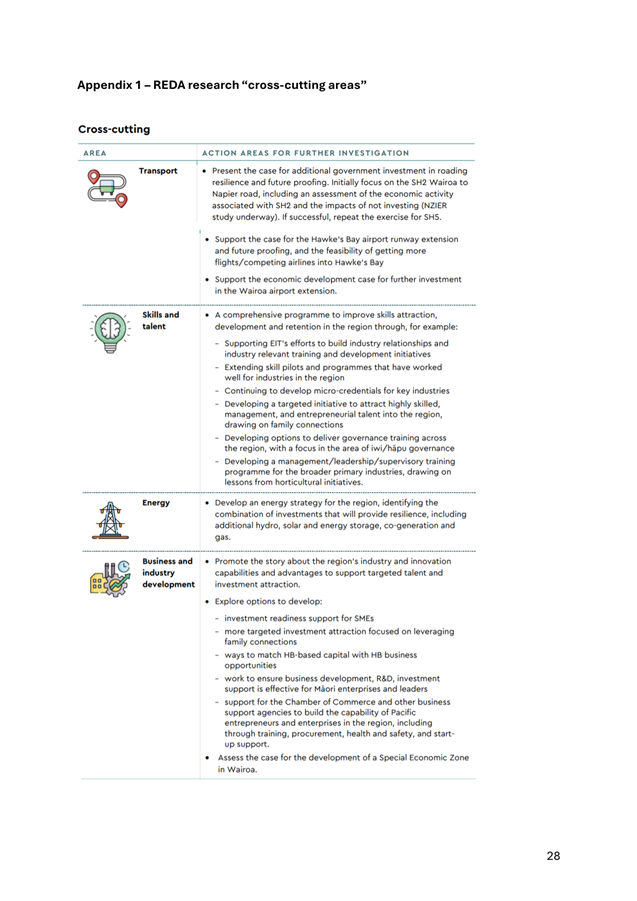
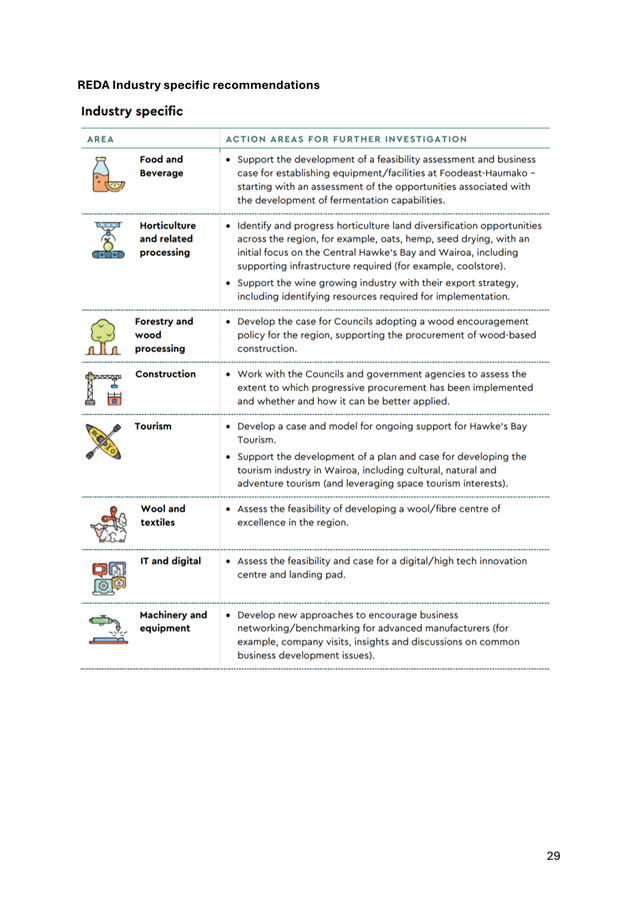
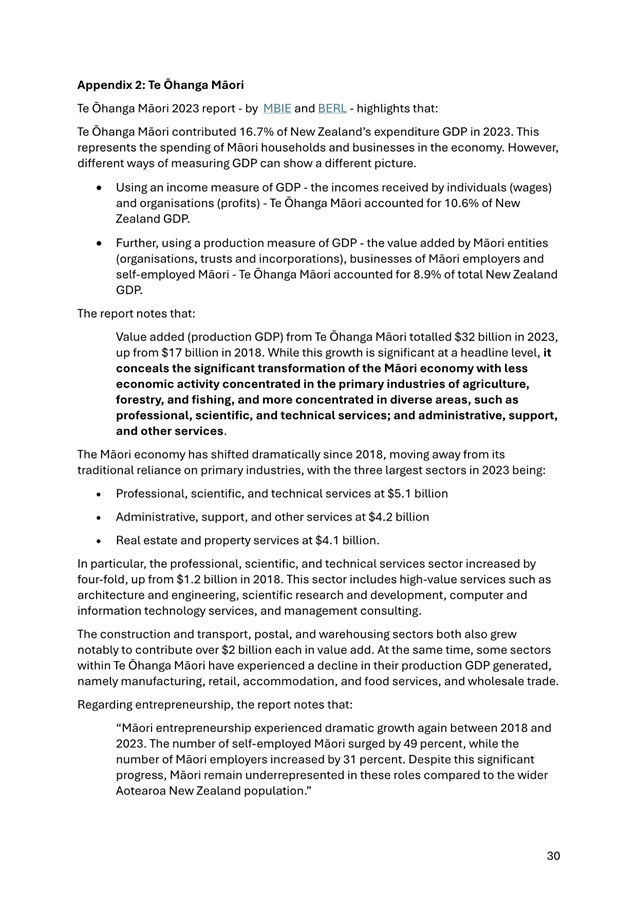
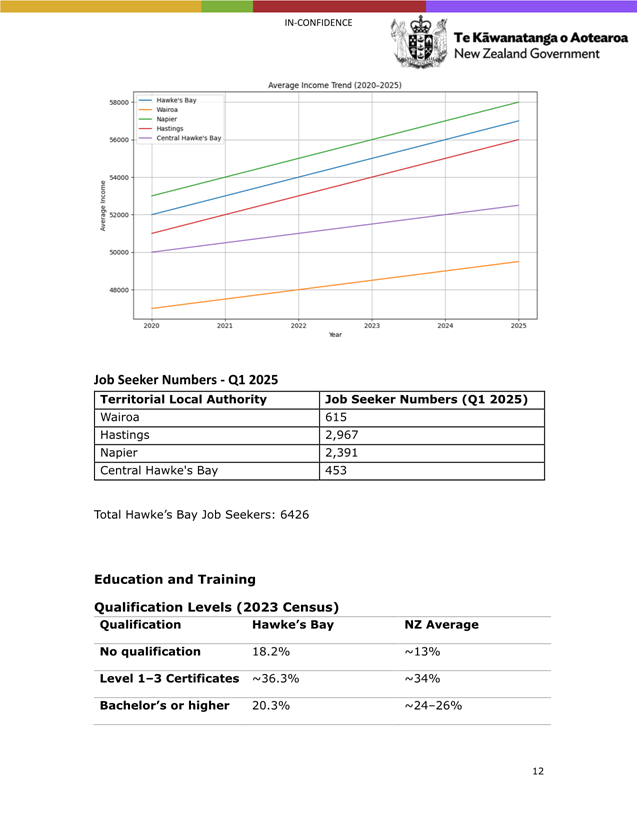
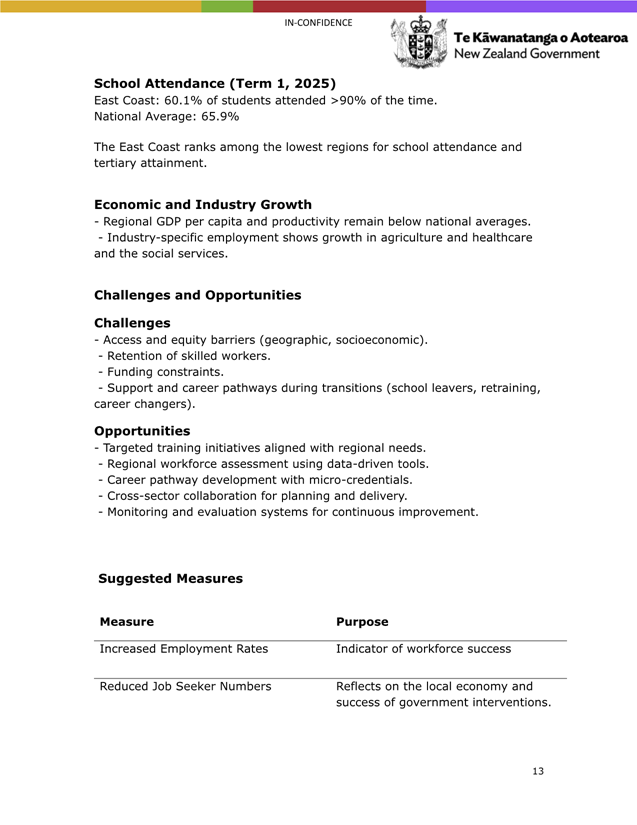
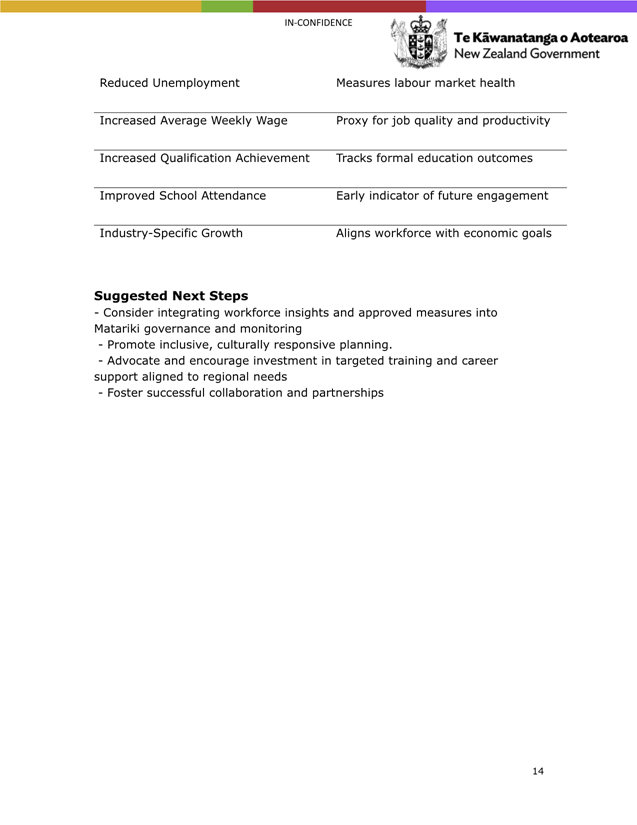
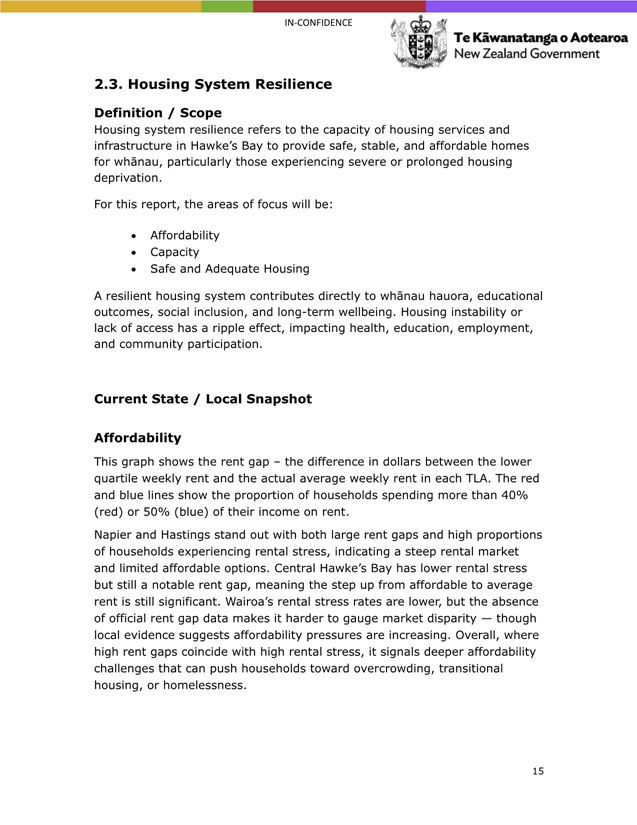
Please see Appendix A for the key background papers that include the analytical
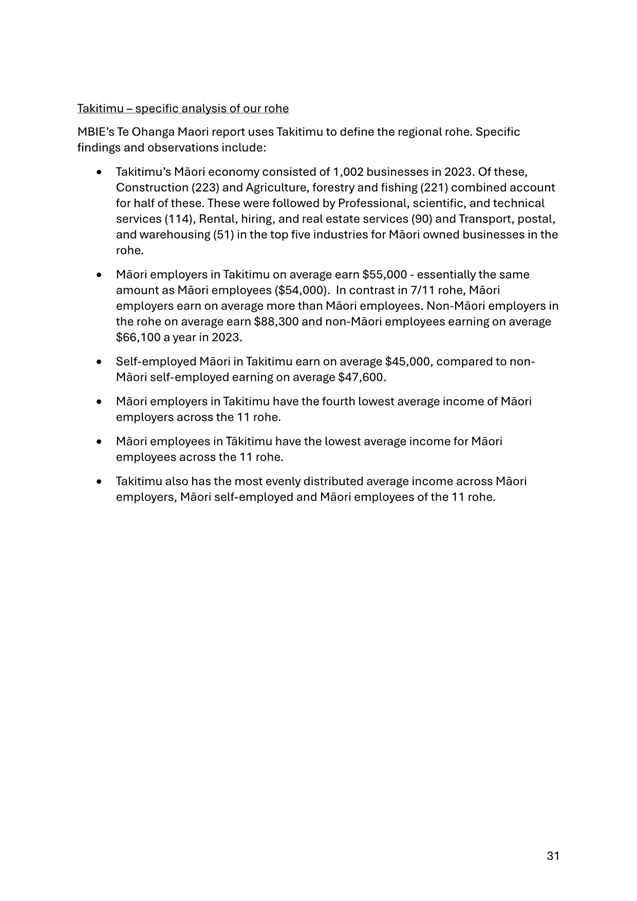
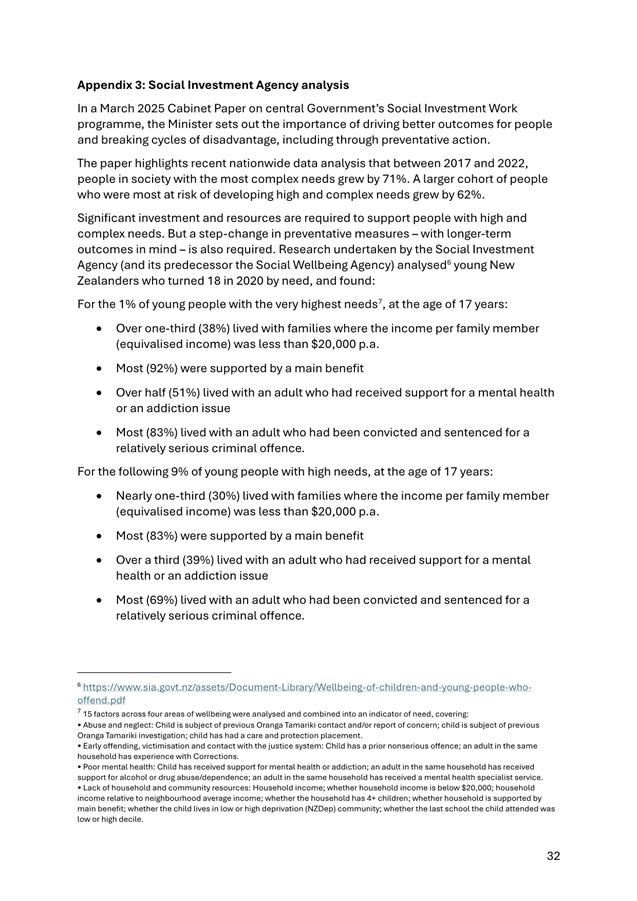
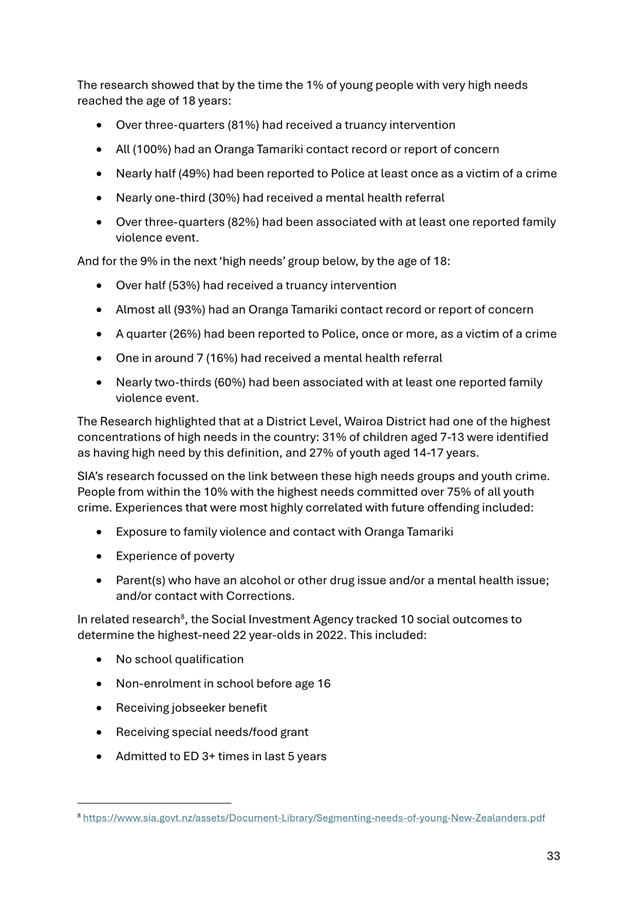
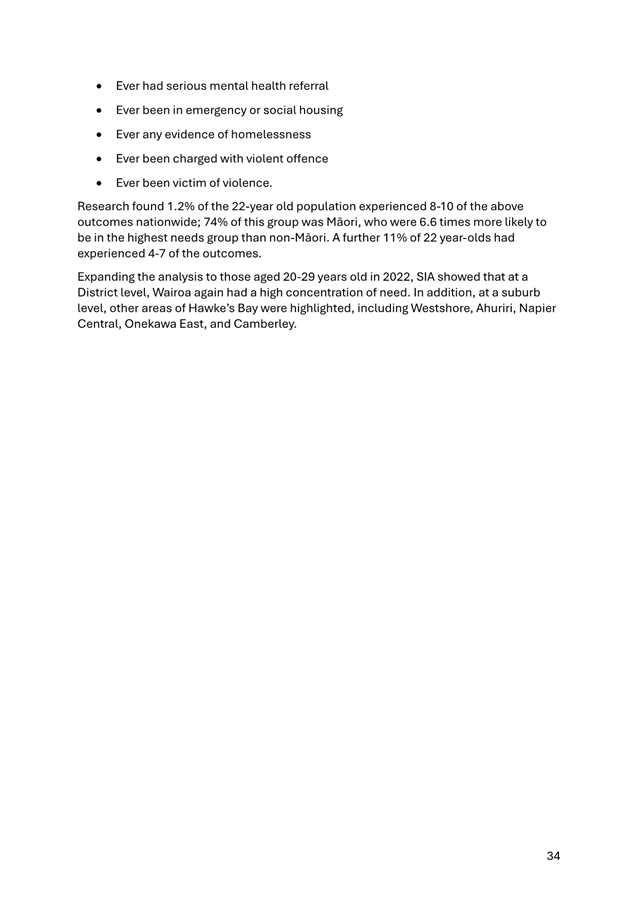
work to support the initial areas of focus and direction of travel. .
· Updates from the
RRA and REDA on their respective work programmes.
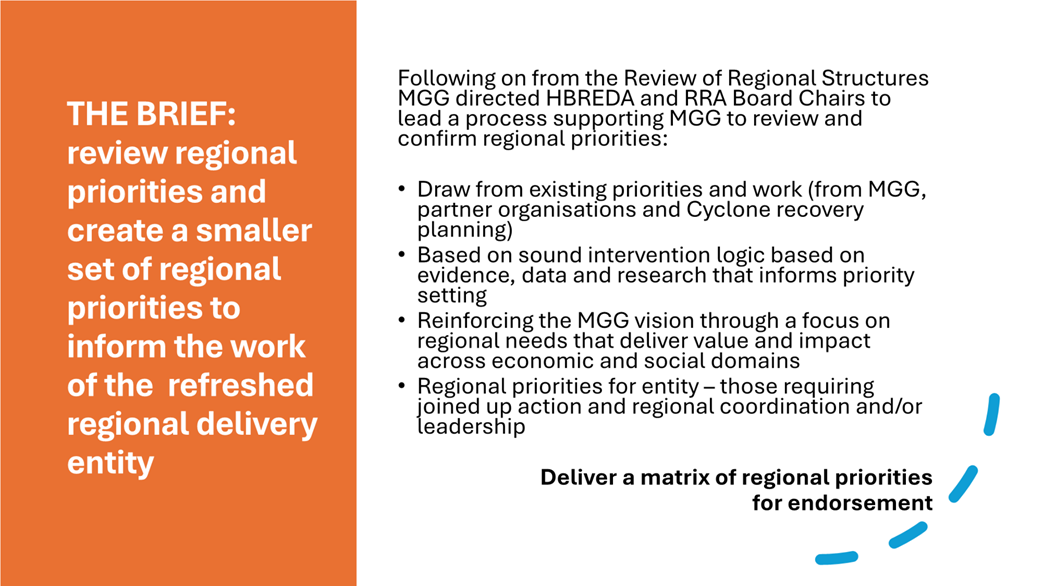
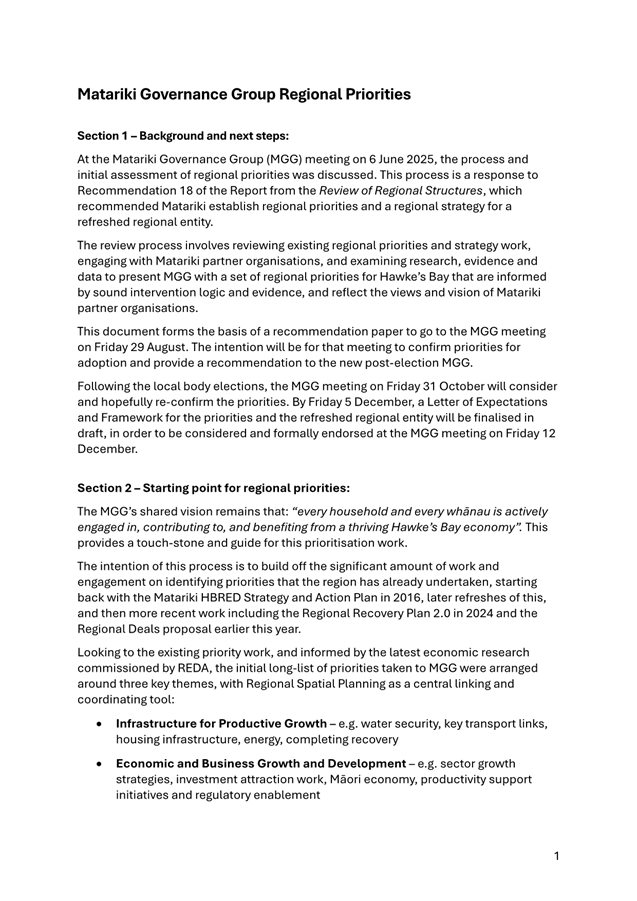
1.3 The work to establish
a small set of shared regional priorities follows a ‘Review of
Regional Structures’ commissioned by MGG in October 2024 and
delivered in April 2025. Key recommendations of that review were:
· Rec 2: Focus
MGG’s role and function on identified shared regional priorities and
holding HBREDA (and other delivery agents if contracted) to account for
achieving desired outcomes that contribute to the Matariki vision that “every
household and every whānau is actively engaged in, contributing to, and
benefiting from a thriving Hawke’s Bay economy”.
· Rec 5: Focus
available local government funding on a small set of agreed shared regional
priorities and activities and continue to seek opportunities for external
funding from central Government and the private sector for specific projects of
interest.
· Rec 4: Utilise
the existing legal form and shareholding structure of HBREDA to deliver agreed
shared regional priorities on behalf of MGG and run an open recruitment process
to establish the governance, executive, and management capability required to
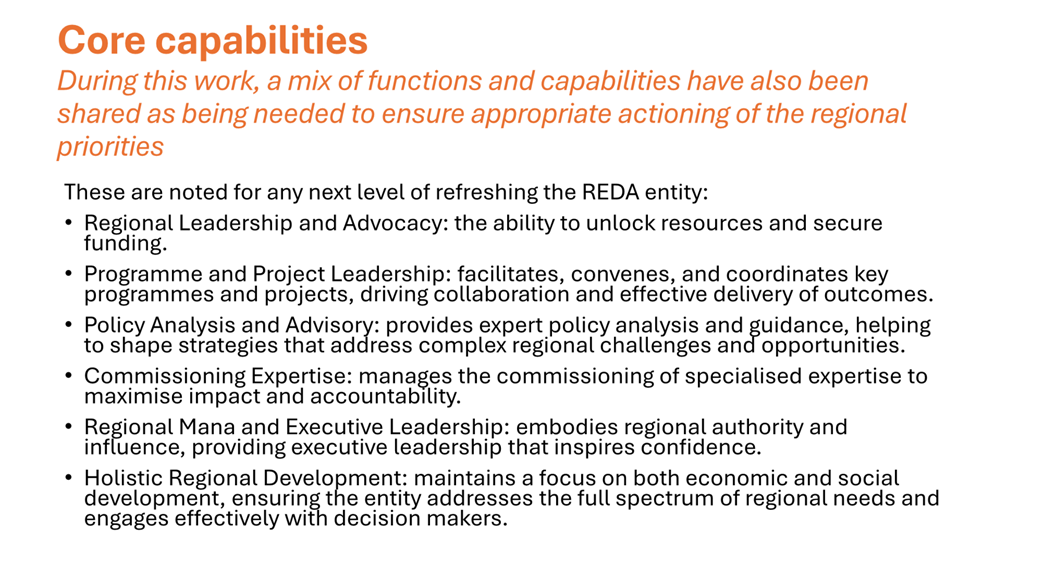
deliver agreed shared regional priorities. A refreshed HBREDA would ideally
comprise a mix of functions and capabilities from across HBREDA and the HB
Regional Recovery Agency (RRA). This includes advocacy, convening,
policy/analytical and commissioning capability as well as senior-level
expertise with regional mana, able to bring a focus to regional needs across
economic and social strategy and the ability to engage effectively with
decision-makers (in particular central Government).
· Rec 18: MGG
to direct the Board Chairs of HBREDA and the RRA to lead a process to support
MGG to clarify and establish regional priorities/the regional strategy for
HBREDA. This work needs to take place as soon as possible as these priorities
and accompanying work programmes will guide the capability required for a
refreshed HBREDA .
Starting point and process for assessing regional priorities
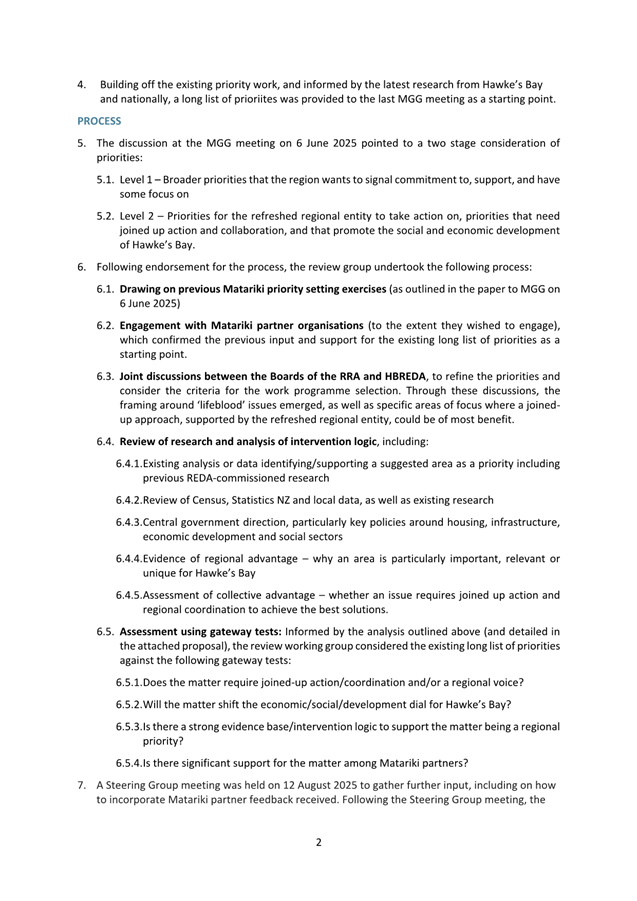
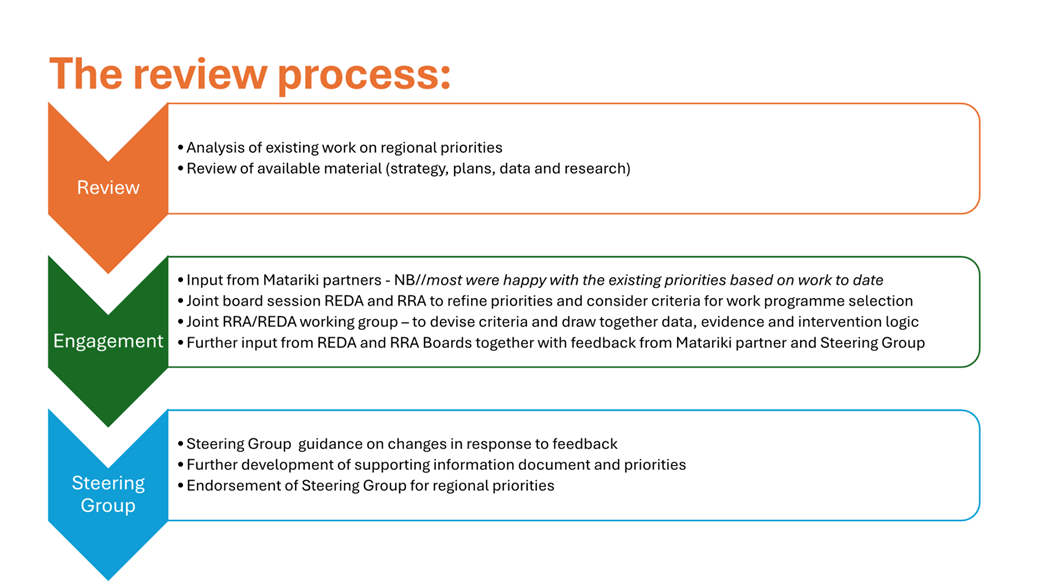
1.4 The process the RRA
and REDA have undertaken for assessing regional priorities has involved a two
stage consideration of priorities:
· Level 1 –
Broader priorities that the region wants to signal commitment to, support, and
have some focus on
· Level 2
– Priorities for the refreshed regional entity to take action on,
priorities that need joined up action and collaboration, and that promote the
social and economic development of Hawke’s Bay.
1.5 This two-stage process
has involved:
· Drawing on
previous Matariki priority setting exercises.
· Engagement with
Matariki partner organisations, which confirmed the previous input and support
for the existing long list of priorities as a starting point.
· Joint discussions
between the Boards of the RRA and HBREDA, to refine the priorities and consider
the criteria for the work programme selection. Through these discussions, the
framing around ‘lifeblood’ issues emerged, as well as specific areas
of focus where a joined-up approach, supported by the refreshed regional
entity, could be of most benefit.
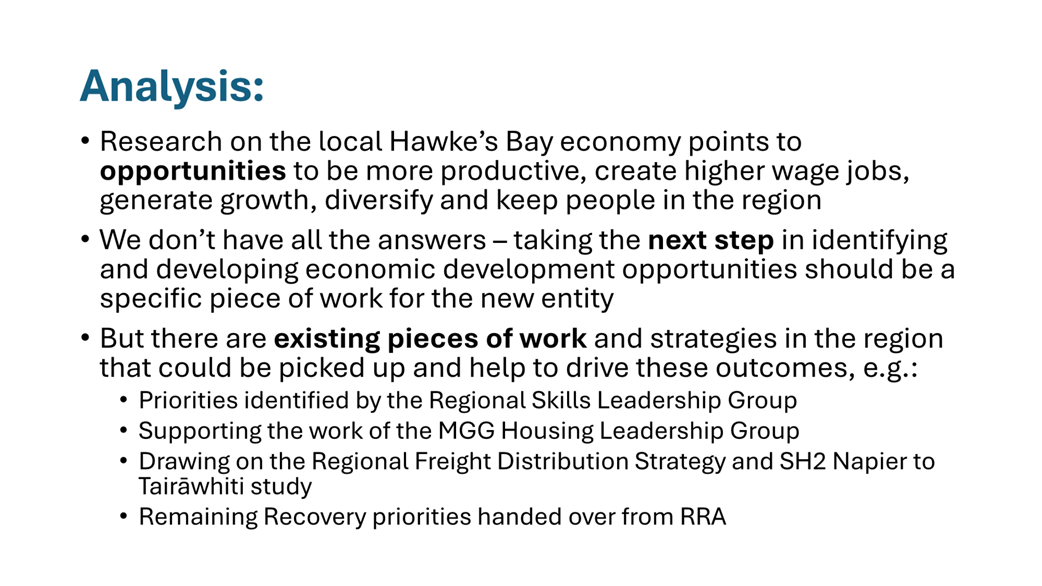
· Review of research
and analysis that supported an ‘intervention logic’, including:
o Existing analysis or data
identifying/supporting a suggested area as a priority including previous
REDA-commissioned research,
o Review of Census, Statistics
NZ and local data, as well as existing research,
o Central government direction,
particularly key policies around housing, infrastructure, economic development
and social sectors,
o Evidence of regional advantage
– why an area is particularly important, relevant or unique for
Hawke’s Bay,
o Assessment of collective
advantage – whether an issue requires joined up action and regional
coordination to achieve the best solutions,
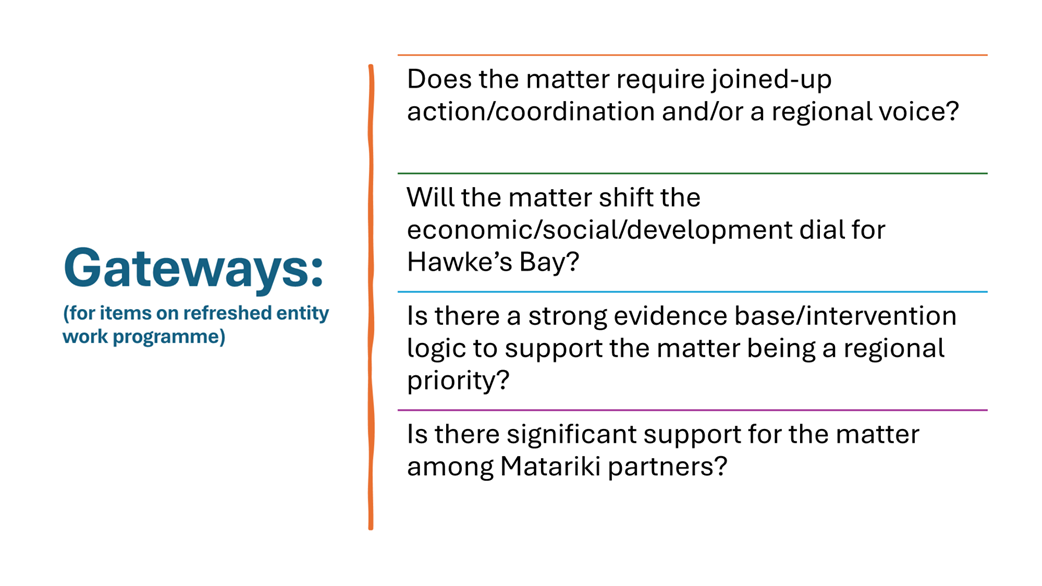
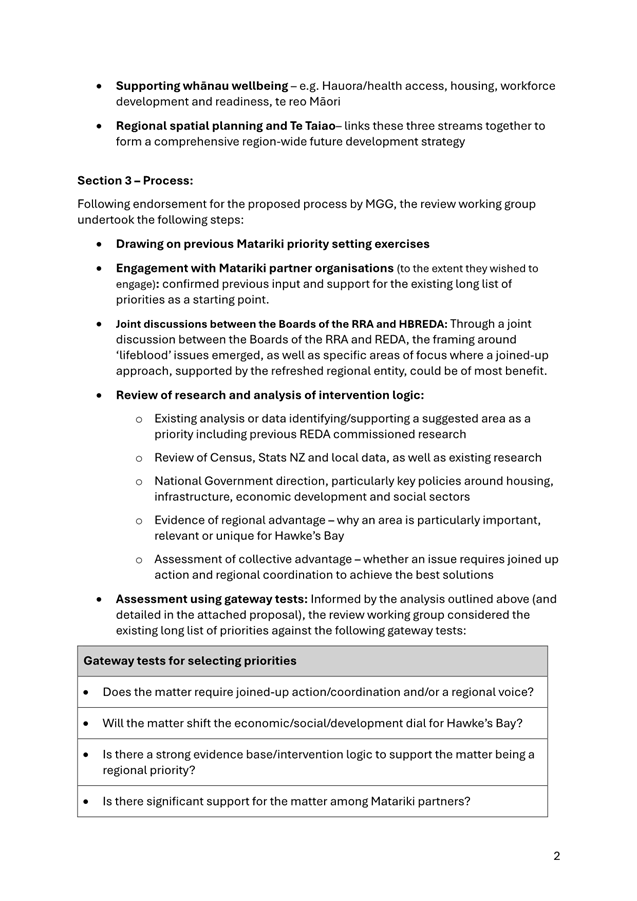
o Assessment using gateway
tests: Informed by the analysis outlined above (and detailed in the attached
proposal), the review working group considered the existing long list of
priorities against the following gateway tests:
§ Does the matter require joined-up
action/coordination and/or a regional voice?
§ Will the matter shift the
economic/social/development dial for Hawke’s Bay?
§ Is there a strong evidence
base/intervention logic to support the matter being a regional priority?
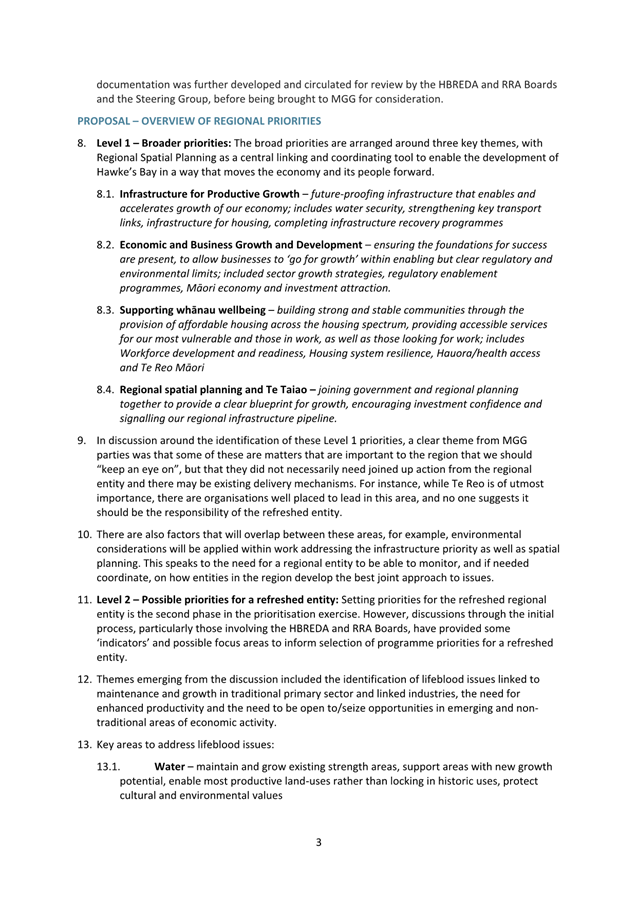
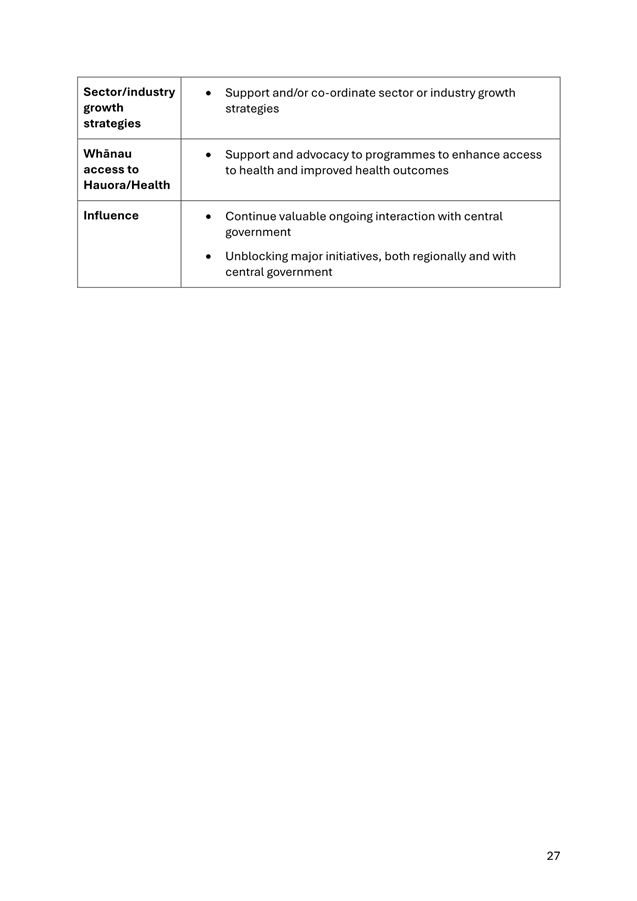
Overview of regional priorities
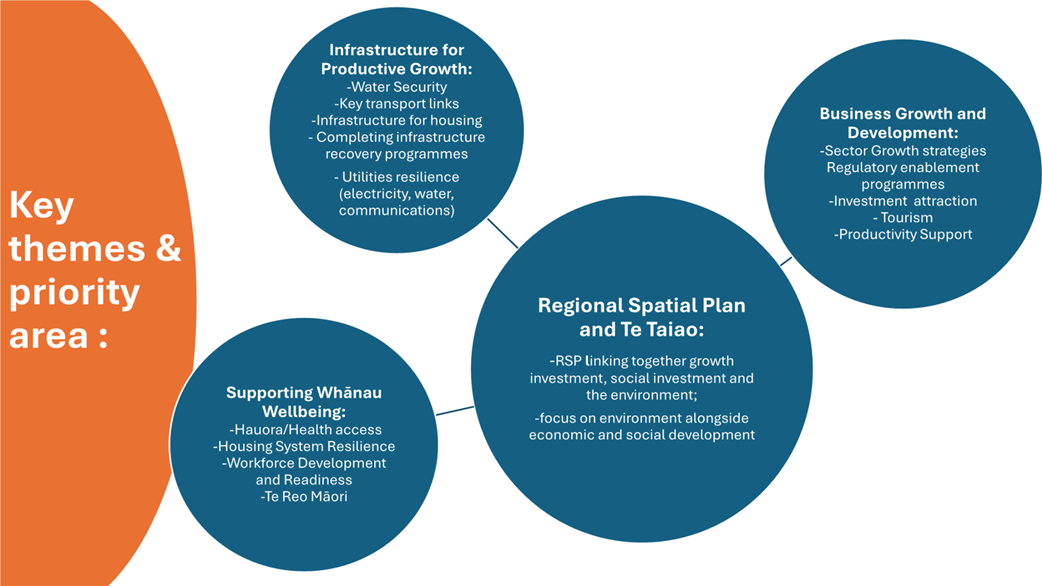
1.6 Level 1 –
Broader priorities: The broad priorities are arranged around three key
themes, with Regional Spatial Planning as a central linking and coordinating
tool to enable the development of Hawke’s Bay in a way that moves the
economy and its people forward.
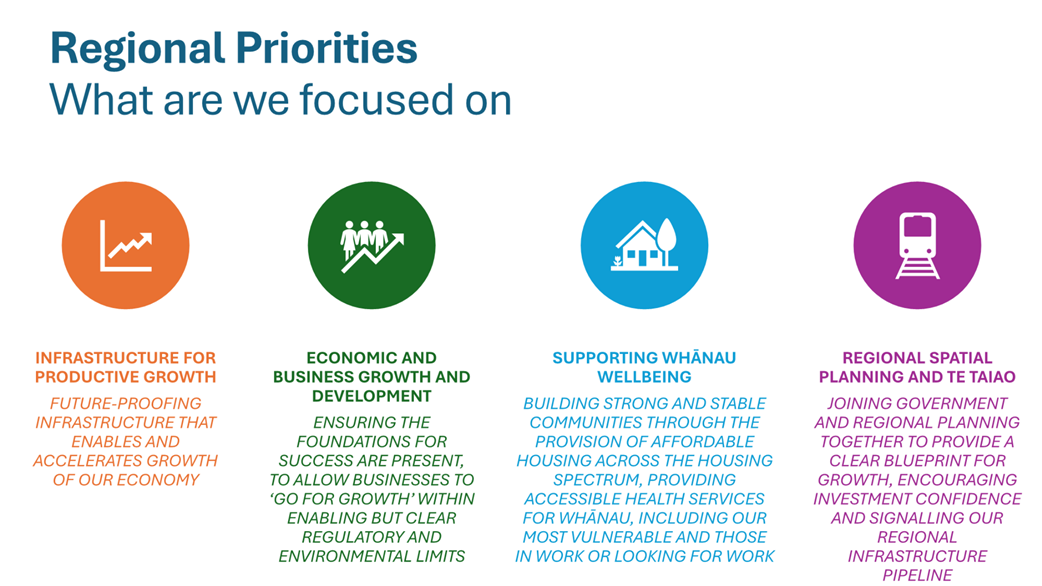
· Infrastructure
for Productive Growth – future-proofing infrastructure that enables
and accelerates growth of our economy; includes water security, strengthening
key transport links, infrastructure for housing, completing infrastructure
recovery programmes
· Economic and
Business Growth and Development – ensuring the foundations for
success are present, to allow businesses to ‘go for growth’ within
enabling but clear regulatory and environmental limits; including sector growth
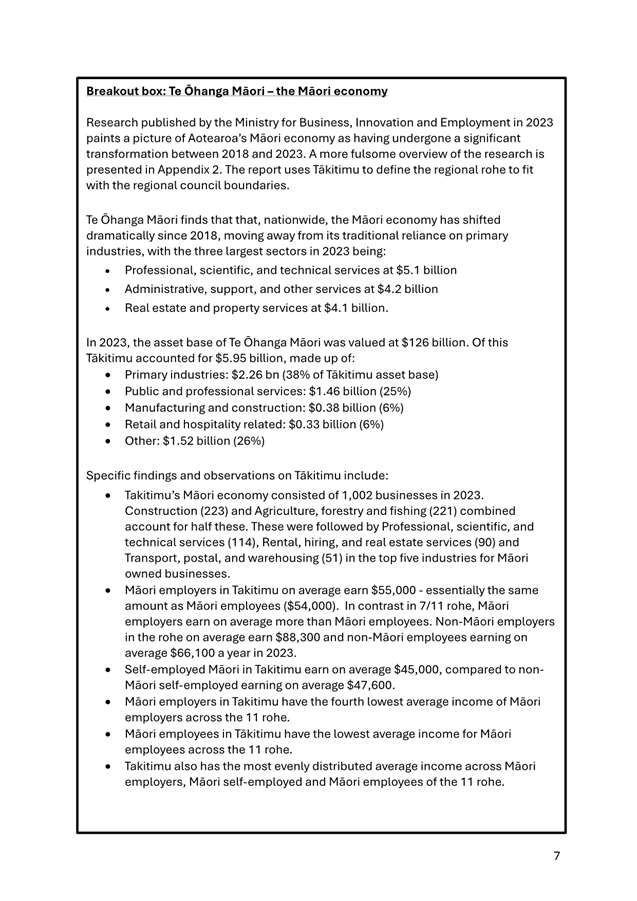
strategies, regulatory enablement programmes, Māori economy and investment
attraction.
· Supporting
whānau wellbeing – building strong and stable communities
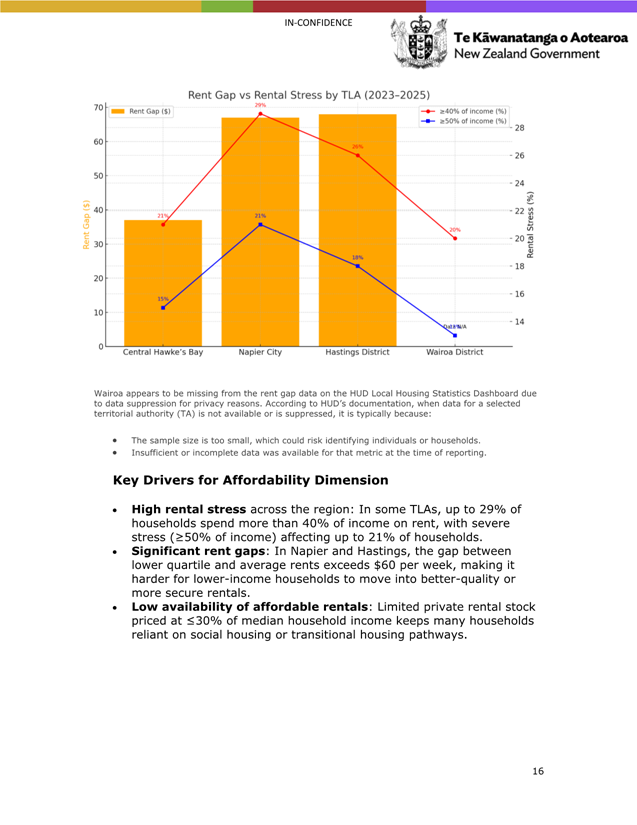
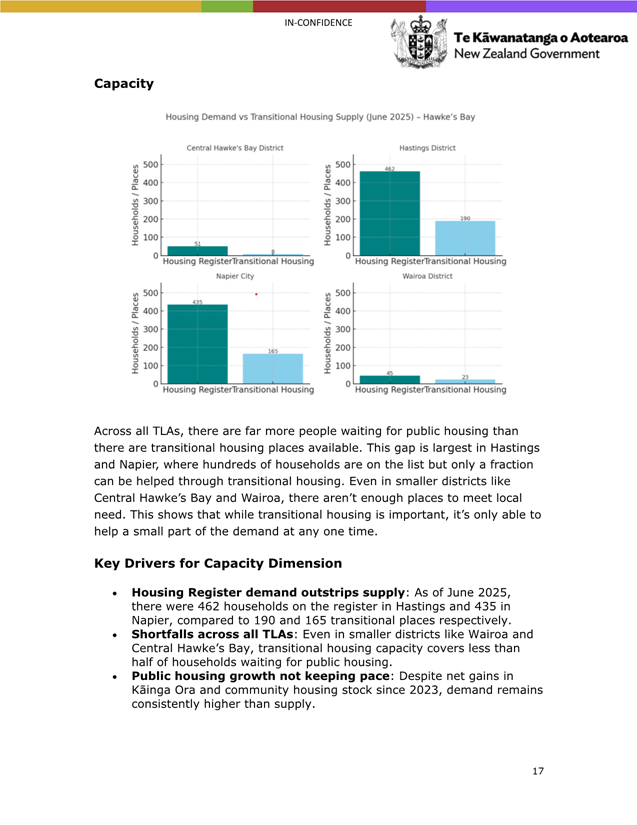
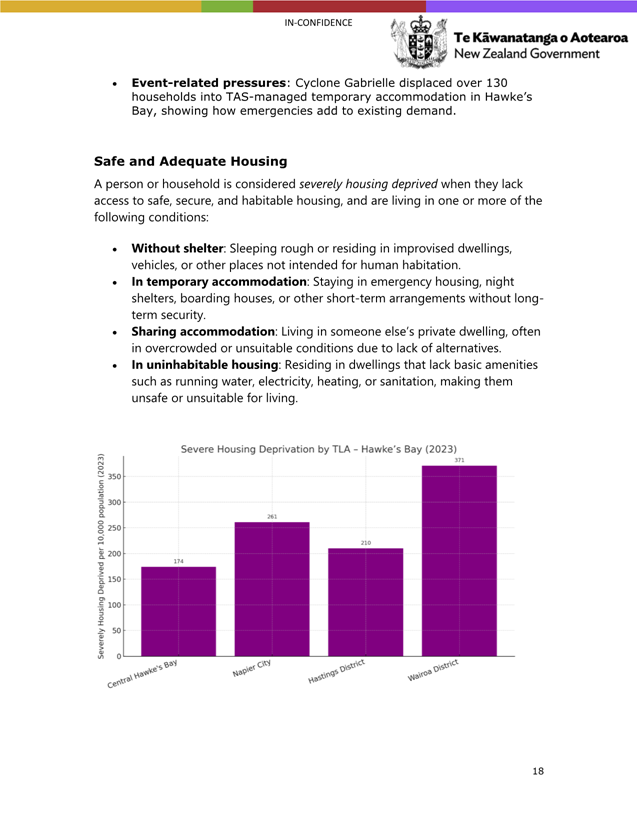
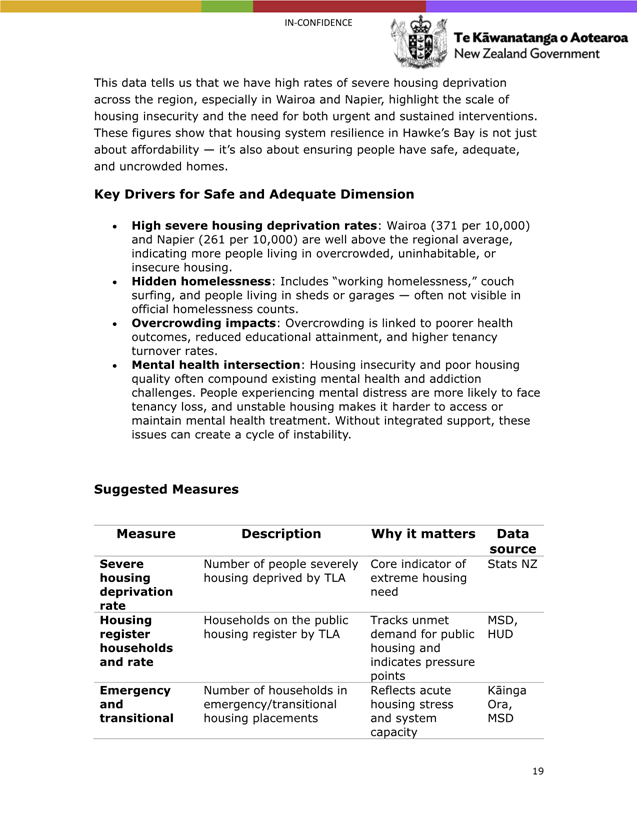
through the provision of affordable housing across the housing spectrum,
providing accessible services for our most vulnerable and those in work, as
well as those looking for work; includes Workforce development and readiness,
Housing system resilience, Hauora/health access and Te Reo Māori
· Regional
spatial planning and Te Taiao – joining government and regional
planning together to provide a clear blueprint for growth, encouraging
investment confidence and signalling our regional infrastructure pipeline.
1.7 A clear theme from MGG
parties emerged from discussion around the identification of Level 1 priorities
– some were matters that should be “kept an eye on”, but that
they did not necessarily need joined up action from the regional entity and
there may be existing delivery mechanisms. For instance, while Te Reo was of
critical importance, there were organisations well placed to lead in this area,
and no one suggested it should be the responsibility of the refreshed entity.
1.8 There are also factors
that will overlap between these areas, for example, environmental
considerations will be applied within work addressing the infrastructure
priority as well as spatial planning. This speaks to the need for a regional
entity to be able to monitor, and if needed coordinate, on how entities in the
region develop the best joint approach to issues.
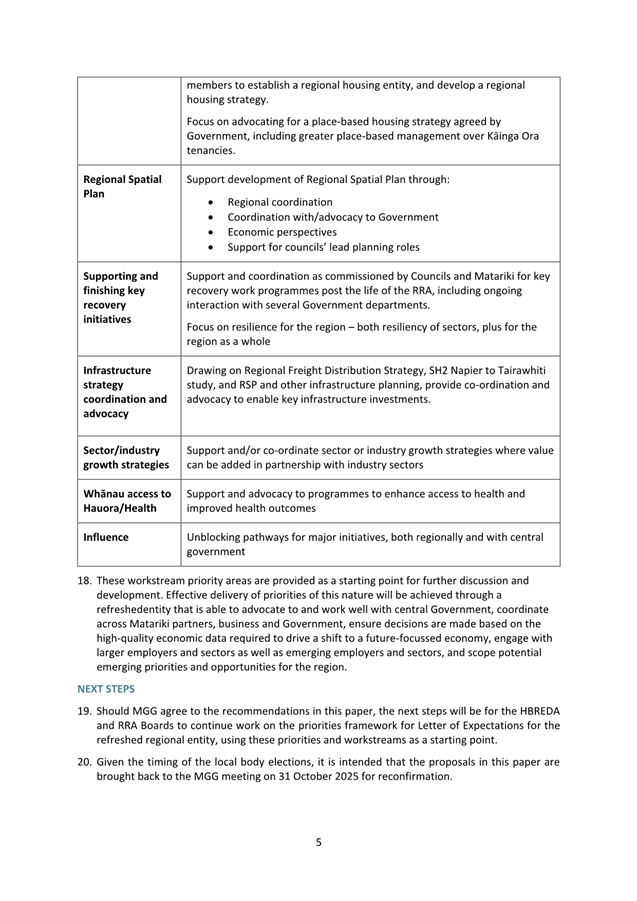
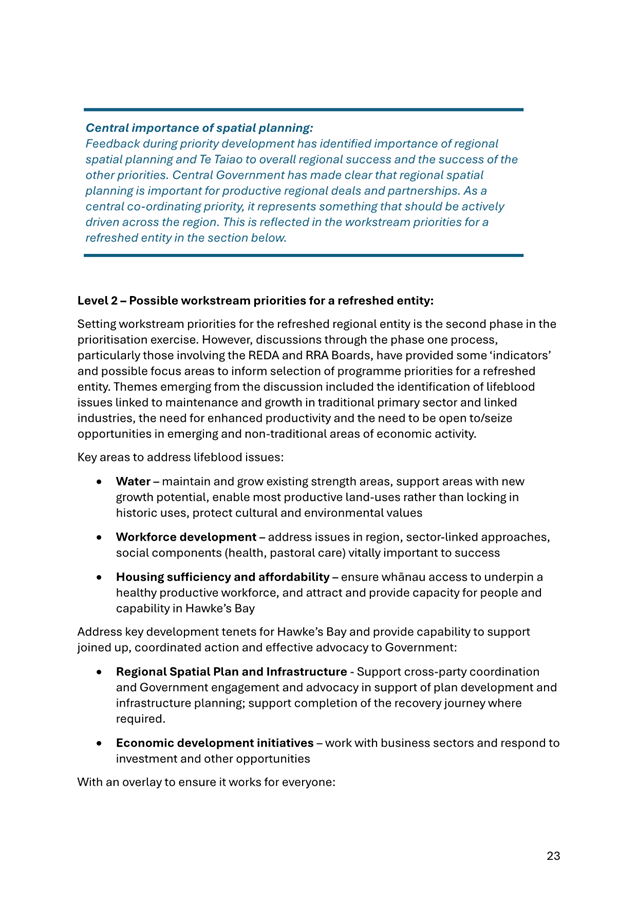
1.9 Level 2 –
Possible priorities for a refreshed entity: Setting priorities for the
refreshed regional entity is the second phase in the prioritisation exercise.
However, discussions through the initial process, particularly those involving
the HBREDA and RRA Boards, have provided some indicators and possible focus
areas to inform selection of programme priorities for a refreshed entity.
1.10 Themes emerging from the discussion
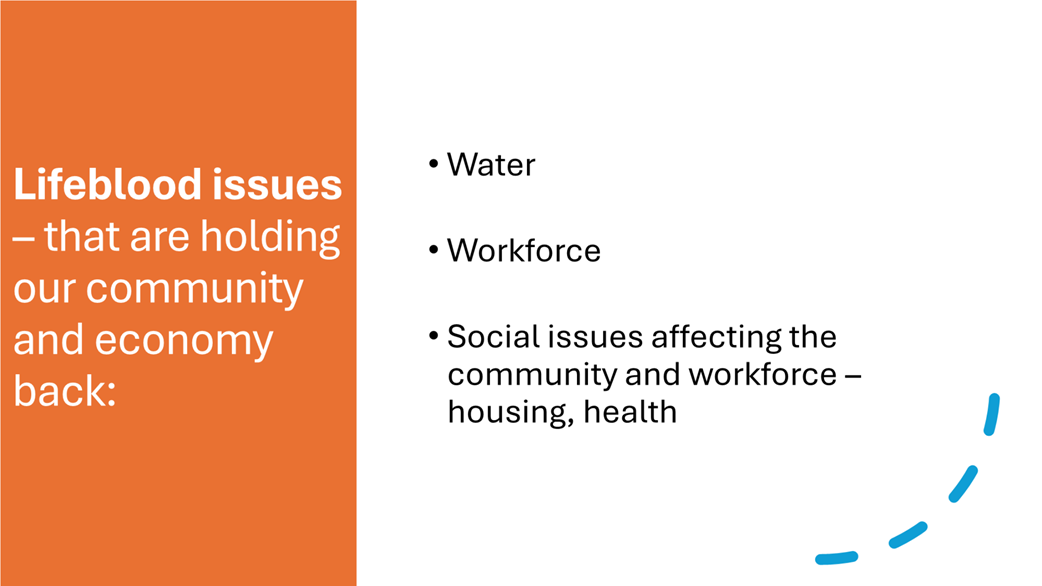
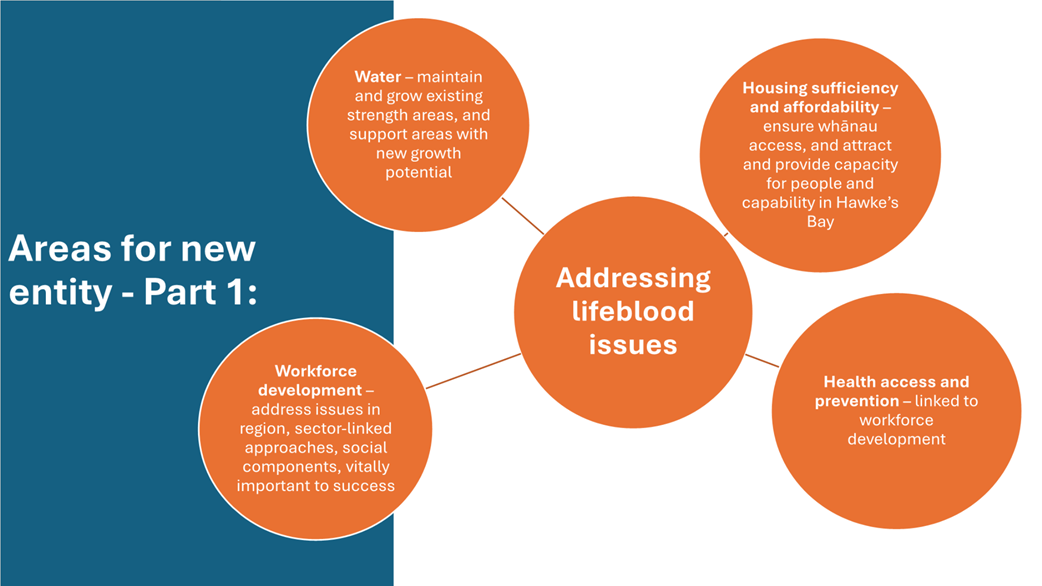
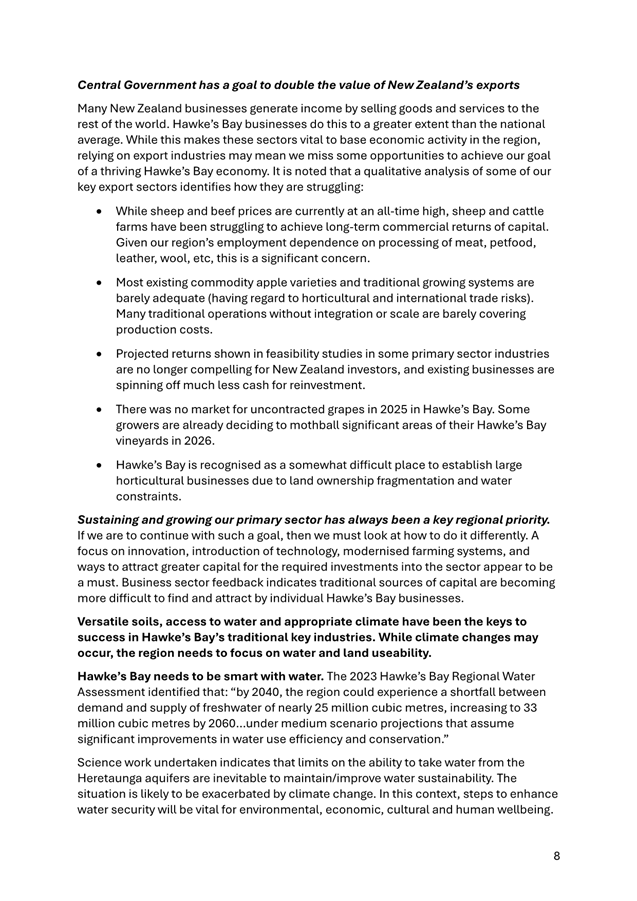
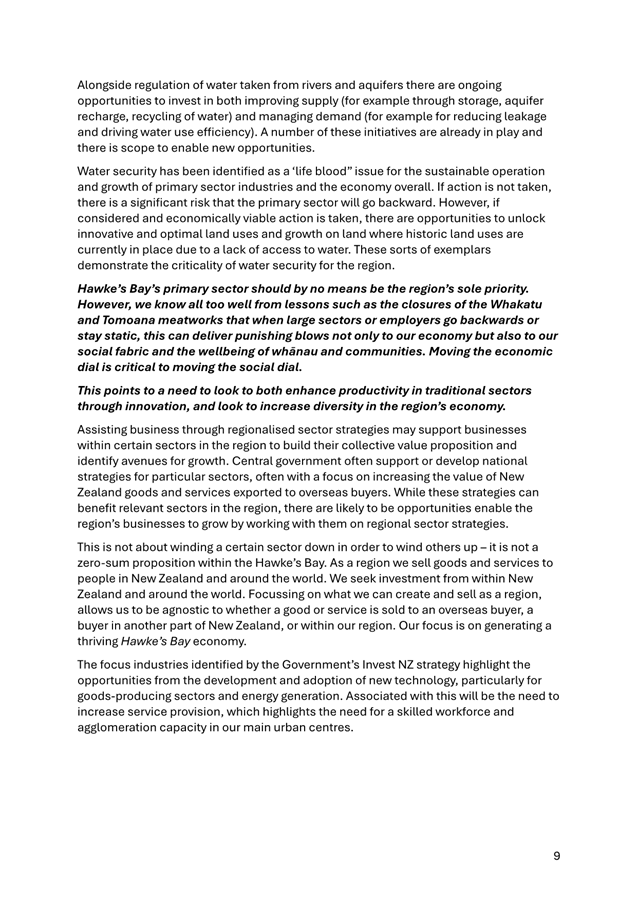
included the identification of lifeblood issues linked to maintenance and
growth in traditional primary sector and linked industries, the need for
enhanced productivity and the need to be open to/seize opportunities in
emerging and non-traditional areas of economic activity.
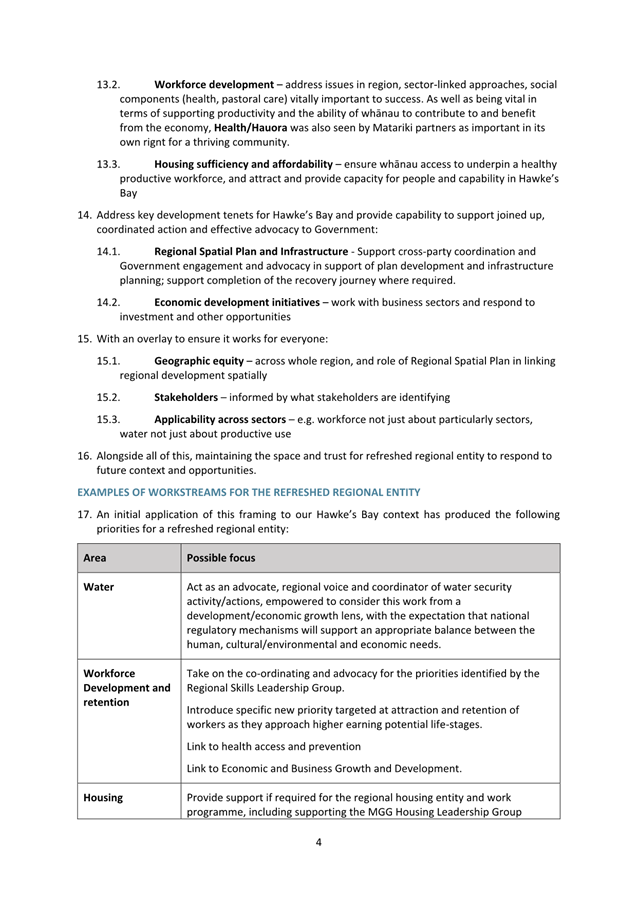
1.11 Key areas to address lifeblood issues:
· Water
– maintain and grow existing strength areas, support areas with new
growth potential, enable most productive land-uses rather than locking in
historic uses, protect cultural and environmental values.
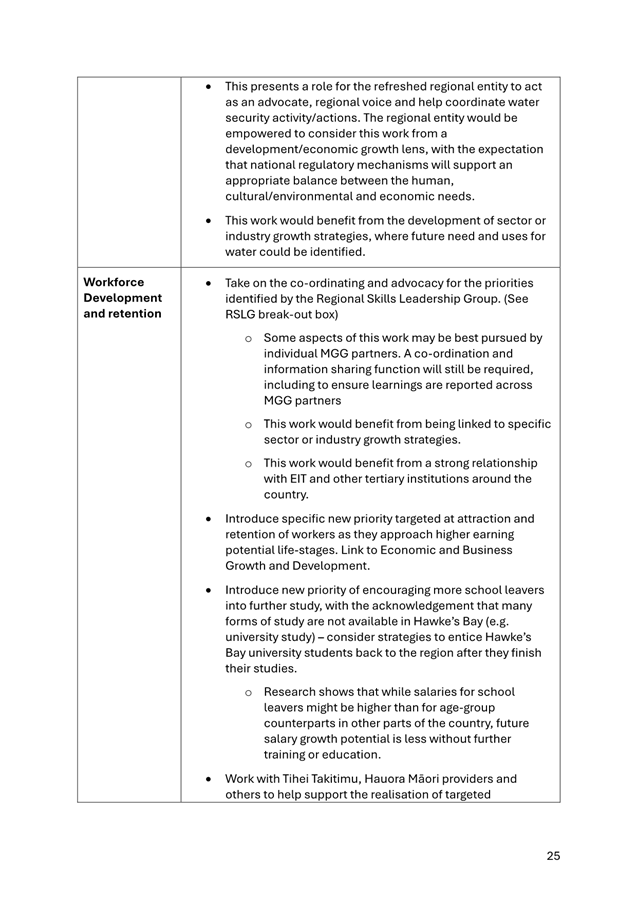
· Workforce
development – address issues in region, sector-linked approaches,
social components (health, pastoral care) vitally important to success. As well
as being vital in terms of supporting productivity and the ability of
whānau to contribute to and benefit from the economy, Health/Hauora was
also seen by Matariki partners as important in its own right for a thriving
community.
· Housing
sufficiency and affordability – ensure whānau access to underpin
a healthy productive workforce and attract and provide capacity for people and
capability in Hawke’s Bay.
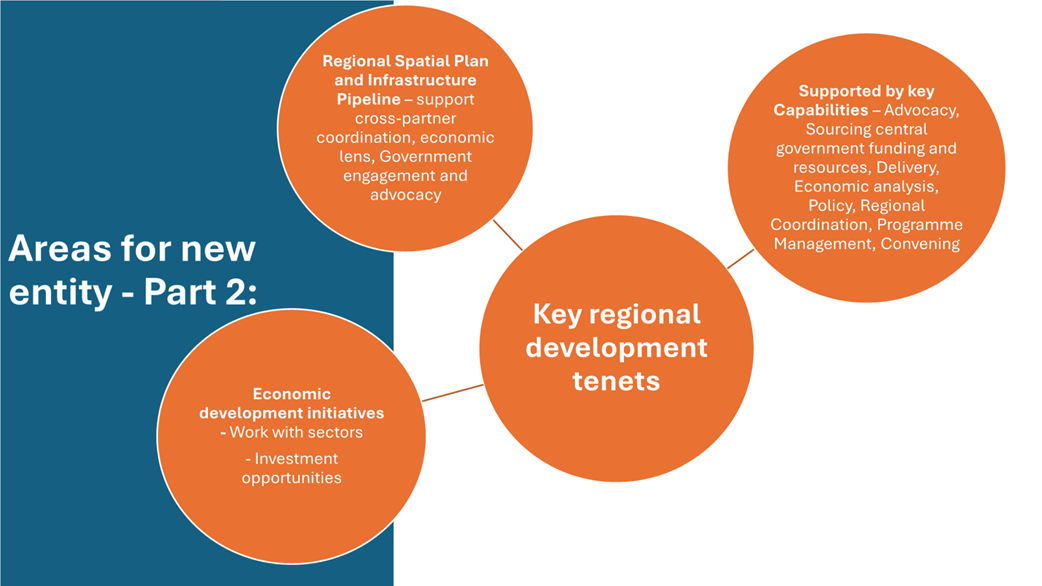
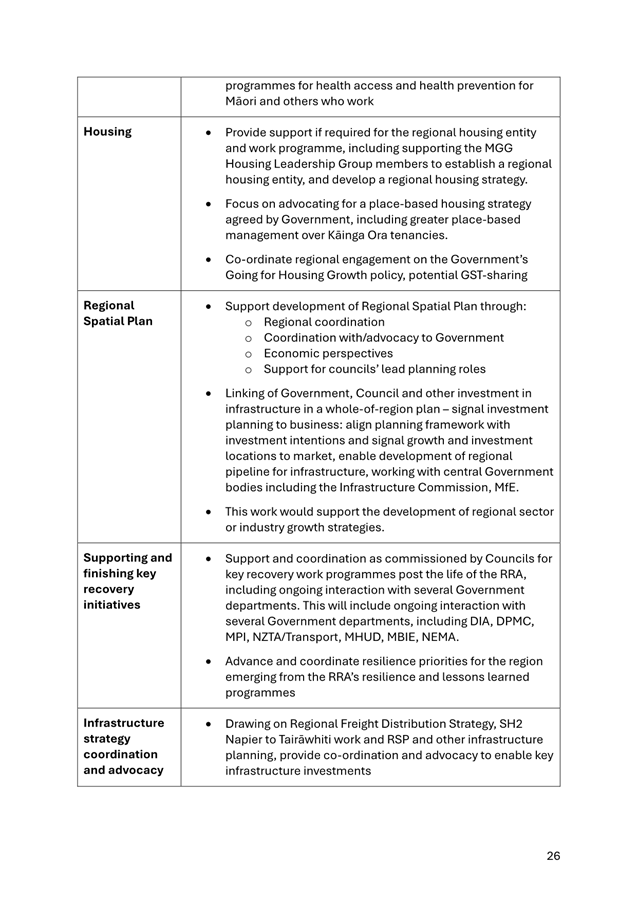
1.12 Address key development tenets for
Hawke’s Bay and provide capability to support joined up, coordinated
action and effective advocacy to Government:
· Regional
Spatial Plan and Infrastructure - Support cross-party coordination and
Government engagement and advocacy in support of plan development and
infrastructure planning; support completion of the recovery journey where
required.
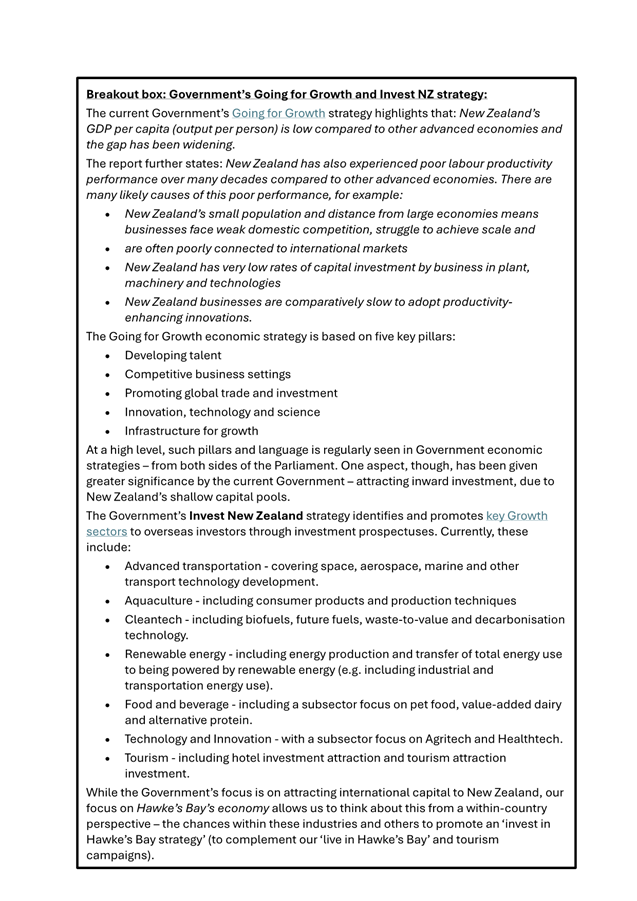
· Economic
development initiatives – work with business sectors and respond to
investment and other opportunities
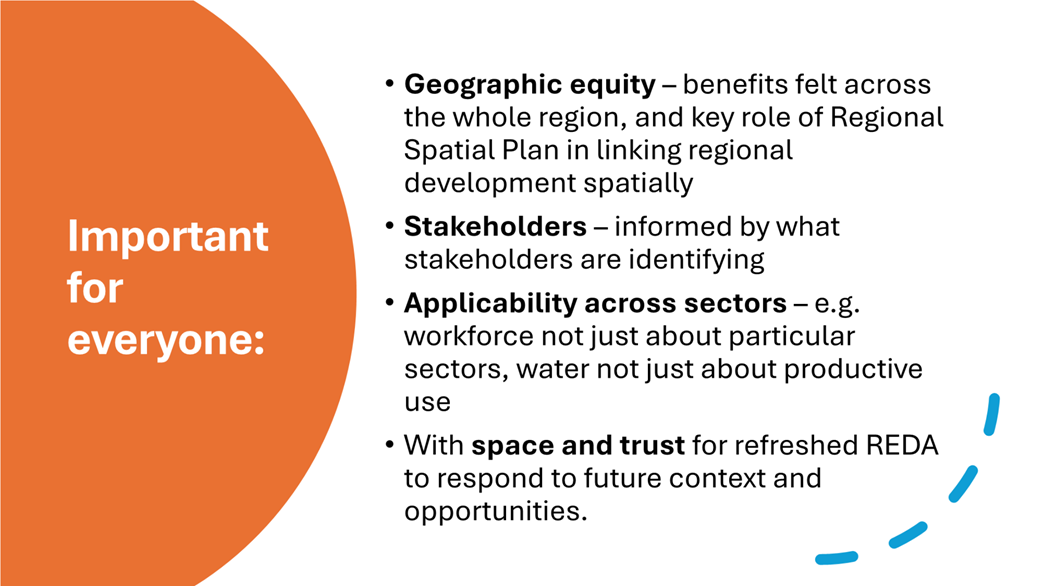
1.13 With an overlay to ensure it works for
everyone:
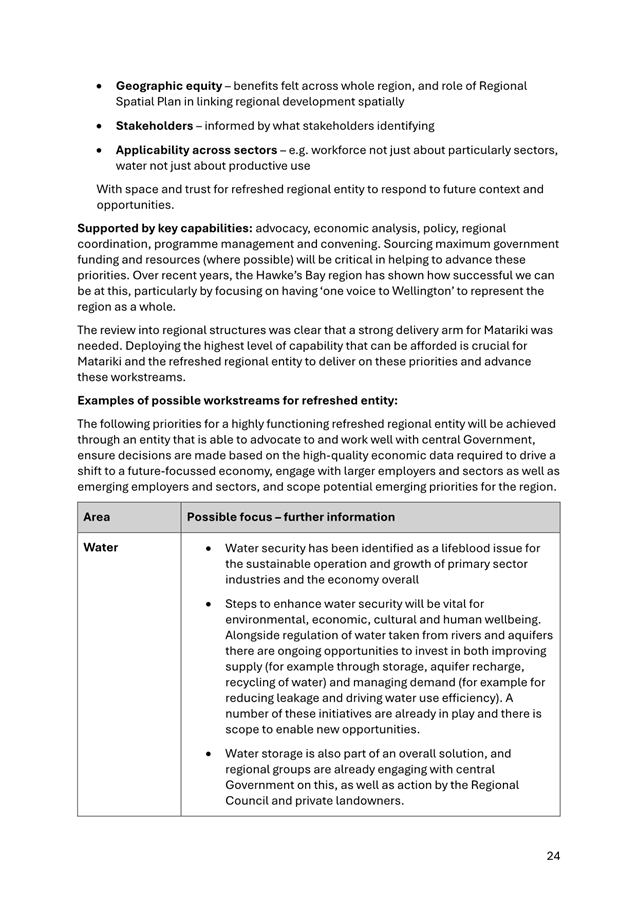
· Geographic
equity – across whole region, and role of Regional Spatial Plan in
linking regional development spatially.
· Stakeholders –
informed by what stakeholders are identifying.
· Applicability
across sectors – e.g. workforce not just about particularly sectors,
water not just about productive use
1.14 Alongside all of this, maintaining the
space and trust for a refreshed regional entity to respond to future context
and opportunities.
Next steps for
confirming regional priorities
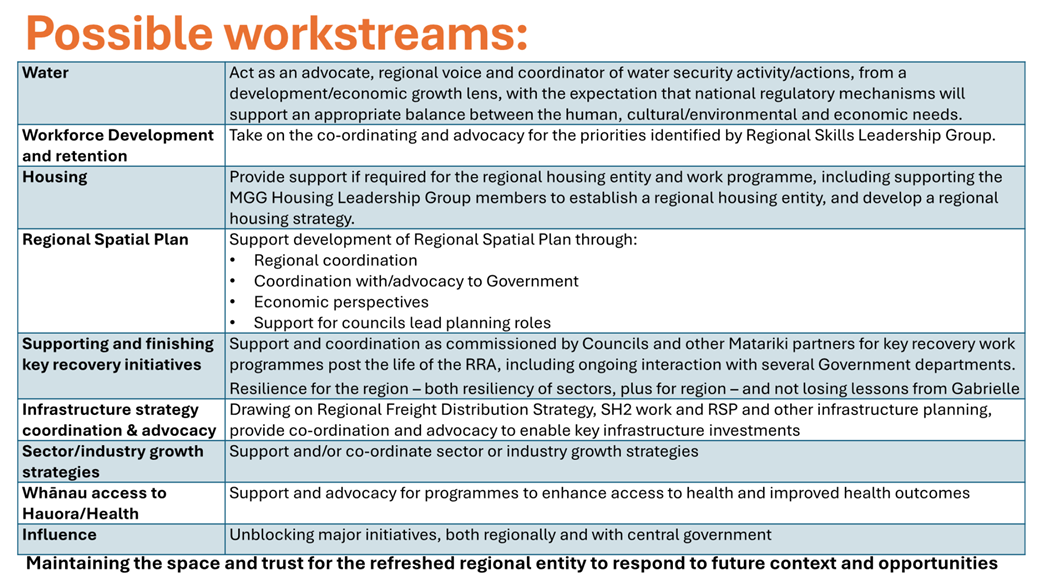
1.15 The HBREDA and RRA Boards will continue
work on the priorities framework for the Letter of Expectations for the
refreshed REDA regional entity. The priorities and proposed workstreams
outlined above (and in more detail in the accompanying papers) will be used as
the starting point.
1.16 The incoming Council will be briefed on
this work as soon as practical. The MGG intention is for the regional
priorities proposals and possible work programmes to be considered, and if
agreed endorsed, at a meeting in November. This will be early for the incoming
Council but there is a need to have the regional priorities set and agreed
before a Letter of Expectations for the refreshed REDA is considered and
formally endorsed at the MGG meeting scheduled for Friday 12 December 2025.
This Letter of Expectations will shape the skills and experience of the staff
that the HBREDA Board and interim CE will need to appoint to deliver on behalf
of the region. The recruitment process needs to begin before Xmas so the
refreshed REDA is in a good position to take ownership of new priorities and
work programmes from 1 April 2026 (the end of the current transition period
from the existing work programme to a refreshed and re-focused work programme).
Update from the
Regional Recovery Agency (RRA)
1.17 The RRA continues to help advance the
region’s recovery and resilience priorities through close collaboration
with Matariki partner organisations as well as Government and its agencies.
1.18 The RRA’s primary areas of focus
are:
· Continued
oversight and support of regional recovery programmes, including coordination
and engagement with relevant Crown agencies/entities, and regional delivery
partners involved in Crown-funded recovery efforts.
· Providing
secretariat and programme management support to the Regional Housing Leadership
Group to advance the Housing System Resilience initiative.
· Direct engagement
with the Crown to advocate for necessary funding, decisions or
regulatory/policy adjustments to ensure successful delivery of agreed recovery
programmes of work.
· Supporting partner
agency led recovery activities.
· Coordinating
multi-organisation programmes of work.
· Providing support
and/or leadership on specific recovery and resilience projects.
· Advancing the
“Lessons Learned” report required by the adopted recommendations of
the ‘Bush Report’, considering resilience directions and starting
to address the closedown of the organisation’s programme and handover of
any ongoing matters to appropriate organisations.
1.19 Positive progress continues to be made
by councils and other agencies across a range of recovery delivery work.
Transport programmes are advancing well, and the first flood protection main
construction contract has been awarded. Much of the RRA’s work is
centred on supporting lead organisations in their work and managing reporting
and Government liaison processes.
Update from the
Regional Economic Development Agency (HBREDA)
1.20 Through the Letter of Expectations from
the MGG, the HBREDA transition board has been tasked with:
· running
business-as-usual activities,
· progressing
existing projects, with no new initiatives to be started,
· recommending a
future organisational form aligned with regional priorities and the closure of
the RRA.
1.21 The following updates were provided on
progressing existing projects:
· FoodEast
Haumako Fermentation Centre of Excellence - Development of a strategic
business case for the proposed FoodEast Haumako Fermentation Centre of
Excellence. This project is underway, and a report is expected this month.
· Review of the
Value of Tourism in Hawke's Bay - Independent assessment of the value of
the visitor economy and promotion in the region, together with options for
sustainable funding and delivery of destination marketing. This project is
underway and is on track.
· Economic Impact
Assessment of State Highway 2 Resilience Initiatives - Economic impact
assessment of SH2 from Napier to Gisborne. This project is jointly funded by
HBREDA and Trust Tairāwhiti and is in two stages:
o Stage 1 - An assessment
of the impacts that disruptions due to climate-related hazards have on road
users along the route, following the standard transport appraisal method set
out by NZTA in its Monetised Benefits and Costs Manual (2024). This stage is
complete and supported the Hawke’s Bay Regional Council's inclusion of
the project in the Regional Land Transport Plan (RLTP).
o Stage 2 - Computable
General Equilibrium (CGE) economic modelling of the potential impacts
associated with increasing resilience along the route on the regional and
national economies. This work would support a proposed ‘East Coast
Connectivity’ business case. This stage has not yet been initiated.
|
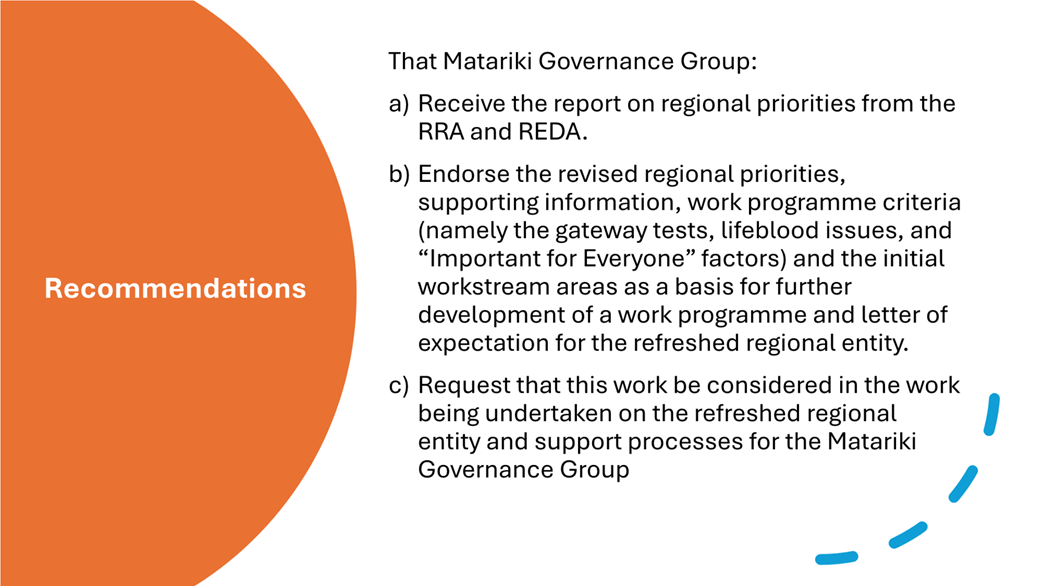
2.0 Recommendations -
Ngā Tūtohunga
A) That Council
receive the report titled Report back on Matariki Governance Group (MGG)
meeting of 29 August 2025 dated 4 September 2025.
B) That Council
note that good progress is being made by the Regional Recovery Agency (RRA)
and the HB Regional Economic Development Agency (REDA) identifying a small
set of shared regional priorities that are intended to be the focus of
regional collaboration and form the basis of the refreshed REDA work
programme.
C) That Council
note that the incoming Council will be briefed on the work to establish
regional priorities as soon as practical given the importance of this work in
informing a new Letter of Expectations for REDA and the skills and experience
of the staff that the HBREDA Board and interim CE will need to appoint to
deliver on behalf of the region. The recruitment process needs to begin
before the end of the year so the refreshed REDA is in a good position to
take ownership of new priorities and work programmes from 1 April 2026 (the
end of the current transition period from the existing work programme to a
refreshed and re-focused work programme).
|
Attachments:
|
1⇩
|
Matariki Regional Priorities - Report to MGG 290825 -
final
|
CG-17-1-01792
|
|
|
2⇩
|
Matariki meeting - August 2025 - Regional Priorities
Presentation Final 280825
|
CG-17-1-01795
|
|
|
3⇩
|
Matariki Regional Priorities - Phase 1 report to MGG
Supporting Document - 220825 Final
|
CG-17-1-01793
|
|
|
4⇩
|
Regional Public Service - Matariki Supporting Whanau final
|
CG-17-1-01794
|
|
2.1